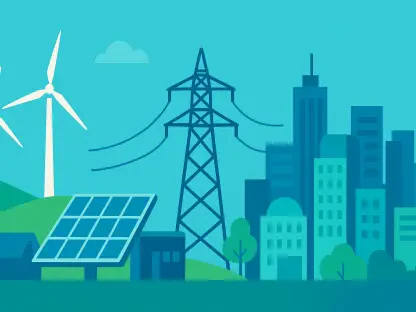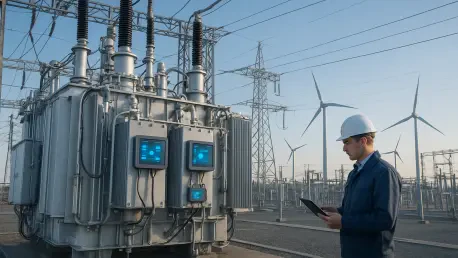

The global transition toward a decentralized and renewable-heavy energy model is forcing national grids to evolve beyond the traditional limits of silicon-based architecture into the sensitive world of quantum mechanics. As of 2026, the integration of quantum systems into the electrical grid has moved from a theoretical laboratory aspiration to a tangible industrial reality in East Asia. The commissioning of specialized facilities has marked a departure from small-scale experiments, focusing instead on the stressors of high-voltage transmission and real-time load balancing. This shift signifies a broader ambition to secure energy sovereignty while managing the inherent volatility of a green-energy-dominated network.
The central pillar of this strategy involves the widespread deployment of quantum-enhanced instrumentation at critical nodes. For instance, the installation of over eighty specialized quantum devices at major substations represents an attempt to bridge the gap between microscopic physical properties and macroscopic industrial needs. By embedding these technologies into the working heart of the energy network, engineers are seeking to solve chronic issues such as equipment failure, data interception, and the computational burden of managing thousands of intermittent power sources.
The Current Landscape of China’s Energy Infrastructure and Quantum Ambitions
Transitioning from Traditional Transmission to the Intelligent Supergrid
The modern energy landscape is no longer defined by a simple one-way flow of electricity from coal plants to urban centers but rather by a complex web of solar, wind, and storage units. This evolution requires a supergrid that can handle bidirectional flows and rapid frequency fluctuations without collapsing under the pressure of unpredictable weather patterns. Traditional copper and silicon infrastructures are increasingly strained by the high-precision requirements of these modern loads, leading to a demand for sensing and monitoring tools that operate at a fundamental level.
Moreover, the drive toward an intelligent supergrid necessitates a level of synchronization that classical systems struggle to provide over vast geographic distances. To maintain stability, the grid must possess the ability to detect and react to micro-disturbances within milliseconds. Quantum technology offers a solution through its inherent sensitivity to external stimuli, allowing for a more granular view of the grid’s health. This transition represents a fundamental rethinking of how national energy security is maintained in a digital-first economy.
Key Stakeholders and the Role of the Houdian Quantum Demonstration Substation
The State Grid Corporation has emerged as the primary driver of this technological integration, utilizing specific facilities like the Houdian Quantum Application Demonstration Substation in Hefei as a proving ground. This substation is not merely a piece of infrastructure but a multi-layered laboratory where 220-kilovolt lines coexist with sensitive quantum hardware. By concentrating a high density of domestic innovations in one location, stakeholders can evaluate how quantum sensors and computers behave under the extreme electromagnetic fields of a live power environment.
Houdian serves as the benchmark for a national rollout, providing the empirical data necessary to justify the high capital expenditure associated with quantum upgrades. The project involves a deep collaboration between utility operators and quantum hardware manufacturers, ensuring that the technology is rugged enough for industrial use. The success of this facility determines the pace at which similar upgrades are deployed across the broader Yangtze River Delta and beyond, making it the epicenter of the quantum-grid movement.
Technological Pillars and Market Momentum in Quantum-Grid Integration
Pioneering Precision through Quantum Sensing and Atmospheric Lidar Monitoring
Quantum sensing has revolutionized the way engineers monitor the internal state of high-voltage equipment by utilizing the spin properties of synthetic diamonds. These sensors can detect minute magnetic field changes that indicate early-stage insulation breakdown or partial electrical discharge inside switchgear. This level of foresight allows for predictive maintenance, preventing catastrophic failures before they occur and extending the lifespan of expensive grid components that are otherwise difficult to inspect manually.
Beyond the internal mechanics, the integration of quantum lidar provides a sophisticated defensive layer against environmental hazards. These systems monitor the atmosphere within a fifteen-kilometer radius, tracking particulate matter and cloud movements with exceptional clarity. By providing high-resolution data on local weather conditions, the grid can better predict solar output and transmission line icing risks. This environmental awareness is crucial for stabilizing a network that is increasingly dependent on the whims of the climate.
Quantifying Growth Projections for the Quantum-Secure Communication Market
The market for quantum-secure communication within the energy sector is entering a period of rapid expansion, with projections indicating a significant compound annual growth rate from 2026 to 2030. As cyber threats against critical infrastructure become more sophisticated, the value of quantum key distribution has surged. Utilities are no longer viewing quantum security as a luxury but as a necessary safeguard for protecting the integrity of the data that keeps the lights on.
Investment is flowing into the development of hybridized networks that combine the speed of 5G with the unhackable nature of quantum encryption. This commercial momentum is supported by national mandates that prioritize the hardening of energy assets against foreign interference. The resulting demand is creating a robust ecosystem of specialized firms focused on miniaturizing quantum communication modules for use in smart meters and rural transmission towers, signaling a shift toward mass-market adoption.
Navigating Technical Hurdles and the Engineering Realities of High-Voltage Environments
Overcoming Electromagnetic Interference and Hardware Ruggedization Challenges
The primary obstacle to deploying quantum hardware in a substation is the violent electromagnetic environment created by high-voltage equipment. Quantum states are notoriously fragile, and the intense noise generated by transformers can easily decohere the sensitive qubits or sensors. Engineers have had to develop advanced Faraday cages and non-magnetic shielding materials to insulate these devices from the very environment they are meant to monitor.
Furthermore, the hardware must be ruggedized to withstand the physical vibrations and extreme temperature fluctuations common in industrial settings. Laboratory-grade equipment is typically housed in climate-controlled rooms, but grid-ready quantum tools must survive the outdoor conditions of a substation. This transition has led to a new field of engineering that focuses on the durability of quantum-dot sensors and solid-state lasers, ensuring they remain operational for decades rather than just the duration of a research project.
Mitigating Global Supply Chain Risks through Domestic Material Innovation
The reliance on specialized materials, such as high-purity diamonds and rare-earth elements, previously exposed the quantum-grid initiative to significant supply chain vulnerabilities. When international trade restrictions limited access to these materials, it sparked a major push for domestic material innovation within the energy sector. Chinese researchers successfully developed internal manufacturing processes for synthetic diamonds optimized for quantum sensing, effectively neutralizing the threat of external procurement delays.
This shift toward self-sufficiency has not only secured the supply chain but also lowered the costs of quantum components. By controlling the entire production cycle from raw material to finished sensor, the industry has achieved a level of vertical integration that is difficult for competitors to match. This localized approach ensures that the expansion of the quantum grid remains unaffected by global geopolitical shifts or trade disputes, providing a stable foundation for long-term growth.
The Regulatory Framework and Security Standards for a Quantum-Enhanced Grid
Establishing National Protocols for 5G-Quantum Hybrid Encryption
The integration of quantum technology into existing telecommunications networks requires a clear regulatory framework to ensure interoperability between different equipment vendors. National authorities have begun standardizing the protocols for 5G-quantum hybrid encryption, which combines classical high-speed data transmission with quantum-based cryptographic keys. This standardization prevents the fragmentation of the network and ensures that data can move securely between municipal grids and national command centers.
These protocols also address the latency issues associated with quantum key distribution, ensuring that the encryption process does not slow down the real-time feedback loops required for grid stabilization. By establishing a unified set of rules, the government has provided the private sector with the confidence to invest in quantum-ready hardware. This regulatory clarity is a key differentiator in the global race to modernize energy infrastructure, as it simplifies the path from prototype to national deployment.
Ensuring Data Sovereignty and Compliance in Critical Energy Infrastructure
Data sovereignty has become a paramount concern as the grid becomes more reliant on cloud-based analytics and remote monitoring. Current regulations mandate that all sensitive data generated by the quantum grid must be processed and stored within domestic borders using verified hardware. This policy ensures that the intelligence governing the national energy supply remains under local control and is protected by the unique security properties of quantum mechanics.
Compliance with these standards is strictly monitored through a series of audits that verify the integrity of the quantum-secure links. Utility companies must demonstrate that their communication channels are immune to interception, utilizing the observer effect of quantum physics as a physical guarantee of privacy. This rigorous approach to data security has turned the energy sector into a leader in cybersecurity, setting a high bar for other industries to follow as they explore their own quantum transitions.
Future Horizons: Scaling Quantum Innovation Across the National Network
The Quest for Quantum Advantage in Complex Power-Flow Analysis
The ultimate goal of integrating quantum computing into the grid is to achieve a measurable advantage in power-flow analysis, which involves calculating how electricity distributes across thousands of nodes. Classical computers are reaching their limits when tasked with optimizing these flows in real-time, especially as electric vehicle charging and rooftop solar panels add millions of new variables. Quantum processors are being tested to handle these multi-dimensional optimization problems with a speed that classical silicon simply cannot replicate.
Current initiatives are focusing on running these simulations on superconducting quantum computers to identify the most efficient transmission routes during peak demand. While the technology is still maturing, the early results indicate that quantum algorithms could significantly reduce the energy lost during transmission. This computational breakthrough would allow the grid to operate at a much higher efficiency, effectively increasing the usable capacity of existing lines without the need for massive new construction projects.
From Local Pilot Programs to Global Leadership in Quantum Energy Systems
The success of initial pilot programs is paving the way for a comprehensive national rollout that aims to cover the majority of high-voltage substations by the early 2030s. This scaling process involves a transition from bespoke, experimental installations to standardized, modular quantum units that can be easily integrated into existing infrastructure. As these systems become more common, the cost per unit is expected to drop, making it feasible for smaller regional utilities to adopt quantum monitoring tools.
This expansion is not limited to domestic borders, as there is a growing interest in exporting these quantum-grid solutions to international markets. By being the first to industrialize these technologies, the industry is positioning itself as the global leader in next-generation energy systems. The ability to offer a complete package of high-precision sensing, secure communication, and advanced analytics provides a competitive edge in the global market for smart grid infrastructure.
Assessing the Long-Term Viability and Economic Impact of Quantum Utility
Evaluating Cost-Efficiency and the Mitigation of Energy Measurement Errors
The economic viability of the quantum grid is often measured by its ability to reduce operational waste and measurement inaccuracies. High-precision quantum sensors have already demonstrated a capacity to reduce electricity measurement errors by hundreds of thousands of kilowatt-hours annually at single testing sites. When scaled across a national network, these minor precision gains translate into massive financial savings and a more accurate accounting of energy usage.
Furthermore, the reduction in unplanned outages due to predictive quantum maintenance significantly offsets the initial investment in the technology. The ability to detect a failing component months before it breaks prevents the high costs associated with emergency repairs and industrial downtime. This shift from reactive to proactive management is fundamentally changing the business model of utility companies, making them more resilient and financially stable in an increasingly volatile energy market.
Final Outlook on Quantum Integration as a Catalyst for Grid Resilience
The assessment of quantum integration in the energy sector demonstrated that the initial deployment phases were successful in identifying operational bottlenecks. Researchers determined that the transition to quantum-enhanced monitoring provided a level of precision previously unattainable with classical instrumentation. The strategic shift toward localized supply chains effectively neutralized external procurement risks, while the expansion of quantum-secure networks provided a foundational layer for grid autonomy. These advancements allowed for a more responsive infrastructure that accommodated the variable nature of renewable inputs. Stakeholders recognized that the focus moved toward standardizing the manufacturing of quantum-dot sensors to reduce upfront capital expenditures. Ultimately, the systematic validation of these technologies at the substation level confirmed that quantum mechanics offered a viable path to long-term energy resilience.