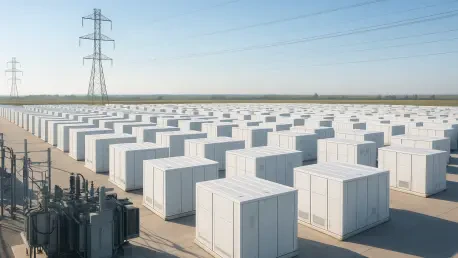

The global energy transition away from heavy, rotating turbines toward a decentralized digital architecture is fundamentally rewriting the laws of physics that have governed electrical networks for over a century. This transformation is currently visible across the Australian power landscape, where the retirement of coal-fired plants necessitates a replacement for the mechanical inertia that historically maintained frequency stability.
Leading researchers and industry experts now focus on grid-forming inverters as the primary solution for this structural shift. The ongoing collaboration between academic institutions and government agencies aims to prove that digital systems can mimic the physical response of massive spinning steel machines to prevent wide-scale outages.
The Evolution of Grid Stability: From Spinning Steel to Digital Intelligence
The historical reliance on synchronous generators provided a natural buffer against sudden changes in supply or demand through physical momentum. However, as the grid incorporates more wind and solar power, the system loses this inherent stability, forcing operators to look toward advanced power electronics.
Grid-forming technology allows batteries and renewable sites to dictate the voltage and frequency of the network autonomously. This shift represents a move from passive energy injection to active grid support, where digital intelligence replaces the mechanical properties of legacy fossil-fuel infrastructure.
Analyzing the Dynamics of the Inverter-Based Resource Market
The market for inverter-based resources is rapidly expanding as costs for storage technology continue to decline relative to traditional peaking plants. Network operators increasingly favor digital solutions that offer faster response times and greater flexibility than their mechanical predecessors.
Current market trends suggest a diversifying ecosystem where hardware performance depends heavily on the underlying software. This evolution is pushing the industry toward a model where grid services are sold as software-defined capabilities rather than just raw energy generation.
Technological Shifts and the Quest for Digital Fingerprints
Each manufacturer develops proprietary control algorithms that cause their inverters to react uniquely to network disturbances. Research is currently underway to map these digital fingerprints to understand how different brands interact when deployed simultaneously across a transmission network.
Identifying these specific waveforms is crucial for ensuring that a diverse fleet of devices can stabilize the grid collectively. Without a clear understanding of these digital signatures, the risk of conflicting responses between different inverter brands could lead to localized instability.
Quantifying the Transition: Investment and Growth Projections
The financial scale of this transition is evidenced by a $6.52 million grant dedicated to grid-protection research from 2026 to 2029. Such investments are intended to accelerate the deployment of large-scale battery projects that exceed 100 megawatts in capacity.
Growth projections indicate that grid-forming technology will likely displace expensive synchronous condensers within the next few years. This shift offers a more scalable and cost-effective method for network operators to maintain system strength in remote or weak areas of the power grid.
Navigating the Technical Hurdles of Fault Detection and System Protection
The most pressing technical challenge involves the fault current paradox where inverters limit their electrical output to protect sensitive internal components. Traditional protection relays require a massive surge of current to identify and isolate a short circuit or equipment failure.
If inverters do not provide sufficient fault current, the protective hardware may fail to detect a critical issue. This visibility gap creates a significant risk of cascading blackouts if the system cannot distinguish between a minor fluctuation and a serious network fault.
Establishing New Standards for a High-Inverter Power System
Regulatory bodies are now working to establish technical requirements for protection-grade fault current that apply to all manufacturers. Moving beyond proprietary claims is necessary to create a standardized framework that ensures network security regardless of the hardware brand used.
Standardization involves defining the magnitude, duration, and shape of the electrical signals that inverters must produce during a fault. This collaborative effort between agencies and developers is essential for maintaining the integrity of the physical network.
Mapping the Future of a Resilient and Decarbonized Energy Network
The trajectory of the power industry points toward a fully software-defined grid where energy management is performed with millisecond precision. Emerging innovations focus on plug-and-play infrastructure that automatically adapts to changing network conditions without manual intervention.
Future growth will likely center on the integration of these digital signatures into a cohesive national strategy. As the technology matures, the management of digital power becomes as important as the generation of the electricity itself.
Final Verdict on the Viability of Grid-Forming Technology
The transition toward grid-forming technology proved to be a decisive factor in stabilizing the national energy infrastructure. Analysts observed that the elimination of mechanical inertia was not a liability but an opportunity for greater precision in power management. Strategic investments in software-based protection systems secured the network against faults that previously threatened system integrity.
The research established that a fully decarbonized grid was technically viable through the standardization of digital power signatures. Market participants moved swiftly to adopt these benchmarks, ensuring that various hardware brands functioned as a cohesive unit. This shift effectively ended the reliance on expensive, outdated synchronous condensers for grid strength. By prioritizing interoperability, the industry successfully decoupled grid security from fossil fuel combustion.