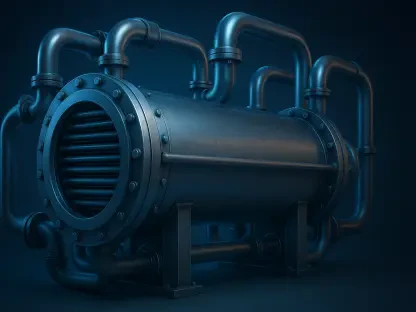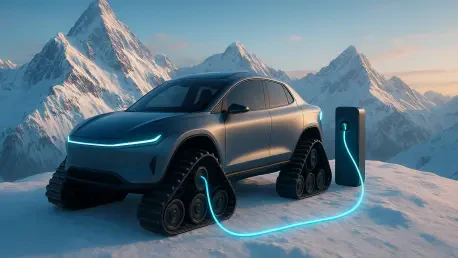

A lithium-ion system with a 97 kWh capacity per unit provides the industrial robustness needed to withstand the intense vibrations and mechanical shocks inherent in grooming rugged terrain. This collaboration between Scania and Prinoth represents a significant leap from experimental prototypes into the realm of long-term industrial scaling. It is 2026, and the alpine industry is witnessing a transformation that was once deemed impossible due to the perceived physical limitations of battery chemistry in extreme cold. By integrating modular energy storage solutions into heavy-duty off-road fleets, the partners are proving that sub-zero temperatures and high-altitude slopes no longer serve as barriers to decarbonization. This shift requires not only powerful motors but also a sophisticated architecture capable of managing thermal stability when the external environment drops well below freezing. The transition is currently redefining operational standards for ski resorts and mountain municipalities globally.
Pioneering Zero-Emission Alpine Technology
Proving the Concept: The Husky E-Motion
The journey into zero-emission grooming began with the Husky E-Motion, a vehicle that redefined the market as a market-ready fully electric solution. Since its introduction, this machine has undergone rigorous testing across diverse geographic regions, ranging from the high-altitude resorts of the American Rockies to the freezing landscapes of Norway and the French Alps. These deployments served as a critical proof-of-concept, demonstrating that electric powertrains could offer the torque and reliability required for professional snow management.
The success of the Husky model was attributed to its ability to maintain consistent power output despite challenging environments. Operators found that the electric drive provided smoother handling and immediate response compared to traditional internal combustion engines. More importantly, it confirmed that modular battery components could handle the logistical demands of a busy ski season. This reliability established a foundation of trust among resort managers who were previously skeptical about abandoning diesel-powered fleets in favor of sustainable technology.
Scaling Up: The High-Performance Leitwolf E-Motion
Building on lessons learned from smaller models, the partnership transitioned to the Leitwolf E-Motion, a more powerful machine designed for intensive heavy-duty grooming. To meet the energy demands of such a large platform, Scania and Prinoth implemented a configuration using multiple battery units. This setup ensures that the vehicle can maintain high-intensity duty cycles, such as clearing deep powder or shaping steep racing tracks, without frequent charging interruptions. The engineering focus shifted toward maximizing energy density while maintaining structural integrity.
A crucial aspect of this scaling involved the strategic placement of battery packs to ensure vehicle stability. By utilizing top and side-mounted configurations, engineers optimized the center of gravity, which is a safety concern for machines on vertical inclines. This design flexibility allows the Leitwolf to navigate treacherous terrain with agility. The result is a machine that does not sacrifice performance for environmental responsibility, offering a high-performance alternative for the world’s most demanding and unforgiving alpine regions.
The Future: Heavy-Duty Industrial Electrification
Standardizing Battery Power: Across Specialized Sectors
The Scania-Prinoth collaboration is indicative of a broader trend where electrification is penetrating industrial sectors like mining and construction. By utilizing a modular battery system that scales from 21 kWh to over 600 kWh, manufacturers can apply a unified power solution across a vast range of vehicle types. This modularity is essential for driving down research and development costs while ensuring that specialized machinery can benefit from the same technological advancements as mass-market commercial transport. It represents a move toward platform standardization.
Furthermore, this approach simplifies the logistical challenges associated with fleet maintenance and parts replacement. In 2026, fleet operators can manage diverse equipment using shared charging infrastructure and diagnostic tools, which significantly lowers the barrier to entry for smaller organizations. The ability to swap or upgrade modular battery units ensures that these expensive machines remain viable throughout their operational life. This strategy is transforming how heavy-duty vehicles are designed, moving away from bespoke, one-off electric solutions toward scalable frameworks.
Strategic Alignment: Engineering Excellence
The expansion of this partnership demonstrated that the success of industrial electrification relied on deep strategic alignment rather than simple procurement. Scania’s proprietary management systems provided the necessary safety protocols and performance data, while Prinoth contributed decades of experience in navigating complex off-road dynamics. This combined expertise allowed for the creation of a blueprint that other heavy-duty sectors began to follow. They proved that environmental constraints were merely engineering challenges to be solved through collaborative innovation.
Industry leaders realized that the path forward involved investing in specialized thermal management and robust structural housing to protect sensitive electronics. The adoption of these zero-emission groomers in alpine regions successfully reduced the carbon footprint of the outdoor recreation industry while setting a new benchmark for mechanical resilience. Future efforts focused on expanding the charging infrastructure in remote areas and further refining battery energy density to extend operational windows. The partnership showed that sustainable technology was fully capable of mastering the planet.