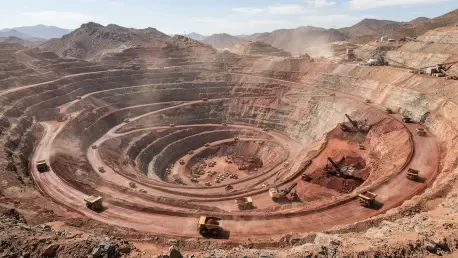

Approximately 50 million people worldwide rely on artisanal and small-scale mining for survival, often working in unregulated conditions that involve child labor and dangerous hand-dug shafts. This staggering figure represents the often-invisible human foundation upon which the global transition to renewable energy is being constructed. As the international community accelerates its departure from fossil fuels, the reliance on high-tech solutions such as electric vehicles and solar arrays has birthed a new erthe Mineral Age. Aerial photographer Tom Hegen has spent the last six years meticulously documenting the physical manifestations of this era, capturing the vast industrial scars that are frequently omitted from the glossy marketing of green technology. By utilizing drones and small aircraft, Hegen provides a macro-perspective that is otherwise inaccessible to the average consumer. His images serve as a visual bridge, connecting the sleek, finished products found in modern urban centers to the raw, often devastating extraction processes occurring in remote corners of the globe. This perspective is not merely aesthetic; it is an analytical necessity that reveals the sheer scale of the environmental transformation required to sustain a low-carbon economy. Through this lens, the transition is revealed not as a clean break from the past, but as a shift toward a different, more materially intensive form of industrial consumption.
The Paradox of the Renewable Transition
Reconciling Clean Goals: The Conflict of Extraction
The global pursuit of net-zero emissions presents a fundamental paradox that is becoming increasingly difficult to ignore. To mitigate the catastrophic impacts of climate change and preserve the biosphere, the world is currently engaging in an unprecedented expansion of mining activities. Critical minerals such as lithium, cobalt, nickel, and copper are the essential building blocks for the batteries, turbines, and panels required for a renewable future. However, the extraction of these materials often involves the destruction of the very ecosystems that the green transition aims to protect. In many instances, the production of a “green” battery necessitates the clearing of primary rainforests or the contamination of local water tables with toxic chemicals. This creates a moral and environmental conflict where the long-term goal of atmospheric stability is bought at the immediate cost of regional biodiversity and soil health. The transition to renewable energy does not eliminate the human footprint on the planet; it recalibrates it, moving the focus from carbon emissions to the intensive management and extraction of finite geological resources.
This paradox is further complicated by the increasing concentration of mining activities in ecologically sensitive or politically volatile regions. Unlike the widespread extraction of coal, the minerals required for the green revolution are often found in high concentrations in specific, fragile habitats. For example, the expansion of nickel mining in Indonesia often targets areas of high endemicity, where the loss of forest cover leads to irreversible damage to local flora and fauna. As the demand for these materials continues to surge from 2026 into the next decade, the pressure on these environments will only intensify. The narrative of “clean energy” often fails to account for this localized devastation, focusing instead on the reduction of greenhouse gases at the point of use. This narrow focus risks creating a situation where the Global North achieves its climate goals by essentially exporting environmental degradation to the Global South. A truly holistic approach to sustainability must move beyond carbon accounting to include the full spectrum of ecological impacts associated with the entire lifecycle of green infrastructure.
The True Material Footprint: Visualizing Technological Costs
Every sophisticated electronic device and renewable energy installation carries a hidden material weight that remains largely invisible to the end-user. The process of isolating a few grams of a rare earth element or several kilograms of lithium involves the displacement of immense volumes of earth and the use of vast quantities of water and chemical reagents. From an aerial perspective, these industrial processes create patterns that resemble intricate computer circuits, yet they represent a massive alteration of the physical landscape. The sheer volume of material that must be moved and processed to facilitate the global shift toward electric mobility is staggering. This “material footprint” is the physical reality of the Mineral Age, where the demand for specialized elements dictates the reshaping of entire mountains and the creation of sprawling evaporation complexes. By visualizing these sites, it becomes possible to grasp the direct link between a consumer’s desire for the latest technology and the industrial activity required to satisfy that demand in distant, often overlooked regions.
The Atacama Desert in Chile serves as a primary example of this material connection, where vast lithium evaporation ponds create a striking geometric contrast against the natural desert floor. While these ponds are visually captivating from above, they signify a massive consumption of water in one of the most arid environments on Earth. This water usage directly competes with the needs of local communities and indigenous populations, creating a tension between global climate ambitions and local survival. This scenario highlights how the material footprint of technology is not just about the minerals themselves, but about the auxiliary resources required for their extraction. As the world moves toward a more electrified future, the demand for these critical minerals will continue to grow, making it essential to understand the full scope of their production. The “out of sight, out of mind” nature of global supply chains has long allowed for a disconnect between consumption and its consequences, but the visual documentation of these extraction sites makes such ignorance increasingly untenable.
Geographic Case Studies in Extraction
The High Cost: Navigating Essential Mineral Scarcity
The extraction of lithium in the Atacama Desert represents a critical node in the global energy supply chain, yet it illustrates the extreme environmental trade-offs inherent in modern mining. Lithium, often referred to as “white gold,” is the primary component for the high-capacity batteries that power electric vehicles and grid storage. The process of extracting lithium from brine involves pumping massive quantities of water from underground aquifers into surface ponds, where it is allowed to evaporate. This method is highly efficient but puts immense strain on the regional water cycle, potentially leading to the desiccation of nearby wetlands and the loss of biodiversity. From the air, these ponds appear as vibrant, multicolored patches in a monochromatic landscape, a visual testament to the industrial dominance over natural systems. As global demand is projected to rise significantly from 2026 to 2030, the sustainability of this extraction method is under intense scrutiny, raising questions about the long-term viability of relying on a single geographic region for such a vital resource.
In contrast, the cobalt mines in the Democratic Republic of Congo present a different set of challenges, where industrial extraction often overlaps with artisanal activities in densely populated areas. Cobalt is essential for stabilizing lithium-ion batteries, yet its production is frequently associated with severe environmental and social costs. In some regions, mining waste and tailings piles have begun to encroach directly upon residential villages, leading to the contamination of local soil and water sources. The geopolitical sensitivity of these operations often makes them difficult to document, shielding the true cost of production from the global public. These sites serve as the silent engines of the green revolution, bearing the burden of a world that is hungry for energy storage but often unwilling to face the realities of where that energy comes from. The visual evidence of these operations reveals a landscape that is being systematically dismantled to fuel the technological aspirations of industrialized nations, highlighting a profound global inequality in how the benefits and burdens of the energy transition are distributed.
Environmental Devastation: Impact in Southeast Asia
Southeast Asia has become a major theater for the extraction of minerals vital to the green economy, particularly nickel and tin. In Indonesia, the island of Sulawesi hosts some of the world’s largest nickel processing complexes, which are essential for the production of stainless steel and electric vehicle batteries. To support these industrial hubs, vast areas of tropical rainforest are cleared to provide both the land for the facilities and the raw ore for the smelters. This deforestation not only contributes to carbon emissions but also destroys the habitats of numerous endangered species and disrupts the traditional livelihoods of local communities. The rapid expansion of these industrial zones between 2026 and 2028 is expected to further strain the regional environment, as more land is converted from primary forest to industrial wasteland. This destruction is a direct consequence of the global demand for nickel, illustrating how the push for “clean” transport in one part of the world can lead to the loss of vital carbon sinks and biodiversity in another.
Simultaneously, the extraction of tin on Bangka Island showcases the devastating impact of both industrial and artisanal dredging on marine ecosystems. Tin is a critical component for the soldering of electronic circuits and the manufacturing of renewable energy components. On Bangka, miners operate offshore, using large dredges to scoop sediment from the seabed, which is then processed to extract the ore. This activity releases vast plumes of silt that smother coral reefs and destroy the breeding grounds of fish, leading to a collapse of local artisanal fishing industries. The aerial view of these operations reveals a coastline scarred by sediment and a sea turned a murky brown, a far cry from the pristine waters that once characterized the region. These operations are often poorly regulated, leading to a cycle of environmental degradation that is difficult to reverse. The pursuit of tin for global electronics and renewable infrastructure thus comes at the direct expense of marine health and the economic security of coastal populations who have relied on the sea for generations.
Social and Humanitarian Impacts
The Human Price: Ethical Concerns in the Supply Chain
The social dimensions of mineral extraction are as complex and troubling as the environmental impacts, particularly concerning the millions of people who depend on unregulated mining for their survival. In many regions of the Global South, artisanal mining is not a choice but a desperate necessity driven by poverty and a lack of alternative economic opportunities. These miners often work without any form of protective equipment, exposing themselves to chronic levels of toxic dust and hazardous chemicals. The use of mercury in clandestine gold mining, for example, has led to the widespread poisoning of river systems, affecting not only the miners but also the entire food chain of local communities. This exposure leads to long-term health issues and neurological damage, yet the activity continues because it provides a vital source of income. This human price is the hidden cost of a global supply chain that prioritizes low-cost production over the health and safety of the individuals at the very start of the process.
Furthermore, there is a systemic issue where the environmental and social costs of the energy transition are disproportionately borne by the most vulnerable populations. While residents in wealthy nations enjoy the benefits of cleaner air and quieter streets through the adoption of electric vehicles, the people living near the mines must deal with the fallout of toxic waste and habitat destruction. This “outsourcing of impact” creates a moral disconnect, allowing consumers to feel they are making environmentally responsible choices while remaining largely oblivious to the exploitation inherent in their purchases. The complexity of modern logistics makes it difficult for even the most conscientious consumer to trace the origins of the materials in their smartphones or car batteries. This lack of transparency allows for the persistence of unethical practices, as the distance between the source and the consumer masks the reality of the extraction process. Addressing these humanitarian concerns requires a fundamental shift in how global supply chains are managed, moving beyond simple compliance to active engagement and accountability.
Challenging the Myth: The Reality of Green Mining
The concepts of “green mining” and “sustainable mining” are increasingly promoted by industry stakeholders as a way to reconcile extraction with environmental goals, but these terms are often viewed with significant skepticism. At its core, mining is an inherently destructive and resource-intensive activity that involves the removal of finite geological materials and the generation of massive amounts of waste. While it is true that industrial standards can be improved through better technology and more stringent regulations, the idea of a “zero-impact” mine remains a marketing fiction. Even the most advanced operations require vast amounts of energy and land, and the long-term management of tailings and toxic waste remains a significant challenge. By labeling extraction as “green,” there is a risk of downplaying the actual environmental costs and slowing the transition toward more sustainable practices such as mineral recycling and urban mining. A truly honest conversation about the energy transition must acknowledge that every form of resource extraction carries a permanent cost to the Earth.
This skepticism is grounded in the reality of how mining is conducted in many parts of the world where regulations are weak or non-existent. While a mining company might adhere to high standards in its domestic operations, the same level of care is often not applied to its international subsidiaries or its third-party suppliers. This creates a fragmented system where the most damaging activities are pushed to regions with the least oversight. To move beyond the myth of green mining, there must be a global push for transparency and the implementation of mandatory reporting standards for the entire supply chain. This would allow consumers and policymakers to see the true environmental and social cost of the minerals they are using, fostering a more equitable and responsible version of the energy transition. The focus should not just be on making mining slightly less damaging, but on fundamentally reducing the demand for primary extraction through the development of a circular economy that prioritizes the reuse of materials already in circulation.
Toward a New Global Consciousness
Demanding Accountability: The Role of Transparency
Establishing a new level of global consciousness regarding mineral extraction is essential for ensuring that the energy transition is both ethical and sustainable. The current complexity of international trade often obscures the origins of critical minerals, making it difficult for the public to hold multinational corporations and governments accountable for their supply chains. By utilizing visual documentation and high-resolution data, it is possible to collapse the distance between the comfortable life of the consumer and the harsh reality of the mine. This transparency is a powerful tool for change, as it empowers the public to demand that the products they use are sourced in a way that respects both the environment and human rights. When the visual reality of a mercury-poisoned river or a cleared rainforest is brought into the public eye, it becomes much harder for companies to ignore the consequences of their operations. Transparency thus serves as the foundation for a more honest and responsible global market.
Moving forward, the goal must be to create a system where the “material footprint” of every technology is clearly understood and accounted for. This involves not only better labeling and tracking but also a shift in consumer behavior and policy. Governments can play a crucial role by implementing regulations that require companies to perform due diligence on their entire supply chain, ensuring that they are not contributing to environmental destruction or human rights abuses. Additionally, fostering a circular economy where minerals are recycled at the end of a product’s life could significantly reduce the need for new primary extraction. This approach would help decouple economic growth from resource consumption, leading to a more sustainable and equitable future. By demanding higher standards and greater accountability, the international community can ensure that the transition to renewable energy does not replicate the exploitative patterns of the fossil fuel era, but instead serves as a model for a more responsible way of interacting with the planet.
Strategic Pathways for a Circular Future
The documentation of the Mineral Age through the lens of Tom Hegen provided a necessary critique of the modern technological landscape, highlighting the profound disconnect between green ambitions and industrial realities. This body of work successfully visualized the hidden costs of the energy transition, revealing that the path to a low-carbon future was often paved with significant environmental and social sacrifices. By capturing the vivid, often scarred landscapes of the global mining industry, these images challenged the simplistic narrative of “clean energy” and forced a more nuanced conversation about the material requirements of modern life. The findings underscored the reality that moving toward renewable energy did not eliminate the human impact on the planet but shifted it to new regions and materials. This shift demanded a new level of global responsibility and a commitment to ensuring that the benefits of the green revolution were not achieved at the expense of the world’s most vulnerable ecosystems.
As the international community moved beyond the initial phase of the energy transition, the focus turned toward creating a more sustainable and equitable model of progress. Actionable steps were taken to integrate mineral recycling into the core of industrial policy, significantly reducing the reliance on primary extraction. Governments and corporations began to prioritize the development of technologies that used more abundant materials, lessening the pressure on ecologically sensitive mining regions. The lessons learned from the visual evidence of the early Mineral Age informed a new approach to resource management, one that valued transparency and human rights as much as carbon reduction. Ultimately, the transition became an opportunity to redefine the relationship between humanity and the Earth, moving toward a future where progress was measured not just by the technology we created, but by the integrity of the landscapes we preserved. The conversation shifted from simply seeking more energy to seeking a more honest and holistic way of living within the planet’s finite boundaries.