
Standard piers currently lack the ground bearing capacity required to store and load the massive foundations needed for large-scale offshore wind farms. As the global energy transition accelerates, GS Entec has officially pivoted from its traditional role as a producer of refining and petrochemical equipment to become a specialized leader in offshore wind infrastructure. This $217 million investment is not merely a diversification tactic but a fundamental reimagining of industrial capability within the GS Group. By aligning with international carbon-neutral policies, the firm aims to escape the chronic oversupply and diminishing returns currently plaguing the global petrochemical sector. The transformation centers on a comprehensive modernization of production facilities in Ulsan, where legacy expertise in heavy manufacturing is being adapted to meet the rigorous technical standards of modern renewables. This shift highlights a proactive effort to secure long-term growth in the green energy sector.
Engineering Precision: Scaling for Modern Wind Projects
Industrial Automation: Efficiency at the Yongjam Plant
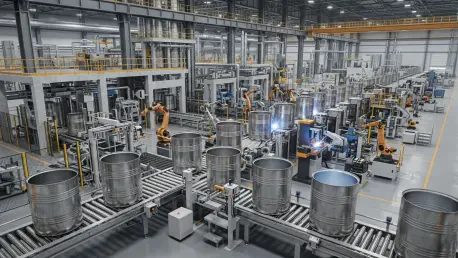
The newly unveiled production line at the 250,000-square-meter Ulsan facility represents a significant leap in industrial automation and manufacturing efficiency. This site has been reconfigured to manage a 10-step automated process that guides the production of massive steel structures from the initial assembly phase through to final coating and eventual shipping. By integrating high-tech machinery and streamlined workflows, GS Entec has successfully increased its annual production capacity nearly fourfold, jumping from a previous 40,000 tons to an impressive 150,000 tons. This scaling is essential to meet the growing volume of orders from both domestic and international developers who require consistent and reliable delivery of large-scale components. The facility’s design prioritizes speed without sacrificing the quality standards required for structures that must withstand the harsh conditions of marine environments for decades. This modernization ensures that the firm remains a leader in global supply.
The core of this technical evolution lies in the facility’s ability to execute complex internal and external welding joins on steel “cans” that reach staggering dimensions. These cylindrical sections, measuring up to 10 meters in diameter with a thickness of 90 millimeters, form the backbone of the monopiles that anchor wind turbines to the ocean floor. Utilizing automated welding machines ensures a level of precision and structural integrity that was previously difficult to achieve at such a scale. This technology allows for the seamless fusion of massive steel plates, creating a single, robust structure capable of supporting immense weight and resisting the corrosive power of saltwater. By focusing on these precise engineering requirements, the plant has optimized its production cycles, reducing the time required for manual inspections and rework. This focus on automated precision is what differentiates the facility from older, more labor-intensive manufacturing plants while ensuring long-term durability in deep water.
Supporting Large-Scale Infrastructure: Meeting High-Capacity Demands
As the offshore wind industry shifts toward larger and more powerful turbines, the demand for foundations that can support these massive units has surged. GS Entec’s upgraded plant is now specifically engineered to produce ultra-large monopiles that weigh as much as 2,500 tons, a necessary specification for the next generation of 15 MW-class turbines. These structures are significantly larger and heavier than those used in earlier wind farm projects, requiring specialized manufacturing techniques and heavy-duty handling equipment. By positioning itself as one of the few global players capable of producing these ultra-heavy foundations, the company is securing a dominant position in the deep-water wind market. This strategic focus ensures that as developers move toward larger turbines to maximize energy yield and reduce overall project costs, GS Entec remains their preferred supplier for the essential subsea infrastructure that keeps these towering giants stable in harsh marine environments.
The transition to wind energy has been facilitated by repurposing deep-seated technical expertise originally developed for the petrochemical and refining sectors. Engineers at the Ulsan plant have successfully adapted decades of knowledge regarding steel plate processing and heavy welding to the unique requirements of renewable energy technology. This cross-industry synergy has allowed the company to bridge the gap between traditional heavy industrial manufacturing and modern green energy infrastructure. Instead of starting from scratch, the firm utilized its existing industrial base to accelerate the development of high-capacity monopile production. This approach not only reduced the initial learning curve but also provided a foundation of technical excellence that has proven vital in securing high-stakes contracts. The ability to pivot legacy industrial skills toward sustainable solutions serves as a model for how established firms can navigate the global energy transition effectively and profitably.
Market Dynamics: Global Expansion and Logistical Hurdles
Commercial Traction: Success and Global Ambitions
The commercial viability of this strategic pivot has already been demonstrated through significant success in the domestic South Korean market. GS Entec recently completed the installation of 64 monopiles for the Yeonggwang-Nakwol offshore wind project, a major undertaking valued at approximately 200 billion won. This project served as a vital testing ground, allowing the company to validate its newly expanded production lines and refine its logistics protocols for large-scale maritime deployments. Completing such a massive contract in a timely and efficient manner has bolstered the firm’s reputation among regional energy developers and government stakeholders. The experience gained during the Yeonggwang-Nakwol project has provided critical data on installation timelines and structural performance, which the company is now using to optimize future bids. These early domestic wins are essential for building the financial stability and operational track record needed to scale into more complex global markets.
With a robust portfolio of domestic projects now established, GS Entec is aggressively targeting expansion into international markets, particularly in Japan and Australia. To remain competitive against the intense price offensive from established Chinese manufacturers, the company has entered into a strategic technical cooperation agreement with Sif, a renowned Dutch leader in offshore foundations. This partnership combines European design innovation with GS Entec’s efficient, high-volume automated manufacturing capabilities. By focusing on technical superiority and the implementation of high-efficiency automated systems, the company aims to drive down labor and production costs to offset the 41% pricing advantage currently held by competitors. Industry analysts anticipate that approximately nine major offshore wind tenders will be released between 2028 and 2030, presenting a prime opportunity for the firm to expand its footprint and diversify its client base across the broader Asian region.
Overcoming Bottlenecks: Port Infrastructure and Policy
The ultra-large monopiles being produced in Ulsan are among the heaviest components in the renewable energy sector, requiring specialized handling and storage facilities. While standard piers typically have a ground bearing capacity of only 5 tons per square meter, the loading of these massive foundations requires piers capable of withstanding 30 tons or more per square meter. Currently, the industry relies on existing facilities at locations like Mokpo New Port and Ulsan Port, but these sites were not originally designed for the extreme weights of 2,500-ton monopiles. This infrastructure gap creates significant logistical challenges, as the lack of high-bearing-capacity space limits the number of units that can be stored and prepared for shipment at any given time. Without the development of dedicated logistics hubs, the efficiencies gained through automated factory production could be lost during the shipping stages, which often face a restricted ninety-day window for offshore installation.
The transition toward a leadership position in the offshore wind sector required a massive industrial overhaul that was successfully completed at the manufacturing level. By investing $217 million into state-of-the-art automation and ultra-large foundation technology, the company positioned itself to meet the growing demands of the 2026-2030 energy market. However, moving forward, the focus must shift toward creating a unified national infrastructure strategy that addresses port capacity and regulatory bottlenecks. Policymakers and industry leaders should prioritize the fast-tracking of high-bearing-capacity pier developments to ensure that manufacturing gains are not negated by logistical delays. This effort will necessitate deeper collaboration between private firms and state agencies to overcome the social and environmental complexities of coastal expansion. Ultimately, the successful deployment of large-scale wind farms depended on a comprehensive ecosystem where production and logistics moved in sync.