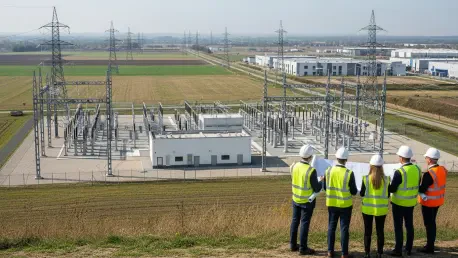

The rapid industrial expansion and population growth currently transforming Madhesh Province have created an urgent need for a complete modernization of the regional electricity infrastructure to ensure economic stability. This high-priority initiative, led by the Ministry of Energy, Water Resources and Irrigation, is designed to overhaul the existing distribution networks that have struggled to keep pace with soaring energy demands. By establishing a more resilient energy backbone, the government is facilitating a transition from reactive maintenance to proactive infrastructure planning, which is essential for supporting the domestic and commercial sectors. This effort is not merely a response to current supply issues but a forward-looking strategy to provide the necessary power for a burgeoning industrial landscape. The Ministry implemented a rigorous system of administrative oversight to ensure that all subordinate agencies remain strictly accountable for their construction deadlines and technical benchmarks.
Strengthening Regional Transmission Networks
Breakthroughs in the Dhanusha District
The Dhalkebar-Balganga 132 KV transmission initiative stands as a cornerstone of the regional energy strategy, representing a significant technological leap for the Dhanusha district. This project features a 24-kilometer double circuit line specifically engineered to provide a stable high-voltage connection that reduces the technical losses common in older systems. Central to this development is the construction of the Balganga substation, which boasts a capacity of 63 MVA, providing a much-needed boost to the local grid’s ability to distribute power efficiently. Technical teams have already reached the final stages of the project, focusing on the intricate installation of advanced electrical equipment and protective relay systems. This infrastructure is designed to act as a buffer against voltage fluctuations, ensuring that both residential neighborhoods and commercial enterprises receive a consistent supply of electricity without the frequent interruptions that once defined the local power landscape in this area.
Following the successful completion of initial structural work, the transmission line underwent rigorous testing to verify its readiness for full-scale operation within the national grid. The commissioning process involved specialized engineers performing load tests and insulation checks to ensure the system could handle the peak demands of the humid summer months in the plains. Once this project is fully integrated into the regional network, it will serve as a primary artery for energy distribution, significantly improving the quality of life for residents in several surrounding municipalities. The stabilization of the grid in Dhanusha is expected to spark a new wave of local investments, as businesses can now operate with the assurance of a reliable power supply. This milestone demonstrated the effectiveness of the government’s focused approach to district-level infrastructure, where targeted investments in substations and lines yielded immediate dividends for the whole community.
Expansion Projects and Logistics in Rautahat
The Chandrapur-Sukhdev Chowk project represents a complex undertaking aimed at improving power reliability across the central and southern areas of the Rautahat district. This specific initiative involves a 37-kilometer transmission line that traverses several kilometers of national forest, a factor that necessitated careful environmental approvals and meticulous land acquisition strategies. Despite the logistical and geographical hurdles associated with working in protected forest zones, the Ministry successfully completed the preliminary phases, including detailed feasibility studies and the construction of boundary walls for the new substations. This project is vital for stabilizing the local energy supply, as it will link previously isolated distribution centers to the high-voltage national grid. By addressing the unique environmental constraints of the region through sustainable engineering practices, the government is ensuring that infrastructure development does not come at the expense of the natural ecosystem.
Technical teams have prioritized the completion of the Sukhdev Chowk substation to serve as a primary load center for the surrounding rural and semi-urban communities. Once operational, this facility will play a critical role in minimizing the voltage drops that have frequently impacted local agricultural operations and small-scale cottage industries. The expansion of this network into the southern parts of Rautahat is expected to drive significant economic development by providing the reliable electricity required for modern irrigation systems and cold storage facilities. Furthermore, the integration of this line into the broader provincial grid will allow for better load balancing across the district, ensuring that energy can be redirected during times of local maintenance or high demand. These developments in Rautahat highlight the government’s commitment to providing comprehensive geographic coverage, ensuring that even the most challenging areas benefit from the national push toward grid modernization.
Industrial Growth and Technological Innovation
High-Capacity Infrastructure for the Bara-Parsa Corridor
The Bara-Parsa region functions as the undisputed industrial heartland of the nation, and its massive energy requirements have necessitated the development of specialized high-capacity infrastructure. To address the unique demands of this corridor, the Ministry is moving forward with the Hetauda-Parwanipur-Pokhariya project, which features an advanced four-circuit transmission line. This specific engineering choice was made to handle the extraordinarily heavy electrical loads required by large-scale manufacturing facilities and heavy industrial plants that operate around the clock. Unlike standard distribution lines, this four-circuit system provides the redundancy and capacity needed to prevent localized outages from cascading through the industrial sector. This project reflects a deep commitment to providing a permanent solution to the energy constraints that have historically hampered productivity and discouraged foreign investment in the region, ensuring that power supply remains a catalyst for expansion.
Furthermore, the strategic placement of new substations along this corridor is designed to optimize the delivery of high-voltage power to the gates of the country’s largest factories. Technical assessments conducted earlier this year highlighted the necessity of upgrading the Hetauda-Parwanipur link to keep pace with the rapid construction of new industrial parks. By investing in this specialized infrastructure, the government is effectively future-proofing the energy supply for the most economically productive area of the province. The implementation of this high-capacity line is expected to result in a significant reduction in the operational costs for manufacturers, who have previously had to rely on expensive backup generators during periods of grid instability. This shift toward a more robust system underscores a broader policy shift that prioritizes industrial energy security as a prerequisite for national economic resilience and the creation of sustainable jobs for the local workforce.
Adopting Advanced Conductor Technologies
In addition to building new physical structures, the modernization strategy has heavily emphasized the adoption of advanced engineering solutions, such as High Temperature Low Sag (HTLS) conductors. This technology represents a significant leap forward in grid management, as it allows existing transmission lines to carry up to double the power capacity without the physical sagging issues that plague traditional aluminum conductors. For instance, the reconductoring of the Piluwa-Parwanipur line successfully demonstrated how the government could boost energy throughput without the lengthy and expensive process of acquiring new land for additional towers. This sophisticated approach allows the Ministry to maximize the efficiency of the current grid infrastructure, providing an immediate solution to capacity constraints in densely populated areas. By utilizing these modern materials, the province is achieving a higher level of technical efficiency while minimizing the environmental footprint of its expansion.
The Ministry finalized the strategic transition toward a 132 KV backbone as the primary standard for all future regional distribution projects to ensure long-term grid stability. Decision-makers implemented rigorous monitoring protocols that ensured every phase of the Madhesh Province overhaul met international technical standards for efficiency and safety. These systematic upgrades effectively reduced technical losses and established a more resilient energy landscape that successfully integrated industrial corridors into the national grid. Moving forward, stakeholders prioritized the continuous maintenance of these new high-voltage assets and recommended the further integration of smart grid monitoring technologies to detect potential failures before they occur. The government successfully laid the groundwork for a decentralized energy management system that empowered local districts to manage their supply more effectively, providing a blueprint for modernizing other provincial grids.