
The dense canopies of Mississippi’s pine and hardwood forests have long served as the backbone of the state’s ecological health and rural identity, yet these vital ecosystems now face an unprecedented challenge from an industry that labels wood burning as green energy. International corporations like Drax have established a significant presence in the region, positioning themselves as pioneers of a renewable future by converting trees into compressed pellets for overseas power plants. This industrial narrative emphasizes carbon neutrality and economic revitalization for underserved communities, but the reality on the ground often paints a much bleaker picture. As these facilities expand, local residents and environmental advocates are raising alarms about the massive scale of timber harvesting and the long-term impact on the land. The shift from diverse natural forests to industrial fuel sources represents a fundamental change in how the state manages its resources, raising questions about who actually benefits from this trade.
Carbon Neutrality: The Myths of Production Realities
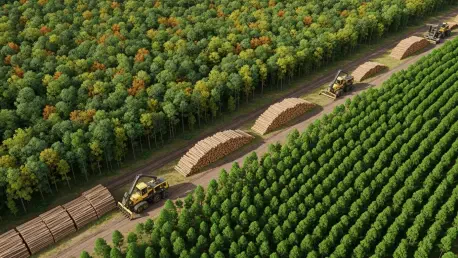
The conversion of standing timber into high-density fuel begins with a process that is far from low-carbon, involving the clear-cutting of vast swaths of forest followed by energy-intensive manufacturing. Once trees are felled, they must be transported to processing plants where heavy machinery grinds and dries the wood at high temperatures to create uniform pellets. This mechanical refinement requires significant amounts of energy, often powered by fossil fuels, which adds an immediate carbon debt to the final product before it even leaves the facility. Furthermore, when these pellets are ultimately burned in European or Asian power stations, they release a higher concentration of carbon dioxide per unit of electricity generated than traditional coal. The industry argues that new tree growth will eventually reabsorb these emissions, but this recovery process can take several decades or even a century. Such a delay is increasingly problematic as global efforts to stabilize the atmosphere require immediate and drastic reductions in greenhouse gas outputs.
The logistical chain required to move millions of tons of biomass across the Atlantic and Pacific Oceans further complicates the environmental claims of the wood pellet industry. Massive cargo ships, which are among the largest emitters in the transportation sector, carry these pellets thousands of miles, burning heavy fuel oil and releasing additional pollutants along the way. When the full lifecycle of the product is analyzed—from the initial diesel-powered harvest to the transoceanic shipping—the purported carbon savings often evaporate entirely. Scientists have pointed out that treating wood as a carbon-neutral resource relies more on accounting loopholes than on actual atmospheric physics. By ignoring the emissions from harvesting and transportation, international agreements allow companies to claim green credits while the atmosphere continues to warm. This disconnect between policy and science has allowed the biomass sector to expand rapidly across Mississippi, fueled by international demand that views the state’s forests as a bottomless fuel tank rather than a complex carbon sink.
Habitat Degradation: Ecological Consequences and Biodiversity Loss
The rapid expansion of wood pellet production has led to a significant transformation of Mississippi’s landscape, as diverse, naturally occurring forests are increasingly replaced by monoculture pine plantations. These industrial forests are designed for maximum yield and quick rotation, meaning they lack the complex layers of vegetation and aging trees that support a wide variety of wildlife. Many native bird species, amphibians, and mammals that depend on the intricate ecosystems of older forests find themselves displaced when their habitats are leveled to meet production quotas. This loss of biodiversity is not a temporary setback but a long-term degradation of the state’s natural heritage. As the variety of plant and animal life dwindles, the entire ecosystem becomes more fragile and less capable of adapting to environmental stressors. The replacement of a thriving, multi-species forest with a single-species crop might serve the needs of industrial processing, but it fails to provide the essential ecological services that the residents of Mississippi have relied on for generations.
Beyond the loss of wildlife habitat, the large-scale removal of mature timber has a profound impact on the state’s hydrology and soil stability. Natural forests act as a giant sponge, absorbing rainwater and preventing the rapid runoff that leads to severe erosion and downstream flooding. When these forests are clear-cut for pellet production, the exposed soil is easily washed away during heavy storms, clogging local waterways with sediment and destroying aquatic habitats. This loss of natural flood protection is particularly concerning as weather patterns become more volatile, leading to more frequent and intense precipitation events. Additionally, the industrial use of fertilizers and pesticides on pine plantations to accelerate growth can leach into the groundwater, posing risks to the drinking water supplies of nearby rural communities. By prioritizing the short-term extraction of timber for fuel, the industry is effectively stripping the land of its natural defenses and leaving the region more vulnerable to environmental disasters. The ecological cost of these operations is a burden that will be carried by the local environment long after the current harvest is over.
Sacrifice Zones: Health Hazards in Residential Communities
In towns like Gloster, the daily reality for residents living near wood pellet facilities is defined by the constant presence of industrial pollutants and fine particulate matter. These plants operate around the clock, releasing a steady stream of wood dust and chemical emissions that include volatile organic compounds like formaldehyde and nitrogen oxides. For those living in close proximity, the air often carries a thick, sweet smell or a gritty texture that coats homes and vehicles, making it difficult to spend time outdoors. Health surveys in these areas have indicated a troubling prevalence of respiratory illnesses, including chronic asthma and bronchitis, which disproportionately affect children and the elderly. The fine dust particles are small enough to enter the bloodstream directly through the lungs, contributing to increased risks of heart disease and other systemic health issues. While the facilities may technically meet certain regulatory standards, the cumulative impact of living in the shadow of such a massive industrial operation has created what many call sacrifice zones, where the health of the population is secondary to production goals.
The social and psychological toll of this industrial encroachment is equally significant, as families find their quality of life eroded by noise, traffic, and the fear of long-term health consequences. Many residents in rural Mississippi have deep roots in their communities and lack the financial resources to relocate, leaving them trapped in environments that they feel are making them sick. Local clinics and hospitals have seen an uptick in emergency room visits related to respiratory distress during periods of high facility activity, placing a further strain on already limited healthcare infrastructure. Despite numerous complaints and grassroots efforts to demand better oversight, many residents feel that their voices are being ignored by both the corporations and the state regulators tasked with protecting them. This sense of powerlessness is compounded by the fact that the energy produced from these pellets is destined for consumers thousands of miles away who will never witness the local fallout. The industry’s presence has transformed once-quiet residential areas into industrial corridors, where the hum of machinery and the dust of the forest are a constant reminder of the high price paid for green energy.
The Subsidy Paradox: Economic Disparities in Rural Regions
A central argument used to justify the wood pellet industry’s expansion in Mississippi is the promise of economic revitalization and the creation of much-needed jobs in rural counties. However, the modern wood pellet plant is a highly automated facility that requires relatively few workers to maintain operations compared to the massive scale of its physical footprint. While some temporary construction jobs are created during the building phase, the permanent workforce is often small and consists of specialized roles that may not always be filled by local residents. This stands in stark contrast to the traditional timber industry, which historically supported a broader range of local businesses and workers. Furthermore, the reliance on automation means that as production increases, the number of employees does not necessarily grow at the same rate, limiting the industry’s ability to act as a true engine of local economic growth. Instead of fostering a diverse and resilient local economy, the industry creates a specialized enclave that extracts value from the state’s natural resources without providing a proportional benefit to the people who live near the harvesting sites and processing facilities.
The financial landscape of the wood pellet industry is heavily shaped by significant government subsidies and tax incentives that often dwarf the direct economic benefits provided to the state. In many cases, companies have received tens of millions of dollars in taxpayer-funded grants and exemptions from property taxes, which are intended to encourage industrial development. These subsidies essentially mean that Mississippi residents are paying to support an industry that exports the state’s natural wealth while simultaneously degrading local air quality and infrastructure. When these tax breaks are factored in, the net economic gain for the community becomes even more questionable, as local governments are left with less revenue to fund schools, roads, and emergency services. Additionally, the hidden costs of the industry—such as the repair of rural roads damaged by heavy log trucks and the increased public health expenditures—are often externalized onto the taxpayers. This creates a parasitic economic model where the profits are privatized by international corporations while the long-term liabilities and costs are socialized among the residents of one of the poorest regions in the United States.
Historical Perspectives: Strategic Shifts Toward Preservation
The realization that the wood pellet industry imposed significant burdens on Mississippi led to a shift in how policymakers and local leaders approached forest management and industrial oversight. To address these challenges, many advocates proposed a transition away from biomass incentives toward the direct protection and restoration of natural hardwood and pine forests. They emphasized that preserving intact ecosystems offered more long-term value through carbon sequestration, water filtration, and eco-tourism than could ever be gained from short-term fuel production. Legal frameworks were adjusted to require more rigorous environmental impact assessments that accounted for the total lifecycle emissions of biomass energy. Furthermore, community groups worked to secure stricter air quality monitoring around existing facilities, ensuring that public health was no longer treated as a secondary concern. These efforts aimed to move Mississippi toward a future where natural resources were conserved as a public trust rather than exploited for international trade. By valuing the standing forest for its ecological complexity, the state began to reclaim its role as a leader in genuine environmental stewardship.
Economic strategies also evolved as communities sought more sustainable ways to support rural development without compromising their health or natural heritage. Diversifying the local economy became a priority, with investments flowing into sectors like small-scale sustainable timber products, renewable solar energy, and regional agricultural initiatives. These alternatives provided more consistent and equitable job growth while keeping the financial benefits within the state rather than sending them to overseas shareholders. Tax incentive programs were restructured to favor businesses that demonstrated a long-term commitment to community health and environmental transparency. Public-private partnerships focused on reforesting degraded lands with diverse native species, helping to rebuild the biodiversity that had been lost during the height of the wood pellet boom. These collective actions demonstrated that a prosperous economy did not have to come at the expense of the environment. By prioritizing the well-being of its citizens and the integrity of its landscapes, Mississippi laid the groundwork for a more resilient and self-sufficient path forward. This historical shift proved that protecting the heart of the state’s natural identity was the most profitable investment of all.