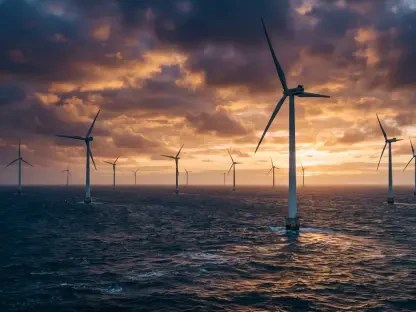

The rapid expansion of wind and solar capacity across the vast Kazakh steppe has fundamentally rewritten the national industrial blueprint, yet the true challenge now lies in anchoring this volatile power to a grid originally designed for the predictable baseload of the coal era. As the nation moves deeper into its energy transition, the focus has shifted from the mere installation of green megawatts toward a sophisticated strategy of system resilience. Authorities now recognize that while wind and solar provide the volume, hydropower must provide the stability required to maintain a functioning modern economy. This shift signifies a pivot to a system-first approach where reliability is no longer an afterthought but the primary driver of infrastructure investment.
The Foundation of Kazakhstan’s Energy Transformation
From Intermittent Generation to System Resilience
Kazakhstan is currently navigating a pivot from a fragmented expansion of renewable assets toward a holistic strategy that prioritizes grid stability over simple capacity growth. While the initial phase of the green shift was dominated by the rapid deployment of wind and solar farms, the government now views hydropower as the essential stabilizer for the national electricity supply. This transition is born from the realization that a modern, low-carbon economy cannot function on intermittent power alone. By focusing on water-based generation, the state is creating a buffer that can handle the natural fluctuations of other renewable sources.
The move toward system resilience also reflects a broader change in national energy policy, moving away from a coal-heavy baseload and toward a diversified, water-supported renewable mix. This evolution requires the national grid to become more flexible and responsive. Hydropower stations are uniquely capable of providing this flexibility, as they can be ramped up or down much faster than traditional thermal plants. Consequently, the integration of these assets is seen as the vital bridge between the carbon-intensive past and a fully decarbonized future.
Core Segments and Key Infrastructure Players
The industry is currently divided into three distinct segments: large-scale strategic facilities, small-scale hydroelectric retrofitting, and innovative pumped-storage projects. State-led initiatives remain the primary drivers for massive infrastructure, such as the Ugam River Cascade, which involves complex public-private partnerships designed to share both the financial burden and the technical risk. At the same time, regional authorities in areas like East Kazakhstan and the Zhetysu region are courting private investors to develop smaller, site-specific projects that can power local industries and communities.
These players are operating under a new mandate to transition the national grid away from its reliance on aging coal infrastructure. Private developers are increasingly looking at the potential of small-scale hydro because of its lower environmental footprint and faster permitting cycles compared to mega-dams. Meanwhile, the state continues to manage the larger, strategically significant rivers that require transboundary cooperation and massive capital outlays. This dual-track approach ensures that both large-scale industrial needs and local energy security are addressed simultaneously.
Technological Evolution and Strategic Growth Benchmarks
The Rise of Pumped-Storage and Digital Hydrological Mapping
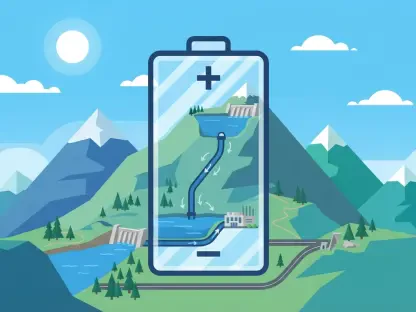
A major trend defining the current technological landscape is the adoption of pumped-storage technology, which functions as a massive natural battery to solve the problem of energy intermittency. By pumping water to elevated reservoirs during periods of low demand and releasing it during peaks, Kazakhstan is finally addressing the missing link in its energy transition. This technology allows the grid to store excess wind and solar energy that would otherwise be wasted, providing a reliable source of power when the sun is not shining or the wind is still.
Furthermore, the emergence of a national digital platform has begun to centralize hydrological and environmental data, significantly reducing information asymmetry for potential investors. This digital shift is streamlining the technical feasibility phase of new projects by providing real-time data on river flows and water levels. By digitizing these natural resources, the government has made it easier for engineers to design efficient turbines and for financiers to assess the long-term viability of hydroelectric investments.
Quantifying the 2035 Vision and Capacity Projections
The forward-looking Hydropower Development Plan through 2035 outlines a clear path to commission 8.4 gigawatts of total renewable capacity. The government has identified thirty specific measures to develop thirty new projects, which include both large-scale stations with capacities exceeding 1,000 megawatts and the retrofitting of twenty-nine existing hydraulic structures. This comprehensive roadmap is designed to ensure that the progress made in the wind and solar sectors is not undone by a lack of stabilizing infrastructure.
Clean energy has already become a significant part of the national generation mix, but the next decade will focus on the qualitative integration of these assets. The targets set for 2035 are not just about numbers; they represent a fundamental restructuring of how power is moved across the country. By maximizing the utility of existing water management assets, Kazakhstan is attempting to lower the overall cost of the transition while meeting its ambitious climate goals.
Navigating Geopolitical and Structural Hurdles
Financial Intensity and Environmental Constraints
Hydropower development faces significant obstacles, primarily the high capital intensity and long lead times required for construction. Unlike solar farms, which can be deployed in a matter of months, hydroelectric cascades often require years of environmental vetting and complex hydrological studies. The financial commitment required is substantial, and the return on investment is often measured in decades rather than years. This makes many projects difficult to finance without significant state support or international guarantees.
Additionally, the region faces the complex challenge of transboundary water management and increasing climate variability. Many of the rivers used for power generation originate outside of Kazakhstan’s borders, requiring delicate diplomatic negotiations with neighboring states. Climate change also introduces uncertainty regarding long-term river flows, which can affect the reliability of water-based generation. These factors require a highly sophisticated approach to resource management that goes beyond simple engineering.
Mitigating Risks through Public-Private Partnerships
To overcome these structural barriers, the government is focusing on bankability to ensure that projects remain attractive to international private capital. Strategies include creating investment-ready sites where the state has already performed the initial hydrological and environmental legwork. By reducing the upfront risk for private developers, the country is hoping to attract the technical expertise and capital needed for the most ambitious projects.
Public-Private Partnerships have emerged as the preferred vehicle for large-scale developments, such as the 191.7 billion tenge Ugam River project. These partnerships allow the state to maintain strategic control over water resources while leveraging the efficiency and innovation of the private sector. This collaborative model is essential for managing the high costs and technical complexities associated with building modern hydroelectric cascades in rugged terrain.
The 2035 Hydropower Development Roadmap and Legal Frameworks
Streamlining Regulation via the National Digital Platform
The regulatory landscape has been formalized through a series of legislative updates that clarify land-use rights and environmental impact evaluations. A central component of this regulatory shift is the mandatory use of the national digital platform, which serves as a transparent database for all technical and environmental compliance data. This system was designed to eliminate the bureaucratic bottlenecks that previously delayed infrastructure projects, providing a clear and predictable path for developers.
By centralizing the permitting process, the state has improved the overall investment climate. Investors can now access all necessary river basin assessments and hydrological data in one place, which reduces the time and cost associated with project preparation. This transparency is also intended to improve public trust in large-scale energy projects, as environmental data is more readily available for scrutiny by civil society and international monitoring bodies.
Compliance Standards and Strategic Infrastructure Status
New regulations have designated large-scale hydropower projects as strategic infrastructure, granting them priority in terms of state support and land allocation. This status ensures that these projects are protected from local administrative delays and are fast-tracked through the national planning process. Compliance measures have also been tightened regarding water conservation, ensuring that projects serve dual purposes such as providing drinking water or irrigation alongside electricity generation.
This multi-functional regulatory approach ensures that energy projects contribute to broader national resource security rather than just electricity production. For example, the Ugam River Cascade was designed to provide 110 million cubic meters of drinking water annually while simultaneously generating power. This integrated approach to resource management makes projects more socially acceptable and economically viable in the long term.
Toward a Resilient and Decarbonized National Grid
Transitioning from Quantity to Quality in Energy Assets
The future of the energy sector lies in the shift from simply adding more green megawatts to building a sophisticated, flexible grid. Hydropower is expected to move from a supporting role to a central pillar of the energy mix, providing the steady baseload required to allow further expansion of wind and solar. This transition represents a shift in focus toward the quality of energy assets, prioritizing those that offer the greatest contribution to system stability and grid health.
Innovation in small-scale hydro and the integration of storage solutions will be the primary drivers of growth over the coming years. As the grid becomes more decentralized, small hydroelectric plants can provide localized energy security for remote regions, reducing the need for expensive long-distance transmission lines. This localized approach also helps to mitigate the impact of climate change by making the energy system more modular and resilient to regional disruptions.
Emerging Opportunities in Regional Energy Integration
As the grid stabilizes, there is significant potential for Kazakhstan to become a regional hub for green energy exports within Central Asia. The development of large-scale cascades and the modernization of existing hydraulic structures provide a blueprint for neighboring states facing similar energy challenges. By exporting surplus green electricity during periods of high water flow, the country can generate significant revenue while helping its neighbors meet their own decarbonization targets.
Future growth will likely be concentrated in high-capacity storage and the digital management of water resources to combat the effects of regional climate shifts. The ability to coordinate energy production across borders will be essential for managing the shared river basins of Central Asia. This regional integration not only improves energy security but also fosters political stability by creating a shared interest in the sustainable management of water resources.
Securing the Bedrock of Kazakhstan’s Sustainable Future
The comprehensive review of the national energy landscape demonstrated that hydropower stood as the most viable solution for balancing ambitious renewable targets with the practical necessity of grid reliability. The analysis found that by investing in dispatchable power and long-term storage, the government successfully mitigated the risks of intermittency that had previously threatened the green shift. It was determined that the 2035 roadmap provided the necessary data-driven path to integrate these water-based assets into the national architecture effectively.
Strategic findings indicated that the focus had to remain on the bankability of projects and the timely execution of the national digital platform to maintain investor confidence. The assessment concluded that the East Kazakhstan and Zhetysu regions were established as the primary growth areas for both large and small-scale developments. Ultimately, the successful stabilization of the grid was identified as a result of maintaining a stable regulatory environment and managing transboundary water agreements with high diplomatic precision, ensuring that hydropower functioned as the resilient bedrock of a decarbonized future.