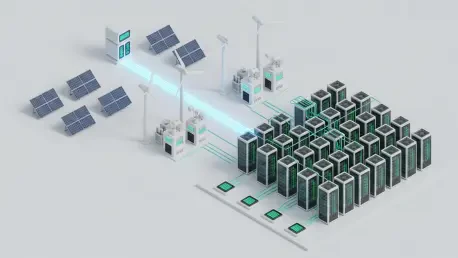

The rapid expansion of artificial intelligence is currently colliding with a fossilized electrical grid that cannot keep pace with the massive energy demands of modern high-compute facilities. This friction has triggered a fundamental decoupling of digital growth from centralized utility schedules. Hyperscalers such as Amazon and Microsoft are no longer content waiting for grid updates; they are instead pioneering a behind-the-meter movement that treats energy as a core part of the architectural stack.
As workloads for generative models intensify, the mismatch between digital speed and industrial-age infrastructure has reached a breaking point. Microgrids and localized storage are now the primary defense against localized brownouts and connection delays. This transition effectively transforms data centers from energy sinks into sophisticated energy nodes that can sustain their own operations.
The New Energy Paradigm: Decoupling Digital Infrastructure From a Stagnant Grid
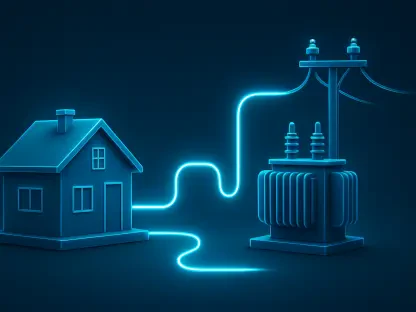
The traditional reliance on centralized utilities is fading as tech giants prioritize speed to market over legacy connection methods. By generating power on-site, companies bypass the years of bureaucracy inherent in expanding public infrastructure. This move toward localized generation represents a strategic shift where energy control is viewed as a competitive advantage.
Surging artificial intelligence workloads require a density of power that many regional grids simply were not designed to support. Consequently, the industry is witnessing an explosion in microgrid technology and high-capacity battery storage. These systems allow facilities to maintain high-performance levels while insulating the broader community from the massive draws of high-compute clusters.
Analyzing the Surge in Distributed Energy Resources and Market Growth
Strategic Adoption of Microgrids, On-Site Solar, and Virtual Power Plants
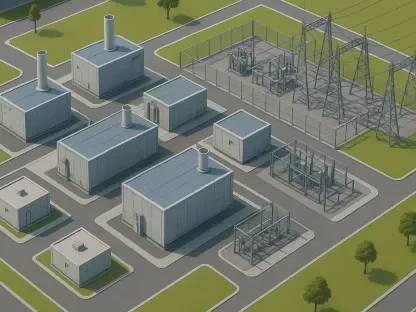
Approximately 56 GW of on-site capacity is currently in development across the United States, signifying a massive investment in independence. Tech leaders are integrating localized solar arrays with residential battery networks to create virtual power plants that supplement industrial needs. This decentralized approach creates immediate grid headroom and provides a buffer during peak usage.
Regional innovation is concentrated in hubs like Texas and New Mexico, where land and solar resources are plentiful. These locations allow for the rapid deployment of self-sustaining data hubs that can operate with minimal grid interference. By utilizing demand-response tools, these facilities can even feed power back to the grid when it is most vulnerable.
Quantifying the Interconnection Crisis and Future Capacity Projections
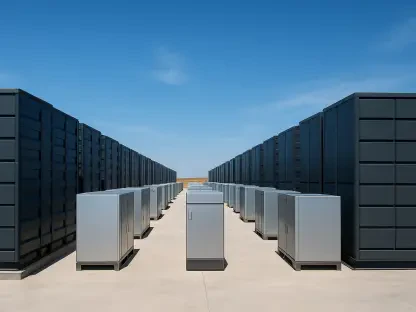
The national interconnection queue has reached a staggering 2,200 GW, which dwarfs the current installed capacity of 1,400 GW. This bottleneck makes it nearly impossible for new facilities to rely on traditional timelines. In response, Battery Energy Storage Systems have become a standard component of data center design to ensure 24/7 uptime without total grid dependence.
While investor-owned utilities have proposed a $1.1 trillion investment plan through 2029, the actual delivery of high-voltage transmission remains slow. This financial commitment is necessary but insufficient to meet the immediate, ravenous demand of AI-driven industries. Data center developers are therefore forced to act as their own utility providers to bridge the gap.
Navigating the Transmission Bottleneck and Infrastructure Deadlocks
High-voltage transmission projects are currently mired in decade-long timelines that prevent rapid scaling of centralized power. These delays are often caused by complex permitting processes and aging grid architectures that struggle with modern loads. To combat this, developers are turning to Grid-Enhancing Technologies to improve the efficiency of existing lines.
Overcoming these deadlocks requires a blend of technical innovation and creative site selection. By situating data centers near underutilized power sources or existing industrial corridors, developers can bypass some of the worst queue jumps. This resilience strategy is essential for companies that cannot afford to wait for federal infrastructure projects to break ground.
Evolving Regulatory Landscapes and Fast-Track Interconnection Policies
Regulatory frameworks are beginning to shift in favor of facilities that bring their own generation to the table. The Southwest Power Pool, for instance, has implemented a 90-day connection fast-track for self-powered sites. Such policies incentivize the adoption of behind-the-meter renewable energy and reduce the burden on public utilities.
However, operating as an independent power producer comes with new compliance and security standards that data centers must navigate. Federal and state incentives are increasingly tied to the use of clean energy sources for these on-site builds. This alignment of policy and necessity is forcing a modernization of interconnection protocols across the industrial landscape.
The Road Ahead: Transforming Data Facilities Into Autonomous Energy Hubs
The future of digital infrastructure lies in the integration of small modular reactors and advanced geothermal energy directly into data center footprints. These technologies offer a path to carbon-neutral reliability that traditional solar and wind cannot always provide. As these facilities become more autonomous, the relationship between technology firms and public utilities will be fundamentally redefined.
Emerging innovations in long-duration energy storage and hydrogen fuel cells will likely provide the final pieces of the energy puzzle. As the United States shifts toward this decentralized architecture, it will create a more resilient national energy profile. This evolution is expected to have deep economic impacts, securing America’s position as a leader in the next phase of the digital era.
Strategic Imperatives for a Decentralized Digital Infrastructure
Developers prioritized energy autonomy and localized storage to mitigate the inherent volatility of the legacy grid. This strategic pivot ensured that digital infrastructure remained resilient despite the stagnation of centralized transmission. Investors increasingly favored grid-independent real estate as a safer asset class for the next decade of AI growth. These initiatives collectively laid the groundwork for a more robust and self-reliant digital economy.