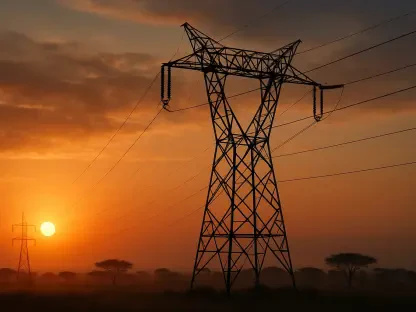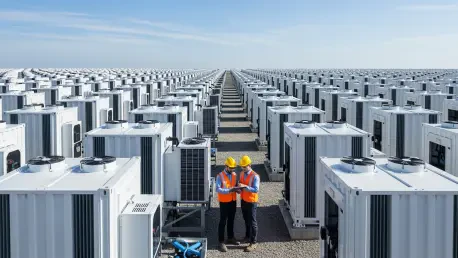

The transformation of a standard industrial container into a pressurized vessel of electrochemical energy holding enough power to sustain an entire city district represents the most significant shift in power management since the invention of the AC grid. As the global power infrastructure undergoes a fundamental move toward decentralization and decarbonization, Battery Energy Storage Systems (BESS) have emerged as the primary solution for a modernized electricity market. Originally used as niche tools for localized backup power, these systems are now mission-critical components that support national energy security. This evolution is largely fueled by the relentless growth of energy-intensive data centers and the increased integration of intermittent renewable sources like wind and solar, which require robust storage to stabilize the fluctuating supply of electricity.
The High-Stakes Shift From Backup Power to Essential Grid Infrastructure
The move toward decentralized energy systems requires a complete rethinking of how electricity is moved and stored across the country. While traditional grids relied on centralized fossil fuel plants, the current push for global decarbonization necessitates a distributed network of high-capacity storage units. These assets function as a massive buffer, allowing the grid to handle the inherent instability of weather-dependent energy generation. Consequently, the role of a BESS has expanded from a simple fail-safe mechanism to a primary infrastructure asset that manages the flow of power for entire communities rather than just single buildings.
Utility providers and facility managers now find themselves managing gigawatt-scale installations that carry a much higher risk profile than the small-scale projects seen just a few years ago. Specialized insurance engineers are increasingly involved in the early stages of design to ensure that these large-scale deployments do not become liabilities for the communities they serve. The shift from localized megawatt solutions to massive community-wide infrastructure has forced a change in how physical safety and operational integrity are perceived across the energy industry.
Analyzing the Momentum of Global Battery Deployment
Economic Drivers: Leveraging Energy Arbitrage and Grid Reliability
Financial volatility in the energy markets has turned battery storage into a highly profitable investment for utility companies and private equity. By utilizing energy arbitrage, operators can store electricity during periods of low demand or high renewable production and sell it back to the grid when prices spike. This economic model not only generates revenue but also stabilizes the market by reducing the need for expensive and polluting “peaker” plants that traditionally handled demand surges.
Beyond the simple buy-low-sell-high dynamic, BESS assets provide critical reliability services such as frequency regulation to maintain grid balance. These services ensure that the electrical frequency of the grid remains within safe limits, preventing wide-scale equipment damage and rolling blackouts. Industrial consumers are also pivoting toward on-site storage to insulate their operations from grid fluctuations, ensuring that business continuity remains uncompromised during unexpected regional outages or extreme weather events.
Scaling for the Future: Projected Growth and Capacity Metrics
The velocity of global battery deployment is difficult to overstate as the technology matures and manufacturing costs fall. Current market data shows that the industry has moved well past its initial growing pains, reaching a current capacity of approximately 15 gigawatts as of 2026. This represents a massive leap in infrastructure development, as a single gigawatt is often enough to power hundreds of thousands of homes simultaneously. The trajectory for the remainder of the decade shows no signs of slowing down, with projections suggesting that the total global capacity will double by 2030.
Regional growth remains particularly strong in North America, where power infrastructure expansion is a top priority for both the government and the private sector. Long-term performance indicators suggest that as battery efficiency increases, BESS will become the standard requirement for all new utility-scale power projects. This scaling effort is not just about quantity; it is about building a resilient, long-term energy backbone that can withstand the increasingly complex demands of a high-tech society.
Identifying the Primary Catalysts for Thermal and Operational Failure
The physics of lithium-ion technology presents a unique set of challenges, most notably the risk of thermal runaway in densely packed modules. This chemical phenomenon occurs when a cell enters a state of self-heating that can lead to fire or explosion if not properly managed by the thermal systems. Because these systems are so tightly integrated, a single cell failure can quickly escalate into a cascading event that consumes an entire facility. The intense chemical energy stored within these units means that conventional firefighting techniques are often insufficient to halt the progression of the blaze.
Reignition remains one of the most hazardous aspects of lithium-ion fires that emergency responders must face during an incident. Even after an initial blaze is suppressed, damaged cells can retain enough latent energy to spark a secondary fire hours or even days later. This requires a rethink of site security and emergency response protocols, moving away from immediate extinguishment toward long-term thermal stabilization of the entire unit. Operators must prioritize advanced cooling systems that can draw heat away from the battery modules as soon as a thermal event is detected.
Furthermore, the Battery Management System (BMS) acts as a critical single point of failure within the electronic architecture of the unit. If the sensors or software within the BMS fail to accurately report cell health, the system may allow a battery to operate outside of its safe parameters. Modern risk mitigation strategies now focus on the BMS as both a protector and a potential vulnerability, requiring rigorous software redundancy and digital oversight to prevent logic errors from causing physical damage to the asset.
Strengthening Safety Standards and the Engineering Risk Landscape
Compliance with evolving electrical codes is no longer a matter of checking boxes; it is a fundamental part of asset preservation in the modern market. As fire safety standards become more stringent, engineers are moving toward an engineering-first model of risk transfer that prioritizes physical resilience. This approach emphasizes understanding the physical failure modes of the hardware to design better protection systems rather than relying on insurance alone. Regular physical audits and routine inspections have become mandatory protocols to identify latent mechanical defects before they lead to an operational disaster.
The digital side of battery management also requires robust security measures to prevent operational disruptions from external or internal threats. Protecting battery controls from data lag and unauthorized access is essential, as even a minor delay in the response time of a cooling system can result in severe thermal damage. By establishing secure, low-latency communication networks between battery sites and control centers, operators can ensure that safety protocols are executed in real-time without the risk of system interference.
Anticipating Technological Disruptors and the Evolution of Grid Resilience
The integration of artificial intelligence is revolutionizing how battery lifecycles are managed and monitored on a global scale. By using advanced analytics to monitor cell degradation, operators can identify weak signals that indicate a component is likely to fail in the near future. This shift toward predictive maintenance allows for targeted repairs that minimize downtime and extend the total operational life of the storage system. As these AI models become more sophisticated, they will be able to optimize charging cycles to maximize both profit and safety.
Emerging battery chemistries, such as solid-state or flow batteries, also hold the potential to disrupt the current dominance of lithium-ion systems. These alternative technologies offer different safety profiles and energy densities, which could mitigate some of the thermal risks currently plaguing the industry. However, the existing lithium-ion supply chain remains the most stable, meaning that the transition to new chemistries will likely be a gradual process influenced by global economic conditions and raw material availability.
Synthesizing Risk Mitigation Strategies for a Secure Energy Future
The industry recognized that the dual necessity of robust physical engineering and sophisticated digital monitoring was non-negotiable for long-term viability. Operators adopted proactive, data-integrated models of resilience that prioritized real-time intervention over reactive maintenance. By synthesizing these diverse safety protocols, the sector ensured that the investment outlook remained positive despite the inherent technical risks of the technology. Stakeholders successfully balanced the pressing demand for green energy with the rigorous technical scrutiny required to protect large-scale assets from failure. Ultimately, the systematic implementation of these engineering solutions solidified the role of BESS as the undeniable backbone of a stabilized and fully decarbonized power grid.