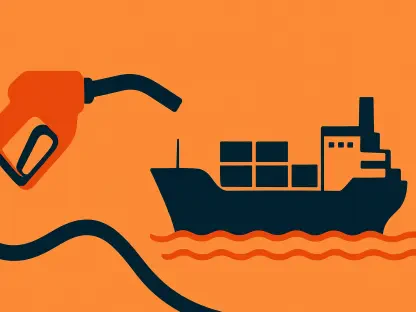

The October 2026 enforcement action demonstrates a significant shift toward the active monitoring of outbound trade to ensure compliance with evolving Export Administration Regulations. This aggressive interception of 90 biodiesel shipments, valued at approximately $2.8 million, represents a pivotal moment for domestic biofuel producers who have increasingly looked toward international markets for expansion. Centered at high-traffic logistical hubs like Port Everglades in Florida and the Port of Houston in Texas, the seizure of over 615,000 gallons of fuel has sent shockwaves through the agricultural export community. Federal authorities have clarified that the primary objective was to prevent unauthorized materials from reaching sanctioned entities. However, the complexity of the case suggests a much deeper tension between renewable energy goals and geopolitical restrictions. This incident serves as a stark warning that even environmentally friendly commodities are not immune to the rigors of national security protocols and trade embargoes.
Federal Scrutiny: The Role of Intermediaries
Homeland Security Investigations and U.S. Immigration and Customs Enforcement orchestrated the operation following a comprehensive period of data analysis and intelligence gathering that intensified throughout September. Of the 90 total shipments identified, 71 were formally seized at Port Everglades while 19 remain detained in Houston pending a more granular investigation into their ultimate destination. The core legal concern revolves around the International Emergency Economic Powers Act. Officials are probing whether the transactions were structured to bypass federal sanctions by utilizing state-controlled channels. Investigators are currently dissecting the electronic manifests and financial trails. They want to determine if there was a deliberate attempt to mask the identity of the end-user. This level of technical scrutiny indicates that federal agencies are no longer relying solely on self-reported documentation. Instead, they are employing advanced forensic tools to verify trade compliance.
At the heart of this legal dispute is Enetec S.A., a state-owned Cuban enterprise that functions as a wholesale importer and exporter. Federal officials have identified the involvement of this entity as a major red flag, suggesting that the fuel was destined to bolster the Cuban government’s energy reserves rather than supporting the local populace. Conversely, representatives for the exporters have argued that the biodiesel was specifically intended for private Cuban entrepreneurs who have recently been granted certain trade concessions by the U.S. Treasury. This conflict highlights a critical compliance gap where the use of state-owned logistics hubs, often the only available infrastructure in restricted nations, complicates the verification of private-sector end-users. The resolution of this case will likely hinge on the look-through approach. This legal standard seeks to identify the true beneficiary of a transaction regardless of the intermediaries involved in the delivery process.
Economic Repercussions: The Agricultural Sector
The immediate impact of the seizure extends far beyond the shipping docks, directly affecting American soybean farmers who provide the primary feedstock for biodiesel production. When significant export volumes are suddenly halted, it creates localized inventory surpluses. These surpluses can depress prices at the farm gate and disrupt the finely tuned operations of regional crushing facilities. For agricultural cooperatives, the detention of $2.8 million in product represents a significant loss of liquidity. It highlights the commercial risk associated with entering markets that are subject to volatile political climates. Even when a product is produced in full compliance with domestic environmental standards, the regulatory environment of the destination country can jeopardize the entire capital investment. This situation underscores a harsh reality. Market access is not just a matter of production efficiency or fuel quality; it is also fundamentally tied to the stability of international trade agreements.
Beyond the immediate supply chain disruptions, the enforcement action has introduced a new layer of market volatility and rising overhead costs for biofuel traders. Companies are now finding it necessary to implement more rigorous Know Your Customer protocols and advanced sanctions screening technologies to mitigate the risk of federal detention. These increased compliance requirements translate into higher administrative costs, which can tighten the profit margins for small and medium-sized renewable energy firms. The industry is beginning to recognize that the cost of doing business in restricted zones now includes a mandatory premium for legal defense and risk management. As federal agencies continue to refine their monitoring of outbound cargo, the ability to demonstrate a transparent and verified supply chain is becoming a competitive necessity. For many in the biofuel sector, the challenge is no longer just about optimizing chemical yields, but about navigating a high-stakes legal landscape.
Strategic Compliance: A Dual-Track Policy Environment
The 2026 seizure reflects a broader shift in federal strategy, moving away from a primary focus on incoming contraband toward a more stringent vetting of American exports. This evolution is particularly challenging due to the dual-track policy that seeks to isolate the Cuban government while simultaneously creating pathways for private-sector economic support. This creates a regulatory minefield where even a minor administrative error or the inadvertent use of a state-owned port facility can trigger a massive federal investigation. Exporters are finding that traditional paperwork, such as a general authorization from the Office of Foreign Assets Control, may no longer provide sufficient protection if the logistical chain involves any sanctioned intermediaries. The government’s expectation for deep-dive audits of every transaction link has placed an unprecedented burden on the logistics departments of American energy companies, requiring them to operate with forensic precision.
In the wake of these events, the industry moved toward a model of integrated legal and logistics management to safeguard future shipments. Companies that successfully navigated these challenges prioritized the implementation of real-time tracking and verified end-user certification programs to bypass state-controlled intermediaries. The investigation into the seized fuel established a clear precedent that the identity of the end-consumer was just as critical as the chemical integrity of the renewable energy being exported. Strategic adjustments included the development of direct-to-consumer delivery networks that minimized contact with sanctioned government entities, thereby reducing the risk of federal interception. This period of intense scrutiny ultimately forced American producers to become as proficient in international trade law as they were in agricultural production. By focusing on transparency and rigorous verification, the biofuel sector began to build more resilient export frameworks that aligned with both foreign policy mandates.