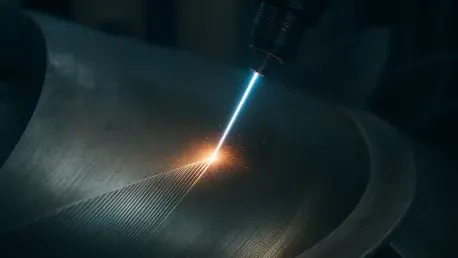

The process of laser micro-cladding and in-line monitoring ensures that complex three-dimensional geometries like turbine guide vanes can be precisely functionalized for better performance. This technological leap comes at a time when the renewable energy sector is pivoting from large-scale structural redesigns toward the mastery of microscopic surface physics. Hydropower, a cornerstone of the global energy grid for over a century, has reached a level of maturity where gains are often found in the margins of fluid dynamics. By integrating biomimetic structures directly into turbine components, engineers are now able to influence the behavior of water at the boundary layer, where traditional designs often lose energy to friction and turbulence. The shift towards such high-precision engineering signifies a departure from conventional manufacturing, focusing instead on how nature has already solved the problem of drag. This approach represents a synthesis of biology and advanced laser physics aimed at maximizing power output from existing water resources.
Biomimetic Principles and Fluid Management
Nature has refined the efficiency of aquatic movement over millions of years, resulting in specialized structures like the microscopic ridges found on shark skin, commonly referred to as riblets. These tiny, aligned channels are far more than evolutionary curiosities; they serve as sophisticated fluid management systems that manipulate the water flowing over an organism’s body. In an industrial hydropower context, these riblets are designed to interact with the boundary layer—the extremely thin region of fluid immediately adjacent to the turbine blade’s surface. By maintaining a more stable and attached flow, these micro-grooves effectively reduce the shear stress exerted by the water on the metal. This management of the fluid environment is critical because even a slight reduction in wall friction can translate into significant cumulative energy savings over the lifespan of a turbine. The primary goal is to keep the water moving smoothly across the blade surface for as long as possible to improve efficiency.
Preventing the onset of flow separation is perhaps the most significant advantage offered by these bio-inspired riblet structures. In standard turbine operations, water often peels away from the blade surface, creating zones of chaotic turbulence that sap kinetic energy and reduce overall efficiency. These parasitic losses are particularly problematic in older or less optimized turbine designs where fluid detachment occurs frequently. By etching these microscopic grooves onto the hardware, engineers can induce a more orderly flow pattern that resists the tendency of the water to become detached under pressure. This mechanism ensures that the kinetic energy of the water is more effectively transferred to the mechanical rotation of the turbine runner. Beyond simple efficiency gains, managing these fluid dynamics also helps in reducing the structural vibrations associated with turbulent flow, potentially extending the operational life of the machinery while simultaneously boosting its total output for the grid.
The BILASURF Collaborative Framework
The BILASURF project represents a massive collaborative effort involving ten major partners across the European technology value chain. This initiative was structured to bridge the gap between biological theory and industrial application, requiring a diverse range of expertise spanning fluid dynamics, laser physics, and manufacturing engineering. Coordination was handled by Ceit, while partners like Fraunhofer IWU and the Workshop of Photonics provided the specialized hardware and software necessary for laser micro-structuring. The project aimed to create a reproducible industrial process that could be scaled for large-scale energy infrastructure. This collaborative framework ensured that every technological challenge, from the initial surface design to the final experimental validation, was addressed by specialists. By pooling these resources, the consortium was able to move rapidly from conceptual blueprints to the creation of functional industrial demonstrators for clean energy production systems.
Before any physical metal was treated with lasers, the project relied heavily on advanced Computational Fluid Dynamics to model the performance of various riblet geometries. Experts at Bionic Surface Technologies utilized these simulations to predict how water would behave when encountering different micro-structure heights and spacings. This virtual testing phase was essential for identifying the most efficient designs for specific hydraulic conditions, allowing the team to refine the riblets before the costly manufacturing phase began. The simulations provided a roadmap for the laser processing parameters, ensuring that the final physical patterns were optimized for the exact flow speeds and pressures found in Francis turbines. This rigorous digital approach significantly reduced the trial-and-error period typically associated with new surface treatments. Furthermore, it allowed the researchers to visualize the interaction between the textured surfaces and the surrounding fluid with high precision.
Advancements in Laser Functionalization
A persistent challenge in surface engineering for hydropower is the extreme durability required to withstand the high-velocity, high-pressure environments inside a working turbine. Traditional coatings or adhesive films, which might work well in aeronautical or maritime applications, are often prone to peeling, erosion, or catastrophic failure when subjected to the relentless forces of flowing water. To address this, the BILASURF initiative pioneered a high-rate laser process that engraves the biomimetic riblet patterns directly into the metallic substrate of the component. This method ensures that the functional micro-structures are an integral part of the hardware’s geometry rather than a superficial layer that can degrade over time. By using high-precision lasers to remove material at a microscopic level, the project achieved a level of durability that far exceeds conventional application methods. This robustness is critical for maintaining performance gains throughout the decades-long turbine lifespan.
Applying these intricate microscopic patterns to the complex, three-dimensional surfaces of turbine components presented a significant technical hurdle. The curved surfaces of a turbine’s runner and the varying angles of its guide vanes require a laser system capable of maintaining focus and precision across non-linear geometries. The project utilized advanced in-line monitoring and laser micro-cladding techniques to ensure that the riblets were applied with uniform accuracy regardless of the surface contour. This capability for complex functionalization represents a major advancement in manufacturing technology, moving beyond flat-surface processing into the realm of true industrial-scale 3D surface engineering. While the process of engraving such large and intricate parts remains time-consuming, the project proved that it is technically feasible to treat the internal components of a turbine without compromising their structural integrity. This breakthrough opens the door for a new generation of smart surfaces in hydropower.
Experimental Validation and Scaling
To validate the theoretical gains identified in the simulation phase, the research team employed a reduced-scale model of a Francis turbine provided by GLOBAL Hydro. As one of the most widely used turbine types in medium- and high-head hydropower facilities, the Francis turbine was an ideal candidate for testing the real-world impact of bio-inspired surfaces. These machines operate using a series of adjustable guide vanes that direct the water flow into a rotating runner, where the kinetic energy is converted into mechanical torque. The experimental campaign was designed to measure how the inclusion of riblets on these components would affect the overall hydraulic efficiency of the system. By using a standardized model, the researchers could compare the performance of the textured components against traditional smooth surfaces under controlled laboratory conditions. This phase of the project was crucial for moving from isolated component testing to a holistic understanding of how these surfaces behave in dynamic assemblies.
One of the most nuanced challenges in hydraulic engineering is the process of transposing results from a small laboratory model to a full-scale industrial prototype. In standard practices, formulas like IEC 60193 are used to predict how uniform surface roughness will affect a turbine’s performance when scaled up. However, the shark skin riblets introduced a new layer of complexity because they are anisotropic, meaning their influence is highly dependent on their orientation. The BILASURF project highlighted a significant deficiency in existing international standards, which currently lack the mathematical framework to accurately scale the effects of such directional micro-structures. To address this, the SuperGrid Institute conducted tests on hydrofoil profiles at different scale factors to observe how the water’s response changed with size. These experiments confirmed that the hydraulic benefits of riblets are exceptionally sensitive to scale, suggesting that a geometry that works on a model requires meticulous recalibration.
Performance Results and Strategic Roadmap
The most compelling evidence of the riblets’ effectiveness emerged from high-precision tests conducted in low-flow water tunnels. These tests provided a clear demonstration that the bio-inspired profiles were capable of delaying the onset of flow separation, resulting in measurable improvements in hydraulic performance. Crucially, the researchers also monitored for cavitation—the formation of vapor bubbles that can erode metal surfaces. There was an initial concern that adding microscopic ridges might trigger or worsen cavitation behavior. However, the experimental results from the water tunnel tests were highly encouraging, showing no statistically significant difference in cavitation onset between smooth surfaces and those textured with shark skin riblets. This finding is of paramount importance for the industry, as it demonstrates that bio-inspired surface functionalization does not compromise structural integrity. By proving that these structures are cavitation-neutral, the project has removed a primary technical barrier for use.
The BILASURF project successfully established a credible roadmap for integrating biological design principles into the heart of modern energy infrastructure. It proved that laser-functionalization of complex industrial components was not only possible but also beneficial for optimizing fluid dynamics in hydropower systems. The initiative highlighted the runner as the primary target for future applications, as its role in power conversion made it the most impactful location for drag-reducing textures. Moving forward, the industry focused on establishing international standards for the scaling and transposition of anisotropic surfaces to simplify the design process for global manufacturers. Collaborative efforts between laser specialists and hydraulic engineers helped bridge the gap between two previously distinct fields of study. Ultimately, the research concluded that while the technology was still in its early stages of industrialization, the potential for incremental efficiency gains justified the investment. These advancements offered a path toward cleaner energy.