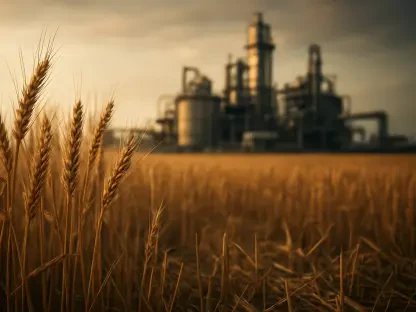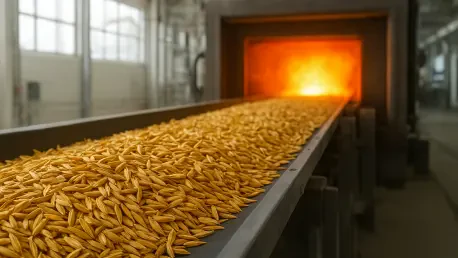

While traditional agricultural waste once clogged waterways and released methane into the atmosphere, the humble rice husk is now driving a sophisticated energy revolution that turns industrial by-products into high-value electricity. Integrating food processing with energy production has become a critical strategy for energy security in emerging economies. This shift highlights a broader movement toward industrial food processing and carbon reduction.
The Global Shift Toward Integrated Agricultural Hubs
Statistical Growth and Market Adoption Trends
The global biomass market expands from 2026 to 2028 as nations seek reliable alternatives to fossil fuels. In Vietnam, the Mekong Delta produces 24 million tonnes of paddy annually, creating a massive reservoir of fuel for decentralized power grids. These trends highlight a growing global preference for closed-loop industrial ecosystems.
Real-World Applications and Industrial Milestones
The Green CT Company facility in Can Tho exemplifies this transition with an annual processing capacity of 500,000 tonnes. A partnership with Japan’s Erex firm utilized 100,000 tonnes of husks to power 50,000 households, proving the feasibility of waste-to-energy logistics. This success served as a blueprint for 18 planned biomass plants nationwide.
Expert Perspectives on Circular Economic Models
Economic Stability for Producers
Deputy Chairman Le Cong Ly emphasized that integrated models provide a financial safety net for farmers and cooperatives. By utilizing every part of the harvest, producers gained economic stability. This model ensures that agricultural communities remain resilient even during market fluctuations.
Export Competitiveness
Sustainable certifications and green energy use significantly enhance the market value of agricultural exports. Trade experts suggested that reducing the carbon footprint of rice production makes local goods more competitive in global markets. This alignment with international green standards drives higher demand for premium exports.
Technological Integration
Industrial engineers focus on refining rice quality through modern technology while simultaneously capturing energy from by-products. This dual approach ensured that food production remains efficient while contributing to the energy grid. It turned a former waste management problem into a consistent revenue stream.
Future Projections and Multi-Industry Implications
Scalability and Expansion
This model offers high scalability for other major agricultural giants such as Thailand, India, or Brazil. Replicating these closed-loop systems globally supports regional energy independence and industrial modernization. Expansion into these markets will likely accelerate the global transition to renewable energy.
Environmental Impact vs. Infrastructure Challenges
While methane reduction from decaying waste is a major benefit, infrastructure challenges in high-volume biomass transport persist. Logistical hurdles remain the primary barrier to widespread adoption in rural regions. Solving these transport issues is essential for maximizing the environmental impact of biomass energy.
Evolution of Energy Grids
Future energy grids moved toward decentralized, biomass-led structures that supported both local industrial needs and residential power requirements. These systems prioritized regional resource management over centralized fossil fuel dependence. This evolution created a more stable and localized energy infrastructure.
Summary and the Path Forward
The link between sustainable food processing and renewable energy became a vital component of modern industrial policy. Leaders identified that the integration of agricultural biomass was a necessity for long-term environmental stewardship and energy security. Ultimately, the field-to-grid narrative redefined the trajectory of industrial growth in the global south.