
Local business leaders in Campbell County are evaluating how the addition of a nuclear fuel facility might leverage the region’s existing expertise in coal and uranium extraction. As the global energy landscape shifts toward carbon-neutral baseload power, Gillette stands at a pivotal crossroads where traditional mining heritage meets cutting-edge nuclear engineering. Kairos Power has emerged as a central figure in this transition, proposing a commercial-scale fuel manufacturing center that could redefine the local industrial base. This initiative is not merely about construction; it represents a strategic alignment between Wyoming’s natural resources and the next generation of energy production. By focusing on advanced nuclear technology, the project aims to capitalize on the state’s historical identity as an energy powerhouse while diversifying the economy against the volatility of fossil fuel markets. The proposed facility would serve as a vital link in the supply chain for a unique reactor design, potentially anchoring a new high-tech cluster in the heart of coal country.
1. Innovative Reactor and Cooling Technology
The proposed facility is designed to support the Fluoride Salt-Cooled High-Temperature Reactor, or KP-FHR, which represents a significant departure from the water-cooled designs that have dominated the industry for decades. At the heart of this innovation is the use of a liquid molten fluoride salt known as Flibe, a specialized mixture of lithium fluoride and beryllium fluoride. This coolant allows the reactor to operate at extremely high temperatures while maintaining low pressure, a combination that drastically improves thermodynamic efficiency and safety margins compared to traditional systems. By avoiding the high-pressure steam environments of conventional plants, the KP-FHR simplifies structural requirements and reduces the risk of coolant loss accidents. This technical shift is essential for providing reliable carbon-free electricity to industrial users and utilities that require consistent baseload power. Such advancements in salt-cooled technology are central to Kairos Power’s strategy for decarbonizing heavy industry.
Moving toward commercialization, the reactor design focuses on a modular approach that allows for scalability and simplified construction. The standard configuration features a dual-reactor setup connected to a single power conversion system, which is capable of generating a steady 150 megawatts of electricity. This power output is tailored to meet the needs of medium-sized grids or large-scale industrial operations, providing a flexible solution for regional energy demands. As electricity requirements grow, additional reactor pairs can be integrated into the existing infrastructure, allowing for incremental capacity expansion without the massive upfront costs associated with traditional large-scale nuclear projects. This “learn-by-doing” philosophy is mirrored in the company’s current development of engineering test units, which serve as essential benchmarks for validating the performance of molten salt pumps and graphite reflectors. By testing these components in non-nuclear environments first, the project ensures a higher degree of reliability.
2. Precision Engineering in Fuel Production
The manufacturing of nuclear fuel for these reactors involves a highly precise engineering sequence that transforms raw uranium into durable fuel pebbles. The process begins with the liquefaction of uranium powder, which is dissolved into a complex liquid solution and combined with specific chemical agents to facilitate the subsequent forming stages. This mixture is then meticulously shaped into tiny droplets that transition into gel spheres through a controlled chemical reaction. These spheres undergo thermal processing in high-temperature furnaces to create solid uranium kernels, each approximately one millimeter in diameter. These kernels serve as the core of the Tri-structural Isotropic, or TRISO, fuel particles, which are renowned for their robust containment capabilities. The precision required at this stage is immense, as the uniformity of the kernels directly impacts the stability and efficiency of the reactor’s core during long-term operations. Ensuring consistent quality in these base kernels remains a top priority for the manufacturing team.
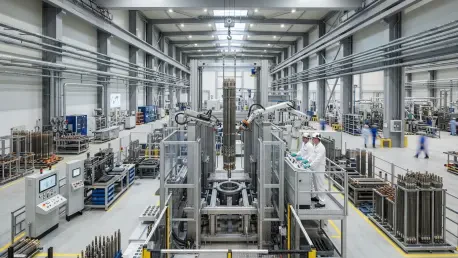
Once the uranium kernels are solidified, they are moved into a specialized coating reactor where multiple protective layers are applied to ensure environmental safety and material containment. These layers include high-density carbon and silicon carbide, which act as a miniature containment vessel for each individual kernel, preventing the release of radioactive fission products even under extreme temperature conditions. Following the coating process, these particles are pressed into a graphite matrix to create the final fuel compacts, often referred to as pebbles. These pebbles are the finished product that will be loaded into the KP-FHR, where they will provide a steady source of energy for years. The transition from small laboratory batches to commercial-scale production in Gillette would involve the implementation of advanced robotics and automated production lines. This shift toward high-volume manufacturing is a critical milestone for the company, as it seeks to supply a growing fleet of reactors with a steady stream of standardized, high-performance fuel.
3. Regional Prosperity and Safety Measures
The economic implications for Campbell County are substantial, with the proposed facility projected to create approximately 200 permanent jobs for the local workforce. While the technology is advanced, many of the roles within the plant will utilize skills already present in the region’s traditional energy and mining sectors, such as equipment operation and industrial maintenance. Kairos Power has indicated a commitment to providing specialized on-the-job training to bridge any technical gaps, particularly regarding environmental health, safety protocols, and specialized nuclear manufacturing standards. Beyond direct employment at the facility, the project is expected to generate significant secondary economic benefits by engaging Wyoming-based engineering firms and construction companies during the development phases. This collaborative approach ensures that the capital investment remains within the state, strengthening the local supply chain and fostering a new ecosystem of high-tech manufacturing. The influx of skilled professionals and their families would also support local services.
Regarding environmental and safety concerns, the fuel manufacturing center is designed to operate similarly to a standard industrial plant, distinct from a power-generating nuclear reactor. Because the facility handles fresh uranium before it undergoes fission, it does not produce high-level radioactive waste or the intense heat associated with spent fuel. Safety protocols for the site focus on the secure handling of raw materials and the rigorous testing of finished fuel containers. Once the fuel pebbles are manufactured, they are secured in heavy-duty, crash-tested, and federally licensed shipping containers designed for transport via truck or rail. Furthermore, the company has emphasized that the Gillette operations are dedicated exclusively to peaceful, commercial energy production, distancing the project from military or defense applications. This clear distinction is vital for maintaining community trust and ensuring that the facility remains a welcome neighbor within the region. The project also adheres to strict federal oversight for safety and security.
4. Future Directions and Policy Integration
As the project moves from the planning stage toward implementation, local officials in Campbell County remain focused on ensuring transparency and regulatory compliance. Residents have expressed a keen interest in understanding how the facility will impact regional infrastructure, including transportation networks and utility requirements. In response, Kairos Power has maintained an open dialogue with county commissioners to address these concerns and provide detailed insights into the facility’s operational footprint. Key discussions have centered on the acquisition of state air and water quality permits, which are necessary to ensure that the manufacturing processes do not negatively impact the surrounding environment. Moreover, there is a strong emphasis on protecting local taxpayers from any potential costs associated with the project’s development or long-term presence. By establishing clear agreements regarding infrastructure contributions and tax structures, the county aims to maximize the public benefit while fostering a stable environment for industrial growth.
The evaluation of the nuclear fuel manufacturing center reached a significant milestone when local stakeholders identified the necessity of integrating nuclear-specific curriculum into regional technical colleges. This strategic shift allowed the community to prepare a workforce capable of handling advanced materials before the facility even broke ground. Lawmakers in Wyoming recognized that the successful adoption of this technology required a robust regulatory framework that balanced innovation with environmental stewardship. Consequently, the state legislature passed measures that streamlined the permitting process for advanced energy projects while maintaining strict safety standards. These actions ensured that the economic benefits of the facility were realized without compromising the region’s natural resources. Moving forward, the focus turned toward creating a broader energy hub that combined carbon capture and nuclear power to solidify the state’s role in the global energy transition. By leveraging its mining history, Wyoming established a precedent for adapting to the requirements of a low-carbon future.