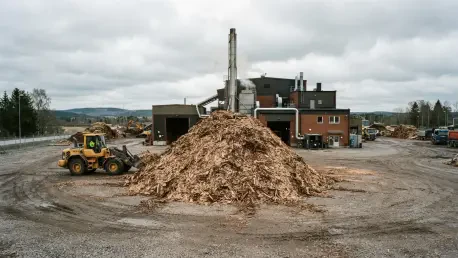

This $7.5 million initiative aims to revitalize the local forestry sector by creating a secondary market for mill leftovers like bark and wood chips. By establishing the Chapleau District Heating Company Inc., the community is turning to localized energy production to safeguard essential services against the volatility of traditional fuel markets. This venture brings together the Chapleau Cree First Nation and Timmins-based Commercial Bioenergy Inc. to construct a three-megawatt thermal plant designed to heat six vital institutional structures. The list of beneficiaries includes the local hospital, Emergency Medical Services buildings, two schools, and the recreation center. This strategic collaboration is not just about heat; it is about building a resilient infrastructure that can withstand the economic pressures often felt in Northern Ontario’s resource-dependent towns. By prioritizing a three-megawatt capacity, the plant is sized to handle peak demands while maintaining a manageable footprint.
A Utility Model for Sustainable Heat
Operating under a structured utility framework, the project represents a sophisticated approach to resource management by converting industrial waste into a high-value commodity. The newly formed company will purchase wood residues—specifically bark, sawdust, and wood chips—from the nearby GreenFirst sawmill, which currently generates a surplus of these materials during daily operations. This biomass will be processed at the central thermal plant to produce heat, which is then distributed through a network of pipes to the participating institutions. Rather than paying flat fees or managing individual boilers, the schools and medical facilities will purchase thermal energy on a per-kilowatt-hour basis. This transition provides a clear economic advantage over more expensive and carbon-intensive options like fuel oil or electricity. By recycling sawmill leftovers into reliable heating, the project creates a closed-loop system that supports the local circular economy.
The implementation of this localized heating grid addresses one of the most significant challenges facing northern infrastructure: the high cost of energy delivery. By centralizing heat production in a three-megawatt plant, the town can achieve economies of scale that were previously impossible for individual buildings. The technology used in this facility is designed to burn biomass with high efficiency and minimal emissions, ensuring that the environmental footprint remains lower than that of conventional fossil fuel systems. Furthermore, reliance on a local fuel source protects the community from the price fluctuations of the global energy market. Since the wood chips are sourced directly from a neighboring mill, transportation costs and supply chain risks are virtually eliminated. This ensures a steady and predictable energy supply for critical public services, allowing administrators to allocate more of their budgets toward patient care and education rather than rising utility bills.
The Challenge: Overcoming Industrial Skepticism
Establishing biomass as a viable energy source in Canada has often been compared to the difficult task of “wrestling a unicorn” due to deep-seated industrial and social resistance. Despite the fact that Northern Ontario sits on a massive surplus of wood residues, there remains a persistent and often irrational skepticism regarding the long-term reliability and commercial feasibility of wood-based energy. Many stakeholders view biomass as a niche or experimental technology, despite its widespread and successful use in other parts of the world. This psychological barrier is compounded by the lengthy development cycles associated with such large-scale infrastructure. These projects often require a decade of planning and negotiation before the first shovel hits the ground. Being a pioneer in this field is an expensive endeavor, as it requires navigating unproven markets and convincing cautious investors that wood chips can be as dependable and efficient as diesel or natural gas for heating.
The disparity between Canadian and European energy strategies is striking when examining the adoption of biomass technology. In many European nations, wood-based district heating is a standard utility, yet in Canada, vast geographic distances often make the logistics of transporting low-value wood waste financially unfeasible. For a biomass project to succeed, the heat source must be located in close proximity to the residue supply, a logistical condition that the town of Chapleau meets perfectly due to its adjacent mill. This geographic advantage allows the community to bypass the high transportation costs that have historically hindered other Canadian biomass initiatives. By demonstrating that a small town can effectively manage its own energy supply using local resources, this project challenges the status quo of the energy industry. It serves as a real-world laboratory for proving that the transition to renewable thermal energy is not a matter of technological limitation but rather one of logistical planning.
Economic Sovereignty: Investing in Community Futures
For the Chapleau Cree First Nation, the investment in a biomass thermal plant is a calculated move toward long-term economic diversification and community sovereignty. The leadership recognizes that traditional revenue streams, such as those derived from gold mining, are tied to finite resources that will eventually be exhausted. In contrast, the demand for heat and energy is perpetual, and the surrounding forests provide a renewable foundation for economic activity that can last for generations. By becoming a primary stakeholder in the utility company, the First Nation is securing a steady stream of revenue that is independent of the volatile cycles of the global mining industry. This project allows the community to leverage its ancestral lands in a way that aligns with modern economic goals while maintaining environmental stewardship. The transition to biomass is viewed as a strategic hedge against the rising costs of living, ensuring that the community remains viable.
The partnership established that meaningful change occurs when leaders prioritize long-term resilience over immediate gains. By 2026, the foundational work completed by the Chapleau District Heating Company provided a clear path forward for other regions looking to reduce their carbon footprints while stimulating local economies. Stakeholders realized that the integration of biomass was not merely a technical upgrade but a shift in the community’s relationship with its environment. Future considerations focused on expanding the heating grid to residential zones and exploring other wood-based technologies that could further enhance independence. The initiative proved that through strategic partnerships and persistent advocacy, even the most daunting industrial challenges could be overcome. Regional planners began using the Chapleau experience to advocate for policy changes that supported decentralized energy networks. Ultimately, the venture showed that reclaiming an economic future required vision and the courage to pursue a new path.