
The stark contradiction between South Africa’s aggressive push for renewable energy and its deteriorating transmission infrastructure has reached a critical tipping point as billions of rands in private investment remain trapped by a physical grid unable to carry the load. At the recent Windaba 2026 conference in Cape Town, the atmosphere was one of cautious optimism tempered by the sobering reality of systemic bottlenecks that threaten the nation’s energy security. While South Africa maintains its status as the leading wind market on the continent with 4.2 gigawatts of installed capacity, the disconnect between generation potential and distribution capability is widening. Regulatory reforms have successfully opened the doors for large-scale industrial consumers, such as mining and cement conglomerates, to bypass traditional utilities and secure electricity directly from independent power producers. This shift has created a robust pipeline of corporate projects, yet these initiatives often stall because the necessary high-voltage lines simply do not exist.
Physical and Financial Constraints: The Infrastructure Paradox
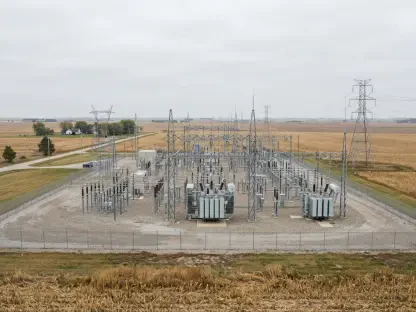
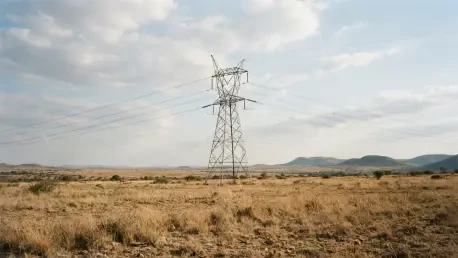
The geographic distribution of South Africa’s wind resources presents a unique logistical challenge, as the most productive sites are concentrated in the Cape provinces, far from the industrial heartlands that consume the bulk of the power. The National Transmission Company South Africa (NTCSA) is currently tasked with a massive infrastructure overhaul that involves the construction of approximately 14,500 kilometers of new high-voltage transmission lines to link these remote wind farms to the national grid. This expansion is essential to prevent the total stagnation of the renewable sector, yet the scale of the required work is unprecedented in the region’s recent history. Engineers and planners are grappling with the reality that without these corridors, even the most efficient wind turbines remain effectively stranded. The urgency of this expansion cannot be overstated, as the current grid density in high-resource areas has already reached its maximum threshold, leaving no room for the thousands of megawatts currently sitting in the development pipeline.
Financing such a monumental project remains the primary hurdle for the state-owned utility, which faces an estimated cost of R440 billion to complete the proposed transmission roadmap. With a current funding shortfall of approximately R134 billion, the government has begun actively soliciting private-sector financing and construction partnerships to bridge the gap. This shift toward public-private cooperation marks a significant departure from previous energy policies and reflects the desperation to modernize the aging infrastructure. However, the procurement processes for these massive infrastructure programs are notoriously slow, leading to concerns that the first major rollout of new transmission capacity will not see significant progress until at least 2027. Developers are being forced to navigate a landscape of uncertainty where project viability is determined more by grid proximity than by wind quality. This financial and regulatory lag delays the decommissioning of older coal plants, further complicating the country’s commitment to a cleaner energy mix.
Economic Realities: The Cost of Systemic Delay
The economic consequences of these infrastructure bottlenecks are profound, manifesting most visibly in the form of electricity curtailment where power generation is intentionally reduced because the grid cannot accommodate the supply. Estimates suggest that this forced reduction of output costs the South African economy roughly R49 billion in potential annual revenue, a figure that represents a massive loss of productivity and investment return. Furthermore, the uncertainty surrounding the grid’s expansion schedule has sent ripples through the local manufacturing and supply chain sectors, stifling long-term industrial growth. Companies specializing in the production of steel towers, high-capacity cables, and industrial-grade transformers are currently unable to justify production expansions or new hiring initiatives without a guaranteed construction timeline. Balancing the need for local job creation with the requirement for affordable energy remains one of the most delicate policy challenges facing the current administration as it tries to foster a domestic green economy.
Addressing the grid crisis required a fundamental paradigm shift in how the state approached infrastructure development and private sector integration. Stakeholders recognized that the success of the wind sector was fundamentally tethered to the government’s ability to provide a stable, predictable timeline for transmission upgrades. To move forward, the administration had to streamline the environmental and regulatory approval processes for new transmission corridors to avoid the multi-year delays that characterized previous projects. Additionally, the implementation of more flexible financing models allowed for immediate private investment in critical grid nodes, bypassing the traditional bureaucratic hurdles of centralized utility procurement. By focusing on decentralized grid management and regional micro-grids, the industry began to find ways to integrate wind power into the local economy despite the overarching national constraints. These actions provided a concrete roadmap for modernizing the national power network and ensured that renewable resources were no longer wasted due to technical limitations.