
The massive scale of this procurement suggests that energy availability, rather than chip supply, has become the primary bottleneck for advanced machine learning development, as Anthropic’s recent decision to commit $3.4 billion toward natural gas power generation highlights a transformative shift in the artificial intelligence industry’s approach to infrastructure and energy security. This massive expenditure represents a significant departure from the traditional asset-light model favored by AI startups, which typically rely on cloud service providers like Amazon Web Services or Google Cloud to manage the physical complexities of data centers. By securing its own power-generation hardware, Anthropic is addressing the most significant bottleneck in the modern AI race: the availability of reliable, high-capacity electricity required to train and operate next-generation models. This move signals that the competition for AI dominance is no longer just about writing code; it is about securing the physical energy required to run data centers.
Securing the Energy Supply Chain
Overcoming Logistics: The Direct Procurement Strategy
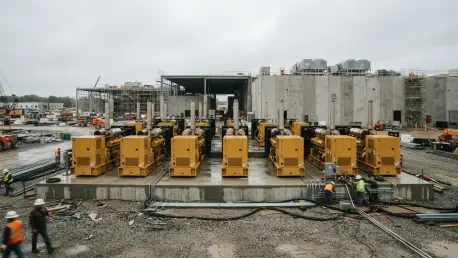
The specific details of the transaction reveal a strategic effort to bypass a crowded supply chain that has otherwise stalled many ambitious tech projects. Anthropic stepped in to take over an order for hardware originally placed by an energy supplier called OnePWR Solutions, which struggled to find the necessary funding to finalize the acquisition. By dealing directly with Caterpillar to secure the hardware, Anthropic gained access to specialized generators that usually carry a years-long waiting list. While the deal does not involve a full acquisition of OnePWR or its staff, it reportedly includes the procurement of engineering and construction services essential for the installation and integration of the generators. This direct intervention highlights the urgency with which AI companies are now acting to bypass traditional supply chain delays. By seizing an existing order, the company has effectively jumped the line in a market where lead times for critical power equipment now extend well into the next decade.
Strategic Independence: Moving Beyond Cloud Dependency
Beyond simply acquiring the hardware, this move indicates that Anthropic views energy as a proprietary resource that must be managed internally. The procurement of Caterpillar-manufactured natural gas generators capable of producing 1.7 gigawatts of electricity—enough to supply roughly 1.3 million homes—places the firm in the same category as major utility companies. This illustrates a trend toward vertical integration, where AI firms feel compelled to control every layer of their stack, from the power source to the neural network architecture. Historically, software giants avoided the risks associated with heavy industrial equipment, but the current climate requires a more hands-on approach to guarantee operational stability. By owning the power generation hardware, Anthropic mitigates the risk of electricity price volatility and eliminates the uncertainty of grid connectivity timelines. This infrastructure serves as a defensive moat, ensuring that their roadmap is not derailed by external grid failures.
The Industrialization of Artificial Intelligence
Addressing Grid Constraints: The Need for Firm Power
Public electrical grids are currently struggling to keep pace with the explosive demand from new data centers, leading to significant delays in connection times across the globe. By investing in on-site generation, Anthropic has effectively bypassed the increasing inability of public utilities to provide firm, 24/7 power. While many technology leaders have made widespread corporate commitments to carbon neutrality, the immediate and immense energy needs of training clusters are forcing a pragmatic reliance on natural gas. Natural gas provides a scalable, firm power source that can be deployed on-site, allowing companies to operate independently of the strained public grid. Unlike wind or solar, which are often intermittent and insufficient for the always-on requirements of AI development, gas-powered generators offer a reliable stream of energy. This transition highlights a broader industry reality: the ability to scale is no longer limited by software ingenuity but by the physical capacity to energize hardware.
Future Considerations: Navigating Economic and Environmental Risks
Analysts observed that this $3.4 billion commitment marked a defining moment in the evolution of the AI sector, confirming that the path to advanced intelligence was paved with massive physical infrastructure. Strategic leaders recognized that energy independence was becoming as valuable as the silicon chips themselves. To maintain a competitive edge, it became necessary for organizations to diversify their energy portfolios and invest in modular on-site generation to protect against grid instability. Although the heavy use of fossil fuels created friction with sustainability goals, the move ensured that development cycles remained uninterrupted. Moving forward, the industry pivoted toward exploring even more advanced solutions, such as small modular reactors and enhanced battery storage, to balance power needs with environmental responsibilities. Ultimately, those who secured their own energy supplies early gained a multi-year head start, transforming themselves from software developers into industrial leaders.