
Single-cylinder engine tests conducted under full-load conditions indicate that metallic nano-additives can prevent the typical torque drop-off seen at high rotational speeds. As the global transport sector continues to seek viable alternatives to fossil fuels, the integration of nanotechnology with renewable biofuels has emerged as a promising frontier for enhancing combustion efficiency. However, recent experimental data involving silver nanoparticles synthesized through biological pathways suggests that the path to high-performance green energy is fraught with complex environmental trade-offs. The utilization of Allium tuncelianum, a rare species of wild garlic endemic to the high altitudes of eastern Türkiye, serves as a unique case study in this field. This specific botanical source provides a rich matrix of phytochemicals capable of reducing silver ions into stable nanoparticles, which are then introduced into cottonseed-based biodiesel blends. While these “nanofuels” show a remarkable ability to sustain engine power under demanding loads, they simultaneously trigger a massive surge in toxic exhaust components, challenging the notion that biological synthesis automatically equates to an ecological win.
The engineering community has long recognized that standard biodiesel suffers from inherent physical limitations, such as high kinematic viscosity and lower energy density, which often lead to suboptimal fuel atomization and reduced thermal efficiency in compression-ignition engines. To overcome these hurdles, researchers have pivoted toward the use of catalytic nano-additives that can fundamentally alter the droplet evaporation and ignition characteristics within the combustion chamber. By leveraging the unique molecular architecture of endemic garlic, scientists have successfully bypassed the need for toxic chemical reducing agents typically required in nanoparticle production. Yet, as the mechanical results of these fuels become clearer, the industry must grapple with a startling reality: the same catalytic mechanisms that boost torque can also catalyze the formation of harmful pollutants. This article explores the intricate technical processes behind the creation of these garlic-derived fuels and the experimental evidence that suggests their current implementation may come at an unacceptably high environmental price.
1. Preparation: Harvesting and Processing the Botanical Source
The initial phase of producing these advanced nanofuels begins with the careful acquisition of the biological reducing agent, specifically the single-clove bulbs of Allium tuncelianum. Unlike common cultivated garlic, this endemic geophyte is harvested from its natural habitats at elevations exceeding 4,500 feet within the Munzur Valley. The timing of the harvest is critical to ensure the peak concentration of active biomolecules, including phenolic compounds and organosulfur metabolites. Once gathered, the bulbs undergo a rigorous cleaning process to remove any traces of soil or external contaminants. To preserve the structural integrity of the heat-sensitive phytochemicals, the garlic cloves are subjected to a controlled drying process at exactly 122°F for a continuous 24-hour period. This moderate temperature prevents the thermal degradation of alliin and allicin, which are the primary functional components required for the subsequent reduction of silver nitrate into metallic nanoparticles.
Following the drying cycle, the garlic bulbs are pulverized into a fine, homogenous powder using specialized ceramic and porcelain equipment. This choice of materials is essential to avoid any unintended metallic contamination that could interfere with the purity of the final nanoparticle synthesis. The resulting botanical powder serves as the foundation for the biogenic extract. By utilizing this endemic plant rather than generic agricultural waste, the research highlights the potential of localized biodiversity in advancing sustainable manufacturing. However, the reliance on such a specific and rare species also raises questions about the scalability of this technology for mass-market fuel production. The precision required in this early stage underscores the fact that the performance of the final nanofuel is intrinsically linked to the molecular quality of the initial garlic harvest, setting the stage for a highly sophisticated yet environmentally sensitive chemical process.
2. Synthesis: Creating the Plant-Based Extract and Nanoparticles
The transition from raw botanical matter to a functional catalyst occurs through a meticulous aqueous extraction and chemical reduction process. The garlic powder is mixed with deionized water in a precise weight ratio of one part powder to four parts liquid. This slurry is then maintained at a constant temperature of 122°F for 30 minutes, a duration that facilitates the maximum leaching of radical-scavenging antioxidants and stabilizing proteins into the water. These compounds are vital because they serve as “capping agents,” surrounding the silver ions and preventing the resulting nanoparticles from clumping together or losing their catalytic potency. After the extraction, the liquid is filtered to remove any fibrous residues, leaving behind a clear, bioactive solution ready for the synthesis of the metallic silver cores.
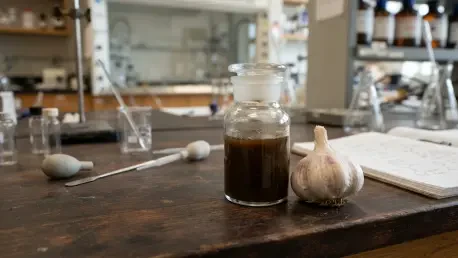
The actual formation of the nanoparticles is a visual and chemical spectacle that takes place under light-protected conditions to avoid photochemical interference. A 10 millimolar solution of analytical-grade silver nitrate is combined with the garlic extract in a strict volume ratio, and the mixture is stirred continuously at 140°F for 60 minutes. During this hour, the solution undergoes a distinct color transformation from a pale yellow to a deep, dark brown. This shift serves as the primary visual indicator of surface plasmon resonance, confirming that the silver ions have been successfully reduced into nanoscale particles. To ensure the particles are ready for fuel integration, they are separated using a high-speed centrifuge operating at 8,000 revolutions per minute. The recovered particles are then washed multiple times with ultra-pure water to strip away unreacted precursor ions and loosely bound organic debris, before undergoing a final vacuum drying phase at 122°F for 12 hours.
3. Formulation: Producing and Stabilizing the Nanofuel Blends
The base fuel used in these experiments is derived from cottonseed oil, a common agricultural byproduct in the Mediterranean and southeastern regions of Türkiye. Transforming this crude lipid into an engine-compatible fuel requires a chemical process known as transesterification. Because the initial acid value of the oil is relatively low, it can be processed in a single-step reaction using methanol and a potassium hydroxide catalyst. Over the course of 120 minutes at a stable 140°F, the triglycerides in the oil are converted into fatty acid methyl esters. This resulting biodiesel is then subjected to gravity separation, thorough water washing to remove soap residues, and thermal drying. The final product is a renewable fuel characterized by a high concentration of linoleic and palmitic acids, which provides the necessary lubrication and energy content for the compression-ignition cycle.
To create the experimental nanofuels, a standard B20 blend is first prepared by mixing 20 percent of the cottonseed biodiesel with 80 percent conventional diesel fuel by volume. The green-synthesized silver nanoparticles are then dispersed into this blend at two specific concentrations: 50 milligrams per liter and 100 milligrams per liter. Achieving a stable dispersion is the most challenging aspect of this phase, as nanoparticles naturally tend to settle or agglomerate over time. To combat this, the fuels undergo a two-stage stabilization protocol. First, they are mechanically stirred for 15 minutes to distribute the particles roughly throughout the liquid. This is immediately followed by 30 minutes of high-frequency ultrasonication at 40 kilohertz. The sound waves create microscopic cavitation bubbles that, upon collapsing, release intense energy that breaks up particle clusters, ensuring a uniform and durable nanofuel suspension that can survive the high-pressure environment of a modern fuel injection system.
4. Evaluation: Benchmarking Engine Performance and Thermal Stress
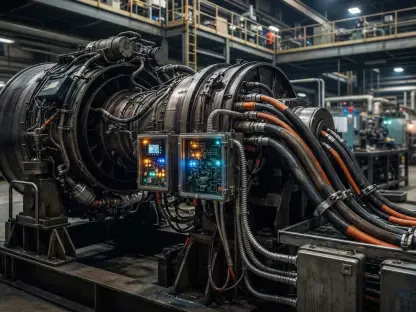
The mechanical efficacy of the garlic-enhanced nanofuels was rigorously tested on a commercial engine test bench under full-load conditions across a spectrum of rotational speeds. The results revealed a clear performance advantage for the 50 mg/L silver blend, particularly as the engine reached higher RPM levels. At a speed of 2000 revolutions per minute, the B20-Ag50 fuel delivered a brake torque of 32.46 Newton meters, representing a 10.3 percent improvement over the base B20 fuel. This is a significant finding, as it demonstrates that the silver nanoparticles act as powerful combustion accelerators, helping the fuel to burn more completely even within the very short injection windows available at high speeds. Interestingly, the 100 mg/L formulation did not yield the same gains, likely because the higher particle concentration increased the fuel’s viscosity enough to hinder the formation of a fine fuel spray.
However, the gains in horsepower and torque were accompanied by evidence of severe thermal and mechanical stress within the engine. The exhaust gas temperatures for the nanoparticle-doped fuels were markedly higher than those of the standard B20 blend. At the maximum test speed, the exhaust temperature for the B20-Ag50 blend soared to over 850°F (457°C), compared to approximately 635°F (335°C) for the un-doped fuel. This massive temperature jump indicates that the catalytic activity of the silver nanoparticles creates an intensely hot combustion environment. While this high heat helps in vaporizing the fuel droplets quickly, it also puts immense strain on the engine’s valves, pistons, and turbocharger components. The researchers noted that while the “garlic fuel” effectively prevented the power drop-off usually seen at 2000 RPM, the resulting thermal footprint might lead to accelerated engine wear or failure if used over extended periods.
5. Analysis: Measuring the Severe Environmental Trade-Off
The most controversial aspect of the garlic-silver nanofuel research lies in the dramatic surge of toxic exhaust emissions recorded during the trials. Despite the “green” label associated with the nanoparticle synthesis, the actual output from the tailpipe told a very different story. At 2000 revolutions per minute, the carbon monoxide (CO) levels in the exhaust for the 50 mg/L blend were more than 111 percent higher than those of the base biodiesel blend. Even more concerning was the spike in nitrogen oxides (NOx), which are a primary contributor to smog and respiratory illnesses. The NOx concentrations for the nanofuel reached a staggering 489 parts per million, nearly quadruple the 117 parts per million measured for the standard B20. These figures suggest that the rapid, high-temperature combustion triggered by the silver nanoparticles creates local “hot spots” in the cylinder that are perfect for the formation of nitrogen oxides.
The coexistence of high CO and high NOx levels is a paradoxical result that indicates a highly complex and somewhat chaotic combustion process. Typically, when combustion efficiency increases, CO levels should drop; however, in this case, the heterogeneous distribution of the silver particles within the fuel spray likely created zones of incomplete combustion alongside zones of extreme heat. This mixture heterogeneity, combined with the lack of advanced exhaust after-treatment systems on the test engine, allowed these pollutants to escape into the atmosphere unchecked. The researchers emphasized that while the biological synthesis of the additives was successful and environmentally friendly in a laboratory setting, the operational reality in a working engine was quite the opposite. This highlights a critical gap between the development of biogenic nanomaterials and their practical application in the automotive and industrial sectors.
Strategic Directions for Nanofuel Viability
The experimental investigation into silver nanoparticles derived from Allium tuncelianum established that while biogenic additives could significantly enhance high-speed engine power, the current environmental costs were prohibitive. The study demonstrated that a 10.3 percent increase in torque was offset by a doubling of carbon monoxide and a fourfold increase in nitrogen oxide emissions. These findings suggested that the immediate commercialization of garlic-synthesized nanofuels was not feasible without a radical redesign of either the fuel chemistry or the engine’s emission control systems. The data confirmed that “green synthesis” in the lab did not automatically translate to a “green” footprint during fuel combustion, serving as a cautionary tale for the broader alternative fuels industry.
Moving forward, the research community must prioritize the optimization of nanoparticle concentrations and the development of sophisticated exhaust after-treatment technologies specifically tuned for nanofuel combustion. Future efforts should focus on long-term durability testing to determine how these high-temperature fuels affect engine longevity and fuel system integrity. Additionally, investigating the use of metal oxide nanoparticles, rather than pure metallic silver, might offer a way to maintain the catalytic benefits while mitigating the extreme spikes in NOx. Ultimately, the quest for a garlic-powered future will require a more holistic approach that balances mechanical performance with a stringent commitment to air quality and public health.