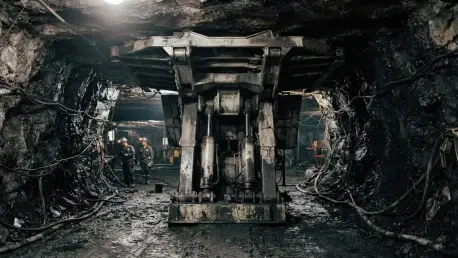

Comparing theoretical peak stress predictions of 44.80 MPa with numerical simulation results demonstrates the high degree of accuracy in modern statistical models. As the global demand for resources drives energy sectors deeper into the Earth’s crust, the mechanical behavior of coal-rock masses becomes increasingly volatile. Mining at extreme depths introduces immense geostatic pressure, which can trigger sudden structural failures or violent rockbursts if the resulting stress distributions are not managed with precision. Traditional linear models often struggle to account for the heterogeneous nature of rock degradation under these conditions. However, the emergence of advanced statistical damage constitutive relationships marks a significant pivot toward more resilient engineering practices. By treating the rock mass as a collection of micro-elements with varying strength thresholds, researchers are now capable of simulating the transition from elastic stability to progressive failure, ensuring that deep-earth extraction remains safe in an era of diminishing reserves.
Mathematical Foundations of Mining Damage
The core of this breakthrough lies in a sophisticated mathematical synthesis that combines the Weibull distribution with the Mises strength criterion and the strain equivalence principle. This framework moves beyond static calculations by integrating a dynamic attenuation parameter, which specifically tracks the progressive degradation of the coal-rock mass as it faces mining-induced disturbances. Instead of viewing structural integrity as a binary state, this approach recognizes that damage accumulates over time, weakening the internal structure before a total collapse occurs. The inclusion of roof displacement and horizontal stress evolution into the model allows for a more holistic view of the subterranean environment. By utilizing these statistical principles, engineers can better understand how the integrity of a rock mass fluctuates when mechanical excavation disrupts the equilibrium. This level of detail is necessary for predicting how advanced abutment pressure shifts during the removal of coal seams.
To guarantee the model’s reliability across various geological strata, a rigorous parametric sensitivity analysis was conducted to isolate the variables that most significantly impact peak stress intensity. Key factors such as Young’s modulus, Poisson’s ratio, and mining height were scrutinized to determine how they influence both the location and the magnitude of stress concentrations ahead of the coal face. This process revealed that even minor adjustments in roof displacement parameters could lead to substantial shifts in the predicted load distribution. By quantifying these relationships, the model offers a high degree of adaptability, allowing it to be calibrated for diverse operational settings ranging from soft-rock environments to high-stiffness deep mines. This calibration ensures that the predictions remain grounded in the physical reality of the specific site rather than relying on generalized assumptions that might fail. Understanding these sensitivities is crucial for long-term project planning and safety.
Validation Through Advanced Numerical Simulations
Validation of the theoretical framework was achieved through a comprehensive three-dimensional numerical simulation targeting Working Face 8301 at the Chenmanzhuang Coal Mine. Using specialized software tools like Rhino for geometric modeling and FLAC3D for finite difference analysis, the research team replicated the intricate environmental conditions found hundreds of meters below the surface. This digital twin allowed for the observation of stress field transitions as they evolved from a state of initial in-situ equilibrium to a complex pattern characterized by gob unloading and roof adjustment. The simulation captured the precise moment when stress began to concentrate ahead of the advancing coal face, providing a visual and data-driven confirmation of the theoretical predictions. The alignment between the calculated 44.80 MPa peak stress and the simulated range of 42 to 48 MPa serves as a powerful testament to the model’s robustness. By bridging the gap between theory and mechanical behavior, these simulations offer a reliable benchmark.
The implementation of these statistical models provided immediate, actionable insights for the design of mine support systems and the mitigation of catastrophic geological events. Engineering teams utilized the data to adjust the density of hydraulic supports and the timing of roof bolting operations, which effectively neutralized the potential hazard zones identified by the stress distribution maps. Looking forward, the integration of real-time sensory feedback into these predictive frameworks offered a pathway toward automated response systems that adjust mining speeds based on detected stress shifts. This proactive approach moved the industry away from reactive safety measures, focusing instead on the preventive management of geomechanical risks. By standardizing the use of damage constitutive relationships, the mining sector established a more rigorous protocol for assessing structural health. These advancements ultimately streamlined the transition toward fully autonomous mining systems where precision modeling replaced intuition in high-risk zones.