
The massive scale of South Korea’s industrial infrastructure is currently undergoing a fundamental transformation as the Gunsan Shipyard moves from a period of relative dormancy into a modern, multifunctional energy and maritime hub. This strategic pivot addresses the urgent global demand for renewable energy infrastructure while simultaneously revitalizing the region’s traditional shipbuilding capabilities through a massive 1.8-million-square-meter facility. By integrating heavy manufacturing with advanced engineering for offshore wind power, the site is being repurposed to serve as a critical engine for regional growth and a cornerstone for national decarbonization goals. This evolution represents a broader industrial shift where existing massive-scale assets are adapted to meet the technological requirements of the current decade. The facility now serves as a blueprint for legacy site modernization and sustainable development.
Strategic Alliances: Renewable Energy Infrastructure
The Partnership: Industrial Consortium Model
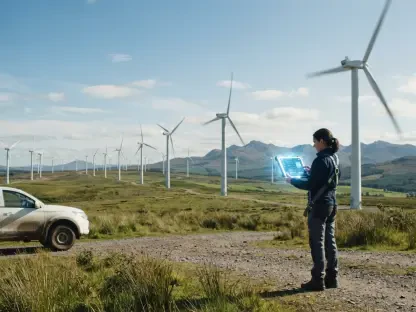
A powerful consortium involving HJ Shipbuilding & Construction, JE Ocean Heavy Industries, Myeongun Industrial Development, and the wind turbine specialist Unison has established a framework for localized manufacturing. This group is specifically targeting 330,000 square meters of land within the shipyard to develop an offshore wind power production base. The collaborative approach allows for the pooling of expertise in heavy construction, precision engineering, and renewable energy technology, creating a specialized ecosystem for the production of large-scale wind turbines and towers. By focusing on these specific components, the consortium aims to streamline the supply chain for offshore wind projects, reducing logistical bottlenecks that often plague large-scale renewable installations. The agreement highlights a shift toward industrial synergy where companies with complementary strengths work within a single environment to maximize efficiency.
Resource Allocation: Infrastructure for Green Energy
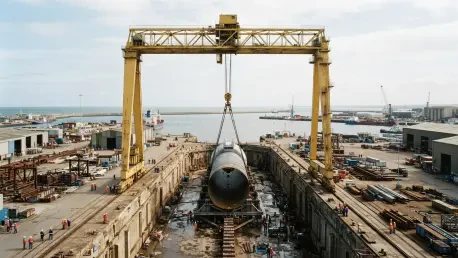
The choice of the Gunsan site for this initiative is driven by its existing heavy-duty infrastructure, which is uniquely suited for the massive dimensions of offshore wind components. Central to these operations is a massive one-million-ton dry dock and a gantry crane capable of lifting 1,650 tons—tools that were originally designed for supertankers but are now being adapted for offshore transformer stations. These facilities allow for the fabrication and assembly of structures that would be impossible to manage in smaller manufacturing plants. The sheer scale of the gantry crane enables the movement of fully assembled turbine sections, which significantly reduces the time required for offshore installation and lowers the risks associated with maritime construction. This repurposing of high-value maritime assets ensures that the shipyard remains a high-output facility while contributing to the expansion of the domestic and regional green energy market.
Economic Rejuvenation: Maritime Production Goals
Financial Restructuring: Ownership and Management Shifts
The financial restructuring of the facility involves a significant ownership transition from HD Hyundai Heavy Industries to JE Ocean Heavy Industries, a move backed by Ecoprime Marine Pacific. Valued at approximately 780 billion KRW, this transaction is moving toward its finalization by the end of December 2026, marking a new era for the region’s industrial management. This change in leadership is expected to bring a renewed focus on agility and niche market targeting, allowing the yard to move beyond the traditional cycles that have historically impacted the global shipbuilding industry. The acquisition is part of a strategy to stabilize the yard’s financial standing and provide the capital necessary for modernizing equipment that has been underutilized. By moving away from the previous corporate structure, the new management aims to implement leaner operational practices while maintaining the high standards of technical excellence associated with maritime engineering.
Production Cycles: From Refinement to Delivery
Stakeholders took decisive action to integrate diverse manufacturing streams, ensuring that the facility remained resilient against the price volatility often seen in global shipping markets. Throughout the current year, intensive modernization of existing equipment and comprehensive facility overhauls were prioritized to bring the yard up to current technological standards. These preparations were essential for supporting the complex manufacturing processes required for both advanced maritime vessels and sophisticated offshore energy components. Full-scale shipbuilding operations were prepared to commence in early 2027, with the objective of delivering the first newly constructed tankers by 2028. Future considerations should include the expansion of automated welding technologies and the integration of digital twin monitoring for all offshore components to further enhance operational efficiency. This transition provided the necessary momentum to transform a legacy asset into a future-proof powerhouse.