
Establishing an energy-weighted network centroid in the feature space allows for the measurement of the radial Euclidean deviation of every node to identify unique contextual information. This technological breakthrough comes at a pivotal moment when metropolitan infrastructures are struggling to maintain the massive Internet of Things (IoT) ecosystems that define modern urban living in 2026. As city administrators deploy more sensors to manage everything from autonomous vehicle lanes to localized air quality alerts, the sheer volume of data is overwhelming the power reserves of remote hardware. Traditional deep learning approaches, while incredibly precise, act as significant energy drains that can exhaust the batteries of vital sensing equipment in a matter of months rather than years. The introduction of the Radial-Residual Energy-Aware Deep Learning (R2EADL) framework addresses this systemic vulnerability by embedding energy awareness into the very core of the neural processing pipeline, ensuring that urban intelligence remains sustainable and reliable even under the most demanding computational conditions found in dense city environments today.
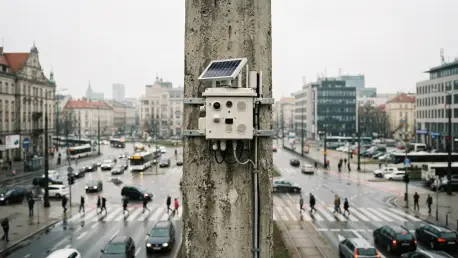
Metropolitan IoT deployments are tasked with supporting vital civic operations, including transportation control, environmental monitoring, energy grid regulation, and public emergency response. These systems must coordinate thousands of heterogeneous sensing nodes while operating under the harsh realities of limited processing power, finite battery life, and the inherent unpredictability of wireless communication in dense urban environments. While the industry has attempted to alleviate these hardware limitations by shifting computation toward cloud platforms or localized edge nodes, existing deep learning approaches often fail to strike a balance between analytical precision and power preservation. The R2EADL architecture was developed to bridge these fragmented pipelines by consolidating feature representation, computational offloading, and execution scheduling into a single, energy-governed optimization framework. By linking specialized functional modules through a common objective, the system allows a network to adapt to shifting energy states across an entire city.
Solving the Urban IoT Energy Crisis
Why Do Standard AI Models Fail in Smart Cities?
Standard implementations of deep learning, such as traditional convolutional neural networks and federated learning protocols, are often inefficient because they lack a cohesive coordination mechanism for power preservation. These systems are effectively “energy-blind,” meaning they do not account for the real-time battery status of the devices they run on, nor do they possess the dynamic operational scheduling required to survive long-term deployments. Consequently, when a node’s battery begins to fail, traditional systems cannot effectively prioritize that node’s data or adjust its workload, leading to sudden network instability and permanent data loss in critical areas of the municipal grid.
Prior attempts to solve these pervasive hardware limitations, such as model compression, energy-aware routing, or neural architecture search, have functioned primarily as localized heuristics rather than a comprehensive system-wide strategy. These methods often lack the sophisticated coordination needed to link live battery measurements with distributed inference tasks across thousands of sensors. When a single sensor becomes a bottleneck due to power exhaustion, the entire analytical chain can break, leaving city operators without the real-time insights needed for emergency response or traffic management. The absence of a unified, energy-aware framework has historically forced city planners to choose between high-frequency data collection and the operational longevity of their sensing equipment.
How Does the R2EADL Architecture Work?
The R2EADL framework bridges these fragmented pipelines by consolidating four specialized functional components into a single, energy-governed optimization framework. A Radial Attention Module handles energy-sensitive feature weighting, ensuring that data from nodes with more remaining power or higher informational value are prioritized. This is supported by a Deep Residual Learning Backbone, based on ResNet principles, which provides feature stability and maintains mathematical gradients during deep processing. This specific combination is essential for reducing end-to-end latency, allowing the system to process urgent urban data without the computational overhead that typically characterizes deep neural networks.
In addition to these core processing units, the architecture features an Energy-Adaptive Cloud Coordinator that manages dynamic workload distribution across the network. This module decides in real-time whether a specific task should be processed locally at the sensor level, at a nearby edge node, or in a central cloud environment. Complementing this is a Reinforcement Learning Scheduler, a temporal task manager that uses a Q-learning policy to regulate when and how frequently tasks are executed based on the current state of the network. By linking these modules together, the R2EADL system optimizes the trade-off between predictive performance and power consumption, allowing urban intelligence to remain active even as hardware resources fluctuate.
Implementing Energy-Aware Data Pipelines
Step 1: Execute Energy-Sensitive Data Acquisition
The first line of defense against rapid battery depletion in the R2EADL system is a dynamic and adaptive sampling strategy. Rather than capturing data at rigid, constant intervals—which often leads to redundant measurements and wasted energy—the system uses an exponential decay function to adjust the sampling frequency of each sensing unit based on its remaining battery capacity. High-energy sensors are utilized to provide fine-grained observations during peak hours, while low-energy nodes automatically reduce their activity levels to preserve power. This proactive management prevents vulnerable nodes from failing prematurely while still maintaining a baseline level of monitoring across the urban environment.
This dynamic approach ensures that the overall network remains operational for significantly longer periods compared to traditional “always-on” configurations. By intelligently scaling the sampling rate, the system can prioritize high-fidelity data collection from sensors that are currently being replenished by solar energy or those with full battery reserves. This flexibility is particularly vital during environmental crises or traffic surges, where the demand for data is high but the energy cost of transmission can be prohibitive. The framework allows the city to maintain a high “quality of service” by strategically managing the energy expenditure of every individual node in the ecosystem.
Step 2: Apply Energy-Weighted Temporal Interpolation
During the data preprocessing stage, the framework addresses the common problem of missing records and sensor gaps by using a technique known as energy-weighted temporal interpolation. In this process, the system identifies neighboring devices with higher battery reserves and gives them more mathematical weight when filling in data gaps. This ensures spatial coherence across the city’s map without placing further strain on nodes that are already operating at low power levels. This interpolation is not just a statistical fill-in; it is a power-aware reconstruction of the urban environment that respects the physical limitations of the hardware.
Furthermore, the framework applies an “Energy-Entropy Anomaly Index” to filter out transmission noise and potential sensor errors. This index calculates parameter deviations and adjusts anomaly detection thresholds against the current battery reserves of the reporting hardware. This is a critical feature because electronic sensors often begin to produce erratic or noisy data as their power levels drop toward zero. By accounting for these low-power artifacts, the system avoids false-positive detections that could lead to unnecessary emergency dispatches or incorrect traffic adjustments. The result is a cleaner, more reliable data stream that reflects the actual state of the city rather than the failing health of the sensors.
Enhancing Intelligence with Radial Attention
How Does Radial Attention Improve Feature Encoding?
Traditional attention mechanisms, such as those found in standard transformer models, often fail to account for the non-linear geometric variations inherent in physical sensor deployments across a complex city. The Radial Attention Module solves this by establishing a network centroid within the feature space, which serves as a mathematical anchor for all incoming data. By measuring each node’s radial Euclidean deviation from this central anchor, the system can identify which sensors are providing truly unique contextual information and which are merely providing redundant signals that have already been captured by neighboring devices.
Nodes that are located farther from the centroid are identified as having high informational diversity, while those near the center are seen as providing overlapping data. By using bounded hyperbolic tangent scaling, the system assigns higher weights to sensors that are both energy-rich and feature-diverse. This ensures that the most important and unique data points are prioritized for processing, while redundant or repetitive signals are suppressed to save energy. This mechanism effectively streamlines the flow of information, allowing the AI to maintain a high level of situational awareness without wasting computational cycles on data that does not add new value to the city’s operational model.
What Role Does Residual Feature Learning Play?
The architectural depth of the R2EADL framework is provided by the Residual Feature Learning stage, which utilizes deep skip connections to enable hierarchical feature extraction. These skip connections allow the system to preserve the mathematical integrity of the gradients during deep processing, which is essential for maintaining accuracy as the model handles more complex urban scenarios. By coupling convolutional operations with energy-normalized batch normalization, the system scales intermediate neural activations based on the ratio of local device energy to the network average, effectively muting noise from depleted hardware while amplifying reliable signals.
The researchers integrated a hybrid model known as ViT-R2ResNet, which combines the strengths of Vision Transformers and residual modeling. This hybrid approach is particularly effective at capturing long-range environmental dependencies, such as the relationship between a traffic bottleneck in one district and a spike in air pollution in another. Because this model supports rapid convergence, the AI learns patterns more quickly and requires less overall computational power to reach its performance targets. This makes it an ideal solution for the interconnected and often unpredictable nature of smart city data, where understanding the big picture is just as important as monitoring individual sensors.
Optimizing Task Execution and Offloading
How Does the Cloud Coordinator Balance Workloads?
A major innovation of the R2EADL framework is its ability to decide in real-time whether a specific task should be processed locally, at the edge, or in the cloud. The Energy-Adaptive Cloud Coordinator evaluates the cost-benefit of different processing locations using a multi-objective loss function that balances processing energy, transmission latency, and the current computational load of the servers. This decision-making process is governed by a sigmoid function that integrates the node’s energy deficit, the urgency of the specific task, and the physical size of the data package being transmitted.
In practical terms, this means that a simple traffic count might be processed locally to save bandwidth, while a complex video analysis for an emergency response would be offloaded to a powerful cloud server. Experimental results have shown that this adaptive coordination can reduce total energy consumption by over 50% compared to static systems that always default to cloud processing. By intelligently shifting the workload, the system ensures that no single part of the infrastructure becomes overloaded or drained of power. This balance is key to maintaining a “green” municipal infrastructure that can scale as the city grows and more sensors are added to the network.
How Does Reinforcement Learning Manage Scheduling?
While the cloud coordinator decides where a task is processed, the Reinforcement Learning Scheduler regulates exactly when it happens. Using a Q-learning policy, the scheduler monitors the entire environment, including bandwidth consumption and battery states, to choose the best action for every incoming task. This agent can choose to execute an inference task immediately, offload it to an edge node, or even delay the computation to a later time when a sensor has had a chance to replenish its battery through solar charging or idle recovery periods.
The reward function for this RL agent is specifically tuned for the needs of a smart city, combining energy preservation, latency reduction, and total system throughput. Because the agent learns from its environment, it can adapt dynamically to sudden traffic spikes or network congestion during major urban events. In simulations, this scheduler achieved a remarkable 89.2% energy efficiency and reached a stable operating state quickly, proving that AI can be self-regulating when given the right incentives. This temporal management ensures that the city’s digital heart keeps beating even during periods of high stress or limited resource availability.
Validating Performance and System Reliability
What Were the Results of Empirical Testing?
The R2EADL architecture underwent rigorous testing using large-scale datasets focused on smart city traffic and urban environmental monitoring. These simulations, conducted in high-performance environments using modern deep learning libraries, proved that the framework outperforms existing models across every critical metric. The system achieved a 95% prediction accuracy while maintaining an energy efficiency rate of 87.9%. Furthermore, the average latency for task completion remained at a low 131 milliseconds, which is essential for time-sensitive applications like traffic light regulation or emergency alerts.
In scalability trials where the number of sensor nodes was increased significantly, the framework demonstrated remarkable stability. While competing models often saw their energy efficiency drop into the low 80s as the network grew more complex, R2EADL maintained its performance levels consistently. This suggests that the model is highly suitable for massive, real-world urban deployments where thousands of sensors must work together without failing. The high task completion rate of 93.1% further confirmed that the system is not just efficient, but also reliable enough to handle the critical infrastructure tasks that modern cities depend on every day.
Ensuring Sustainable Intelligence for the Future
The R2EADL framework moved the industry closer to a truly sustainable urban intelligence model by treating energy as a fundamental architectural constraint rather than a secondary concern. Systematic ablation experiments confirmed that every component, from the radial attention module to the cloud coordinator, was essential for achieving the high levels of efficiency and accuracy recorded during testing. The integration of these technologies allowed for a 53.4% reduction in energy consumption compared to traditional methods, providing a robust blueprint for municipal managers looking to modernize their infrastructure without incurring massive maintenance costs related to battery replacement and hardware failure.
For organizations and cities looking to implement these findings, the actionable next step involved prioritizing “energy-aware” architectures over standard “accuracy-first” models when upgrading IoT sensors. Engineers should have focused on deploying hybrid edge-cloud coordination systems that could adapt to the real-time power fluctuations of the urban environment. The success of the R2EADL model demonstrated that high-level analytical performance did not have to come at the expense of hardware longevity. By adopting these integrated scheduling and attention mechanisms, urban centers ensured that their digital transformations remained both intelligent and environmentally responsible for years to come.