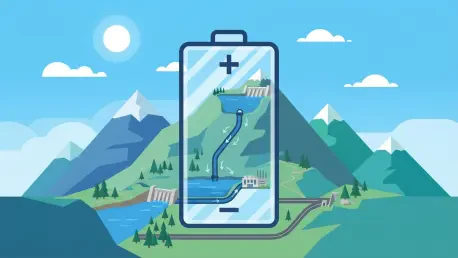

By connecting two existing high-altitude reservoirs, Snowy 2.0 will effectively quadruple the total rechargeable electricity storage capacity currently available in Australia. This project, which began as a relatively modest extension of the iconic Snowy Mountains Scheme, has transformed into a cornerstone of the national energy grid. As the country moves away from traditional fossil fuels, the necessity of large-scale storage becomes a matter of national security rather than just environmental policy. The engineering feat involves drilling through kilometers of hard rock to link the Tantangara and Talbingo reservoirs, creating a closed-loop system that functions like a giant rechargeable battery. While the path to completion has been fraught with challenges, including complex geological formations and shifting economic conditions, the end result is poised to redefine how the National Electricity Market operates. This transformation represents a shift from reactive energy management to a proactive, long-term strategy for energy resilience.
Financial Realities and Storage Requirements
Cost Evolution and Construction Progress
Snowy 2.0 has faced significant scrutiny following a dramatic departure from its original cost and timeline estimates. Initially pitched as a A$2 billion venture, the budget has surged to an estimated A$22 billion to A$25 billion due to geological complexities and rising global labor costs. Despite these financial hurdles, the project is now approximately 80% complete, suggesting that the most volatile construction phases are in the past and the focus has shifted toward final integration into the power grid. The massive tunnel-boring machines, which faced delays due to soft ground and high water pressure, have finally made consistent progress. This increase in expenditure, while substantial, reflects the reality of building multi-generational infrastructure in a post-pandemic global economy. Large-scale civil engineering projects often encounter unforeseen subterranean obstacles that cannot be fully mapped during the initial planning stages of such a massive undertaking.
Bridging the Renewable Energy Gap
The urgency of completing this project is driven by the rapid transformation of Australia’s energy landscape, which aims for 82% renewable generation by 2030. As aging coal-fired power plants retire, the grid faces a critical overnight gap where solar production vanishes and wind energy may fluctuate. To maintain stability during these hours, the nation requires massive, dispatchable energy storage that can bridge the divide between sunset and sunrise, ensuring that the lights stay on as fossil fuels exit the market. Currently, renewables provide a significant portion of the daily mix, but without deep storage like that provided by pumped hydro, the risk of blackouts during peak demand periods increases significantly. Snowy 2.0 provides the scale needed to absorb excess solar energy during the day and release it when the sun goes down. This balancing act is essential for a modern economy that relies on a constant, reliable flow of electricity for industry and homes.
Managing Sustained Energy Droughts
Beyond the nightly cycle, the grid must also prepare for several consecutive days of low wind and high cloud cover, known as energy droughts. Unlike small-scale batteries that can only provide power for a few hours, the deep storage of Snowy 2.0 can generate electricity for up to a week at full capacity if needed. This level of reliability is what makes the project an essential partner for the roll-out of wind and solar farms across the National Electricity Market. As more variable energy sources are added to the mix, the stabilizing influence of a large-scale pumped hydro scheme becomes even more valuable. The ability to store 350 gigawatt-hours of energy means that the system can act as a massive safety net, protecting consumers from the volatility of international energy markets and the unpredictability of the weather. By providing this buffer, the project enables a faster and more secure retirement of the remaining coal fleet, facilitating a smoother transition to a decarbonized power sector.
Technological Comparisons and Future Outlook
Pumped Hydro Versus Battery Technology
A vital component of the economic case for Snowy 2.0 is its superiority over lithium-ion batteries for long-duration storage. While chemical batteries are efficient for managing short-term power spikes, they remain prohibitively expensive for storing energy over several days. According to CSIRO data, replicating the storage capacity of Snowy 2.0 with grid-scale batteries would cost roughly three times the project’s current price tag, making pumped hydro the more fiscally responsible choice for deep storage. Batteries typically provide storage for two to four hours, which is helpful for frequency control but insufficient for multi-day periods of low wind and solar generation. Pumped hydro, by contrast, can provide energy for over a week if necessary, offering a level of insurance that chemical storage cannot currently match. The scale of the water storage at Tantangara ensures that even during prolonged periods of unfavorable weather, the grid remains resilient and stable.
Engineering Mastery and Scale
The technical scale of Snowy 2.0 is unprecedented, effectively quadrupling Australia’s total rechargeable electricity storage capacity. By connecting the Tantangara and Talbingo reservoirs via a 27-kilometer tunnel, the scheme can store 350 gigawatt-hours of energy—the equivalent of seven million electric vehicle batteries. This allows the system to act as a primary stabilizer, pumping water uphill during periods of excess renewable production and releasing it to generate power when demand peaks. The sheer volume of water involved is staggering; the Tantangara reservoir holds roughly half the volume of Sydney Harbour. This massive volume translates directly into dispatchable power that can be deployed within minutes. The integration of such a large-scale asset requires sophisticated software and grid management tools, ensuring that the water flow is optimized based on real-time market prices and weather forecasts to maximize the efficiency of every gigalitre pumped through the system.
The Strategic Long-Term Value
In the final assessment, the completion of this scheme provided the stable foundation required for the total phase-out of coal-fired generation across the continent. The project proved that large-scale pumped hydro could act as a regional anchor, providing the synchronous inertia and deep storage that smaller battery systems lack. To capitalize on this success, future energy planning emphasized the creation of “renewable energy zones” that connected directly to the Snowy storage hub, maximizing the efficiency of long-distance transmission. Engineers and planners used the geological data gathered during the construction of Snowy 2.0 to de-risk subsequent pumped hydro projects in other states, leading to a more competitive and diverse energy market. Ultimately, the transition to a clean grid required bold, multi-generational investments that prioritized long-term stability over short-term political cycles. By securing this reliable source of power, the nation established a blueprint for achieving energy sovereignty in a zero-carbon era.