
Christopher Hailstone joins us to discuss the seismic shifts in India’s energy landscape. With a career spanning decades in utility management and grid security, he provides a unique vantage point on how distributed solar platforms like Sunsol are reshaping national power structures. India’s goal to reach 280 GW of solar capacity by 2030 is one of the most ambitious climate targets globally, and Hailstone breaks down how a mix of 5,000 targeted projects will bridge the gap between policy and execution. We explore the transition from a modest baseline to a renewable powerhouse, the technical rigors of lifecycle management, and the socio-economic implications of localized energy production.
With India aiming for 280 GW of solar capacity by the end of the decade, how does Sunsol’s commitment to deploying 2 GW across 5,000 projects contribute to this monumental national vision?
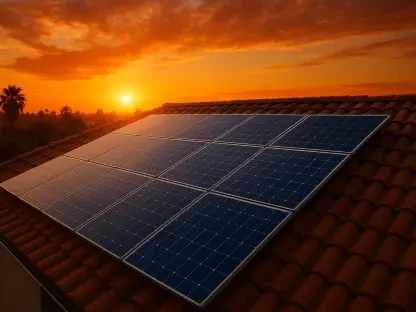
This initiative is a vital piece of the puzzle, representing roughly 5% of the national target through a highly strategic, distributed approach. By breaking down 2 GW into 5,000 individual projects, Sunsol is essentially weaving a new fabric of energy resilience across both urban and rural landscapes. We are looking at a diverse mix of rooftop, captive, and utility-scale installations that bring power generation closer to the point of consumption. It’s a massive undertaking that requires not just engineering prowess but a deep commitment to making solar accessible for residential and industrial users alike. Seeing these projects come to life creates a tangible sense of progress that large, isolated plants often lack.
India’s solar capacity has skyrocketed from just 2.8 GW in 2014 to 150 GW today; what does this fifty-fold increase tell us about the country’s infrastructure readiness and future potential?
That fifty-fold surge is nothing short of a clean energy revolution, signaling a profound transformation in how the country views its resource security. As of April 2026, non-fossil sources already make up over 50% of the installed electricity capacity, which is a staggering milestone for a developing economy. This rapid scaling proves that the infrastructure is becoming increasingly hospitable to renewables, though it still demands the kind of sophisticated management Sunsol provides. The shift from 2.8 GW to 150 GW has laid a foundation where solar is no longer an alternative, but the primary driver of growth. You can feel the momentum in the industry as we pivot toward the final push for 280 GW by 2030.
In terms of project execution, how do the technical audits and digital monitoring tools used by Sunkonnect ensure that these thousands of distributed installations remain reliable over their entire lifecycle?
Reliability in distributed energy isn’t just about the initial setup; it’s about the long-term performance and the digital heartbeat of each installation. Sunsol leverages Sunkonnect’s vast experience, having already completed over 5 GW of renewable projects globally since 2019. By utilizing proprietary quality protocols and advanced digital monitoring, the team can maximize plant reliability and ensure that investors and consumers see real returns. These audits aren’t just paperwork; they are rigorous technical deep-dives that cover everything from engineering design to asset optimization. When you have a team of 200 plus skilled professionals monitoring these systems, you eliminate the “set it and forget it” mentality that often leads to failure in smaller solar setups.
How does the single-window platform approach address the traditional barriers that commercial and industrial consumers face when trying to transition to solar energy?
The traditional path to solar is often cluttered with bureaucratic hurdles and technical complexities that can scare away even the most well-intentioned corporate entity. By providing a single-window platform, Sunsol simplifies the entire journey from engineering and procurement to final construction and operation. This approach is specifically designed to maximize economic benefits while slashing carbon emissions for diverse segments, including independent power producers and impact investors. It removes the friction of dealing with multiple vendors, allowing a factory or a residential complex to cut energy costs with confidence. The sense of relief from a client when they realize they have one point of accountability for a high-quality, transparent project is quite significant.
Beyond the environmental benefits, what kind of socio-economic impact can we expect from the deployment of 5,000 solar projects across the diverse geography of India?
The impact goes far beyond simple carbon math; it is about energy security and the democratization of power for the average citizen. Nitish Kumar has emphasized that these projects are about delivering real impact to the nation’s affordability and sustainability. When you deploy 5,000 projects, you are creating local jobs, strengthening the grid’s resilience, and helping families and businesses save money on their monthly bills. There is a profound human element to this—imagine a rural community gaining reliable power for the first time or a small business owner seeing their overhead drop because of a rooftop installation. These are the stories that define the success of a 2 GW target, turning numbers into actual improvements in quality of life.
What is your forecast for India’s solar landscape as we approach the 2030 deadline?
My forecast is that we will see an even more aggressive acceleration as the synergy between government policy and private innovation like Sunsol’s hits its peak. Reaching 280 GW is entirely within reach, provided we maintain the stringent technical standards and operational excellence that are currently being established. We will likely see solar become the backbone of the Indian grid, supported by a sophisticated network of distributed energy systems that offer both stability and independence. The next four years will be the most critical, but with over 50% of capacity already coming from non-fossil sources, the momentum is truly unstoppable. It is an exciting era where technology and environmental necessity finally align to power one of the world’s largest economies.