
Christopher Hailstone brings a wealth of knowledge from the front lines of energy management and grid security. As a utilities expert with deep experience in electricity delivery and renewable integration, he understands the delicate balance between maintaining a reliable power system and the mounting public pressure for affordable energy. With recent tensions in Las Vegas surrounding rate redesigns and the global surge in energy demand, his insights into how utilities navigate these complex social and technical challenges are more relevant than ever.
This discussion explores the friction between utility business models and consumer affordability, particularly focusing on the introduction of daily demand charges. We delve into the implications of 15-minute peak usage pricing, the impact of extreme heat on energy equity, and the shifting landscape of net metering and renewable energy goals.
A daily demand charge based on peak 15-minute usage can feel unpredictable to residential customers; how do you view this shift in rate design?
The shift toward a 15-minute peak usage window is a significant departure from the traditional volumetric billing that most households have understood for decades. NV Energy estimates that while this change might only add around 49 cents per day to a typical customer’s bill, the true complexity lies in a household’s ability to monitor and control that specific, narrow window of time. From a grid management perspective, these charges are designed to stop subsidies that shift costs to other customers by penalizing those who place the highest momentary strain on the system. However, for the average family, tracking a 15-minute spike creates a level of cognitive load that makes monthly budgeting feel like a moving target rather than a stable expense. It is a technically sound approach to grid efficiency that often fails to account for the lived reality of the consumer.
Protesters have expressed fear that these charges equate to “air conditioning rationing” in extreme heat; how should utilities address the human cost of pricing structures during record-breaking temperatures?
In a city like Las Vegas, which is recognized as one of the fastest-warming in the nation, electricity is quite literally a lifeline for survival against the threat of heatstroke. When temperatures hit 103 degrees and sustain long-duration streaks over the 100-degree mark, asking residents to shift their cooling usage away from peak hours is often both unrealistic and dangerous. The visceral reaction from protesters outside the Fontainebleau Las Vegas highlights a deep-seated fear that financial penalties for staying cool will disproportionately affect vulnerable populations who cannot afford a “financial threat” on their monthly bill. Utilities must find a way to reconcile their revenue-neutral designs with the physiological reality that some residents simply cannot turn off the air conditioning when the desert sun is at its most punishing. Addressing this requires more than just messaging; it requires a rate design that protects life during extreme weather events.
With utilities planning to spend over $1 trillion over the next five years, how does the surge in data center demand complicate the pursuit of lower rates for low-income communities?
The industry is currently entering a massive investment cycle, with more than $1,000,000,000,000 earmarked for infrastructure to handle the explosion of large-load data centers and increasing electrification. This surge in demand puts immense pressure on the existing grid, forcing regulators and the Public Utility Commission to decide who bears the ultimate cost of these necessary upgrades. While the 1,000 utility stakeholders at major conferences argue that new rate designs are critical for long-term stability, the public sees a disconnect when their personal bills rise while corporate demand drives the expansion. Balancing the capital needs of a modern grid against the immediate affordability needs of a low-income community requires a much more transparent approach to how these massive expenditures are recovered from the rate base.
Solar advocates are concerned that changes to net metering could stall Nevada’s clean energy progress; what is the broader impact of these regulatory shifts on individual energy independence?
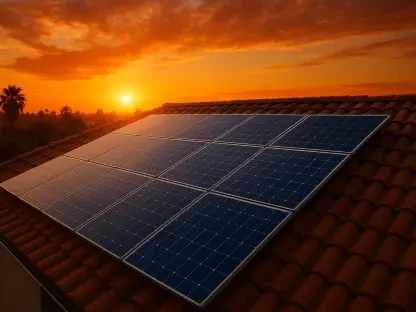
The recent unanimous approval to alter net metering design represents a significant hurdle for the continued expansion of residential solar energy and local clean energy goals. Critics and advocates argue these changes weaken essential customer protections and directly undermine the financial incentive for homeowners to invest in their own generation. When the credit for putting energy back into the grid is reduced or complicated by new demand charges, it slows down the broader transition away from fossil fuels and limits the ability of individuals to mitigate their own rising energy costs. It is telling that even when staff economists and engineers advised against these specific demand charges, the commission moved forward, suggesting a priority on utility revenue stability over individual energy autonomy. This creates a friction point where the state’s environmental aspirations may be at odds with its immediate regulatory decisions.
What is your forecast for the future of utility rate structures as public opposition continues to mount?
I expect that we will see a heightened era of “ratepayer activism” where the technical decisions of utility commissions are increasingly challenged by organized coalitions in the streets and the media. As we move toward January 1, 2027, and these charges take full effect, the friction between infrastructure costs and social equity will likely force a major redesign of how we value energy reliability versus energy justice. We are moving toward a future where being “revenue-neutral” is no longer a sufficient justification for a utility’s existence; they will instead need to prove that their systems are both physically resilient to 103-degree heatwaves and economically accessible to every segment of the population. The era of quiet, technical rate-making is over, and the era of the energy-conscious citizen is just beginning.