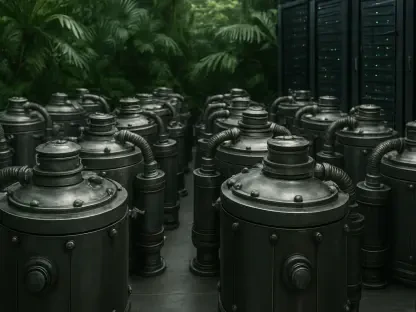

The project utilizes oxygen-free tanks where tailored bacteria thrive on the unique chemical makeup of wastewater diverted from orange washing and extraction lines. This innovative approach addresses a significant environmental challenge in the global juice industry, where massive quantities of organic residue often represent a disposal liability rather than an asset. By converting thousands of tons of citrus peel and wash water into high-value biomethane, the facility at Matão establishes a new paradigm for resource recovery. The scale of this operation is unprecedented, reflecting a strategic shift toward energy self-sufficiency that mitigates the inherent volatility of international energy prices. This integration of industrial biotechnology marks a pivotal moment in the modernization of agricultural infrastructure, ensuring that every byproduct from the fruit processing cycle contributes to a closed-loop system that supports both productivity and ecological stewardship on a massive scale.
Engineering Efficiency: A Circular Economy in Citrus Processing
Biomethane Production: Harnessing Energy From Liquid Waste
The technical architecture of the Matão facility centers on massive anaerobic digesters designed to handle high-load organic effluent. Unlike standard municipal systems, these reactors are calibrated specifically for the acidic nature of citrus wastewater, which contains essential oils and sugars that require precise microbial management. Engineers have implemented a multi-stage digestion process to maximize gas yield while preventing the buildup of toxic compounds that could inhibit bacterial activity. This high-efficiency conversion results in a steady stream of raw biogas, which is then purified through an advanced membrane filtration system to reach pipeline-quality biomethane. This renewable gas serves as a direct substitute for natural gas, powering the industrial boilers used in juice evaporation and pasteurization. By recycling the energy stored in the fruit’s own chemical bonds, the plant significantly reduces the carbon intensity of every liter of juice produced. This transformation from a high-energy-demand process to a self-sustaining ecosystem exemplifies the cutting edge of industrial bioenergy today.
Site Optimization: Strategic Integration Into Existing Facilities
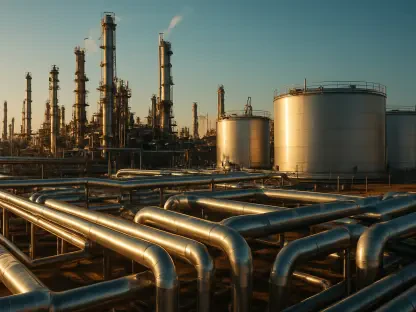
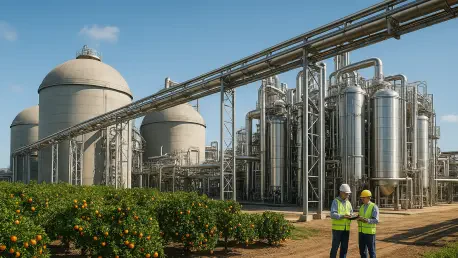
The physical integration of such a massive energy plant into an active industrial complex required sophisticated logistical planning and modular engineering solutions. Designers prioritized a footprint that minimizes disruption to the existing juice extraction lines while maximizing the efficiency of the wastewater collection network. High-capacity pipelines now connect various stages of the citrus processing cycle directly to the digester inlets, eliminating the need for trucking waste to off-site treatment centers. This reduction in internal logistics not only lowers fuel consumption but also significantly reduces local traffic and noise pollution around the Matão facility. The automation systems governing the energy plant are synchronized with the production schedule of the juicing plant, ensuring that peak energy generation aligns with peak demand periods. Such synchronization is vital for maintaining the thermal stability of the digesters, which rely on a consistent flow of organic material to keep the bacterial populations healthy.
Sustainable Growth: Economic and Environmental Impact of Bioenergy
Energy Transition: Moving From Fossil Fuels to Renewable Gas
In the current economic landscape, energy security has become a paramount concern for multinational corporations operating across diverse jurisdictions. The establishment of this biomethane facility provides a hedge against the price fluctuations of global natural gas markets, which have historically introduced significant financial risks into the food processing sector. By internalizing energy production, the Matão plant effectively decouples a portion of its operational overhead from the vagaries of international geopolitics and supply chain disruptions. This move toward localized energy generation not only stabilizes long-term financial planning but also enhances the competitive advantage of the citrus products exported to markets with strict carbon-border adjustment mechanisms. Investors and stakeholders increasingly view such infrastructure investments as essential for long-term viability, particularly as carbon pricing becomes a more prevalent reality in global trade. The ability to guarantee a reliable, low-carbon energy source directly on-site ensures that production can continue unabated.
Future Implementation: Advanced Recovery Solutions Across Global Hubs
Industry leaders who analyzed the Matão project recognized that the first step toward similar success involved a fundamental reevaluation of wastewater treatment as a revenue-generating activity. Organizations prioritized the deployment of high-resolution sensor arrays to track the nutrient density of their effluent streams, which allowed for the precise tuning of anaerobic environments. Experts recommended that future projects focus on the co-digestion of various agricultural residues to further enhance gas yields and stabilize microbial communities against seasonal variations in fruit quality. Governments played a crucial role by providing clear regulatory frameworks for the injection of biomethane into existing gas grids, which incentivized private capital to invest in the necessary infrastructure. The shift toward decentralized energy production required new training programs for facility operators, emphasizing the intersection of biotechnology and traditional industrial maintenance. Ultimately, the move toward comprehensive waste valorization became a cornerstone of corporate strategy.