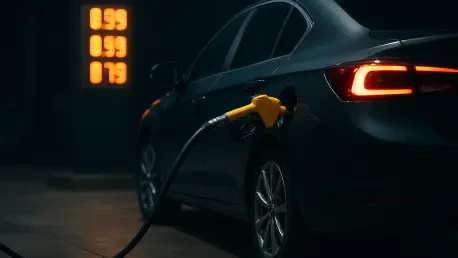

Public skepticism regarding the long-term effects of ethanol on engine health continues to influence how drivers respond to fluctuating prices at the pump. This wariness often clashes with the visual appeal of a bright yellow pump handle offering a steep discount compared to standard unleaded fuel. Recent viral trends have reignited this debate, highlighting instances where E85 was priced significantly lower than its petroleum-based counterpart, sometimes by as much as a dollar and fifty cents per gallon. For a motorist facing the rising costs of daily commuting in 2026, such a disparity seems like an obvious financial windfall that cannot be ignored. However, the decision to switch fuels involves much more than just comparing the numbers on a digital marquee. The initial excitement of saving money on a single tank of gas often masks a complex reality involving chemical compatibility and thermal efficiency. Understanding the hidden mechanics of ethanol blends is essential for any driver attempting to navigate these modern economic pressures.
The Mechanical Reality: Compatibility and Engine Health
Ethanol is essentially an alcohol-based fuel, and while it burns cleaner in terms of emissions, its chemical properties are remarkably different from those of standard gasoline. E85 is a high-ethanol blend that typically contains anywhere from 51% to 83% ethanol, depending on the season and regional regulations. This high concentration presents a significant challenge for traditional internal combustion engines that were not specifically designed as Flexible-Fuel Vehicles (FFVs). The primary issue lies in the corrosive nature of ethanol, which can degrade certain types of rubber, plastic, and metal components within a standard fuel system over time. Flexible-Fuel Vehicles are equipped with specialized fuel lines, tanks, and seals that are resistant to this chemical wear. Moreover, these vehicles feature sophisticated sensors that detect the exact ethanol percentage in the fuel rail, allowing the engine control unit to adjust fuel injection timing and spark advance in real-time to maintain performance.
Attempting to run a high-ethanol blend in a vehicle that lacks the necessary hardware can lead to immediate and long-term mechanical distress. Without the proper calibration, an engine may experience a lean-burn condition, where there is too much air and not enough fuel for proper combustion. This occurs because ethanol requires a lower air-to-fuel ratio than gasoline to ignite effectively. For the driver, this might manifest as a rough idle, poor acceleration, or the illumination of a check engine light. In more severe cases, persistent use of E85 in a non-compatible engine can cause permanent damage to the fuel pump and fuel injectors, which are often the most expensive components to replace in a modern powertrain. Modern automotive experts emphasize that unless the gas cap is yellow or the vehicle manual explicitly identifies it as an FFV, the risks of using E85 far outweigh any perceived short-term savings. The potential for engine failure makes compatibility the first priority.
The Financial Equation: Efficiency and Strategic Decisions
Even for those who own a certified Flexible-Fuel Vehicle, the financial benefits of E85 are not always as straightforward as the price per gallon suggests. The fundamental challenge is rooted in the laws of thermodynamics: ethanol contains approximately 27% less energy per unit of volume than pure gasoline. When a driver fills up with E85, the engine must consume more fuel to produce the same amount of power required to move the vehicle at highway speeds. Consequently, most drivers will see a noticeable drop in their fuel economy, often ranging between 25% and 30% fewer miles per gallon. This reduction means that while the cost to fill the tank is lower, the frequency of visits to the gas station will increase significantly. To determine if E85 is a true bargain, a consumer must calculate the price per mile rather than simply the price per gallon, as the lower energy density can quickly erode any savings if the price gap between fuels is too narrow for comfort.
The ultimate value of E85 was determined by a combination of mechanical readiness and disciplined economic analysis. Drivers who successfully navigated this choice were those who prioritized vehicle specifications over the immediate lure of lower pump prices. It became clear that the yellow cap was not a universal invitation but a specific hardware requirement that demanded respect to avoid catastrophic engine failure. Moving forward, consumers should prioritize digital tools and apps that calculate real-time price-to-efficiency ratios, ensuring that every fill-up aligns with their long-term budget goals. Manufacturers might also provide clearer dashboard data regarding ethanol percentage and estimated range to take the guesswork out of the refueling process. By focusing on the total cost of ownership rather than the sticker price, motorists prepared themselves for a more sustainable and cost-effective driving experience in an era of increasingly diverse fuel options that required careful study.