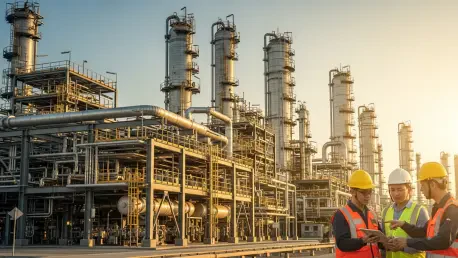

Christopher Hailstone brings years of high-level expertise in energy management and utility infrastructure to our discussion today. As an expert in grid reliability and complex refinery operations, he understands the monumental effort required to pause a massive industrial engine for critical upgrades. We sit down with him to discuss the upcoming 400 million euro maintenance project at the Porvoo refinery and what it takes to manage thousands of specialists in a high-stakes environment.
Managing a workforce of 7,500 people from over 100 different contractor companies is a logistical mountain to climb; how do you ensure safety and cohesion in such a massive, temporary ecosystem?
It starts with a culture of precision where 1,000 of Neste’s own employees act as the backbone for 6,500 external specialists. You aren’t just managing people; you are orchestrating a symphony of experts from Finland, Germany, Poland, Spain, the Netherlands, and the UK. To make this work, the 80% of local Finnish contractors must integrate seamlessly with international catalyst professionals and specialized technical teams. Every person on-site feels the weight of the task, knowing that safety is the absolute priority during the high-pressure environment of statutory inspections and asset improvements.
With a budget exceeding 400 million euros, the financial and operational risks are significant. What goes into the strategic decision-making process for a project of this scale?
A turnaround isn’t just a repair job; it is a vital investment in the long-term competitiveness and availability of the plant. Because these major shutdowns only happen every 2.5 to 3 years, every minute of the nine-week window from August to October 2026 is meticulously planned. We focus on tasks that require a total refinery shutdown, including routine maintenance and asset improvement initiatives that simply cannot happen while the units are hot. The heavy scent of machinery and the constant motion on-site represent a massive capital injection designed to keep the facility at the top of its game for years to come.
How does a refinery maintain its promise of uninterrupted fuel delivery to customers while the heart of the production facility is effectively stopped?
The hard work happens months before the first wrench is turned, as we produce and store massive quantities of goods in advance to secure the supply chain. Even as the main refinery units go dark, the Kilpilahti port and the Porvoo distribution terminal will operate normally to ensure sales and distribution never falter. It is a high-stakes game of inventory management where the end customer shouldn’t notice a single change in their daily service. This level of reliability requires an incredible amount of coordination between the production teams and the logistics managers at the distribution terminal.
Refinery turnarounds often create friction with the local community due to noise and traffic. How do you balance the industrial necessity with the well-being of the local residents?
Transparency is our greatest tool for mitigating disruptions like short-term flaring and the mechanical roar during the shutdown and startup phases. We recognize that 7,500 workers create a sudden surge in local traffic, so we implement specialized traffic arrangements in the Kilpilahti area to keep the community moving. It’s about more than just logistics; it’s about acknowledging the sensory impact on our neighbors and using digital platforms to keep everyone informed of the project schedule. Our goal is to minimize the industrial footprint on daily life while we work around the clock to finish the project safely and efficiently.
What is your forecast for the future of large-scale refinery maintenance turnarounds like this one?
I believe we will see these events becoming even more data-driven and compressed as technology allows for better predictive modeling of asset health. While the Porvoo refinery is investing over 400 million euros now, future turnarounds may utilize more remote monitoring to extend the intervals between shutdowns beyond the current 3-year cycle. However, the human element—the 7,500 specialized experts coming together from across Europe—will remain the most critical factor in ensuring these facilities stay safe and competitive. As the energy transition moves forward, these turnarounds will also increasingly focus on integrating greener technologies into existing infrastructure to meet future demand.