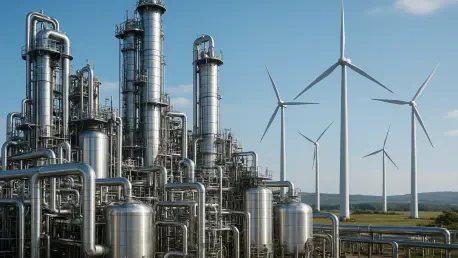

The vast wind-swept plains of Hami are no longer just a remote geography but have become the testing ground for a revolutionary shift in how the global aviation sector powers its heavy-duty engines. The launch of the Xinjiang project in September 2026 marked a pivotal moment where green hydrogen transitioned from a conceptual energy carrier to a primary feedstock for sustainable aviation fuel. This ¥11 billion initiative is not merely a manufacturing site; it is a fully integrated industrial ecosystem designed to prove that carbon-negative flight is a commercial reality rather than a distant laboratory dream.
The strategic importance of this region cannot be overstated, as Xinjiang provides the massive renewable energy capacity required to drive energy-intensive chemical synthesis. By tapping into 2 GW of wind power, the facility bypasses the carbon-heavy electrical grid, ensuring the entire lifecycle of the fuel remains environmentally positive. This transition signals a move away from traditional biofuels that rely on agricultural land, steering the industry toward synthetic fuels derived from captured carbon and clean hydrogen.
The Rise of China’s Green Hydrogen-to-SAF Industrial Ecosystem
The Hami project serves as a definitive benchmark for the production of carbon-negative aviation kerosene on an industrial scale. This facility integrates renewable power generation directly with chemical processing, creating a closed-loop system where the energy used to create the fuel is as clean as the fuel itself. This shift toward Power-to-Liquids technology allows for a more stable and scalable supply chain compared to first-generation biofuels, which often struggle with feedstock consistency.
Market dynamics are also shifting as key players evolve from simple equipment manufacturers into comprehensive energy service providers. This vertical integration means that companies are now managing everything from the initial electrolysis of water to the final delivery of certified aviation kerosene. This move allows for tighter control over production costs and quality standards, making synthetic fuels more competitive with traditional jet fuel as the market matures and production volumes increase across the country.
Technological Evolution and Market Expansion Strategies
Engineering Breakthroughs in Hydrogen Handling and Carbon Capture
The journey to industrial-scale production involved a disciplined expansion from pilot phases in Meishan and Ordos to the current 100,000-tonne facility. This progression allowed engineers to refine high-pressure diaphragm compressors and ionic liquid-sealed systems that handle hydrogen with unprecedented efficiency. These technical milestones were essential for managing the high-pressure environments required to synthesize liquid fuels from gaseous hydrogen and captured carbon dioxide without significant energy loss.
Hardware innovations have extended to the development of proprietary liquid hydrogen pumps and rapid refueling infrastructure. By creating systems that require minimal maintenance while operating under extreme pressure, the industry has addressed one of the primary technical barriers to hydrogen adoption. These engineering successes ensure that the infrastructure supporting carbon-negative fuels is as robust and reliable as the fossil fuel systems it is designed to replace.
Growth Projections for the Power-to-Liquids (PtL) Sector
With a target of capturing 400,000 tonnes of carbon dioxide annually, the industrial focus is firmly on achieving net-negative emissions. This captured carbon becomes a vital raw material, transformed through chemical engineering into high-value energy products. The scalability of these production lines, which now reach 50,000 tonnes of green hydrogen per year, suggests that the synthetic fuel sector is prepared to meet a significant portion of domestic aviation demand in the coming years.
The pursuit of domestic technological autonomy has led to a surge in proprietary hardware that competes on a global level. Economic outlooks for these integrated industrial chains are increasingly positive as renewable power costs continue to decline and carbon pricing mechanisms become more prevalent. This synergy between low-cost green electricity and advanced chemical processing creates a sustainable financial model that supports the long-term growth of the carbon-negative fuel market.
Overcoming Structural and Technical Barriers in Carbon-Negative Production
High capital expenditure remains a significant challenge for the large-scale deployment of hydrogen infrastructure. The initial investment required for wind farms, electrolyzers, and carbon capture units is substantial, necessitating long-term financial commitments and strategic partnerships. However, the consolidation of these components into a single industrial cluster helps to spread the financial risk and improve the overall return on investment by reducing external dependencies.
Logistics also present a unique hurdle, as the remote renewable hubs where fuel is produced are often thousands of miles from major aviation centers. Developing efficient transport methods for synthetic fuels is critical to maintaining their carbon-negative status during the distribution phase. Engineers are also working to optimize carbon capture efficiency, ensuring that the energy spent capturing carbon does not outweigh the environmental benefits of the resulting fuel.
The Regulatory Framework and International Standards Alignment
National decarbonization mandates are playing a central role in driving innovation within the aerospace sector. By setting clear targets for fuel sustainability, the government has provided the predictable environment necessary for companies to commit to multi-billion-dollar projects. These policies are bolstered by specific incentives for demonstration projects that pioneer new technologies in regions like Inner Mongolia, where the potential for renewable energy is highest.
Compliance with international standards is another priority, as aviation is a global industry that requires fuel interoperability. Ensuring that domestic synthetic kerosene meets the rigorous safety and performance certifications used by international airlines is vital for widespread adoption. Security protocols for managing ultra-high-pressure hydrogen systems are also being standardized to ensure that the scaling of these technologies does not compromise industrial safety or operational reliability.
Future Horizons: The Path Toward Global Leadership in Synthetic Fuels
Emerging trends point toward the development of modular hydrogen stations and small-footprint liquid hydrogen systems that can be deployed closer to end-users. These “QuickFill” systems could drastically reduce the complexity of the hydrogen supply chain, making it easier for airports to integrate sustainable fuels into their existing operations. Furthermore, the potential integration of direct air capture technology could make fuel production even more decentralized by allowing carbon to be harvested anywhere.
Xinjiang is positioned to become a global blueprint for how carbon-negative industrial clusters can be successfully implemented. By combining natural resource advantages with advanced manufacturing, the region demonstrates a viable path for other energy-rich territories to transition into the green economy. This model reinforces the idea that the hydrogen economy will be built on large-scale, integrated hubs that serve as the backbone for a new era of sustainable transportation.
Scaling Solutions for a Decarbonized Aviation Future
The successful scaling of Power-to-Liquids technology through the Hami project proved that the transition from a specialized equipment manufacturer to a comprehensive energy provider was a viable strategy. Stakeholders identified that integrating 100,000-tonne capacity facilities into the existing energy grid required a focus on proprietary hardware and ultra-high-pressure management. The project demonstrated that carbon-negative fuel production was not only technically feasible but also economically sustainable when backed by robust renewable energy infrastructure.
Investors recognized that the localized production of green hydrogen significantly lowered the operational risks associated with fuel supply volatility. The integration of massive wind power capacity with advanced chemical engineering established a new standard for the aerospace industry. Ultimately, the industry moved toward a future where the environmental impact of long-haul flight was mitigated by the very fuel used to power the engines. This progress provided a clear roadmap for stakeholders looking to capitalize on the growing demand for sustainable, high-performance energy solutions.