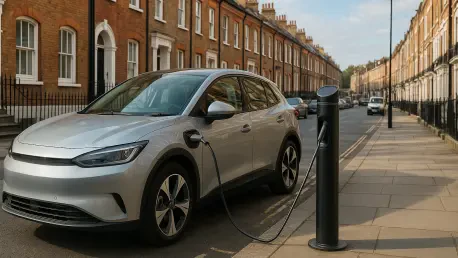

Urban drivers are facing a significant disadvantage as they are excluded from the tax relief measures designed to lower the cost of domestic power consumption. This fiscal discrepancy has become a defining characteristic of the British transition to sustainable transport, as the government recently implemented a temporary reduction of Value-Added Tax on domestic electricity from 5% to 0%. While intended to ease the burden on households during the current economic cycle from 2026 to 2028, the relief strictly applies to residential energy accounts. Consequently, a stark divide has emerged between those who can charge a vehicle on their own property and those who must rely on the public network. For millions of residents living in high-density urban environments, the dream of affordable electric mobility remains out of reach due to a tax code that penalizes those without driveways. This imbalance ensures that the financial benefits are reserved for those capable of installing private charging points.
The Economic Disparity: Bridging the Residential and Public Gap
Current data suggests that approximately 40% of British households lack access to off-street parking, leaving them entirely dependent on the public infrastructure. The price difference between these two worlds is staggering, with home overnight tariffs frequently hovering around 7 pence per kilowatt-hour while public rapid chargers can command prices as high as 90 pence. When the 20% VAT rate is added to these high commercial rates, the total cost of ownership for an urban driver begins to rival or even exceed that of a traditional internal combustion vehicle. This financial hurdle serves as a massive deterrent for potential buyers who are otherwise eager to support environmental initiatives. The disparity is not just a matter of convenience; it is a fundamental socioeconomic barrier that prevents lower-income families from participating in the green revolution. Without intervention, the transition to electric vehicles risks becoming a luxury afforded only to those with fixed assets.
Advocacy and Reform: The Case for a Unified Utility Tax
Advocacy groups such as FairCharge and the RAC have argued that electricity should be classified as an essential utility for transportation regardless of the delivery point. By maintaining a 20% tax on public charging, the Treasury is essentially treating vehicle charging as a luxury service rather than a necessary replacement for fossil fuels. Moreover, the lack of parity makes it difficult for businesses to invest in expanded charging networks in underprivileged areas where demand is high but the ability to pay premium prices is low. If the goal is to achieve total electrification by the end of the decade, the current fiscal framework requires a significant overhaul to ensure that no driver is penalized for their housing situation. Addressing this gap would likely stimulate immediate growth in the used electric vehicle market, which is critical for making sustainable transport accessible to the wider public. Unified tax policies would encourage more urban dwellers to invest in new technology.
Strategic Implementation: Actionable Steps for National Parity
The evaluation of the fiscal landscape demonstrated that the VAT gap was a primary obstacle to achieving universal electric vehicle adoption. To rectify this, the Treasury should have prioritized the alignment of energy taxes to reflect the changing reality of the automotive sector. Stakeholders advocated for a unified mobility tax structure that eliminated the distinction between domestic and public power delivery. Strategic investments in localized charging solutions, combined with a reduction in commercial VAT, provided the stability needed for the secondary market to flourish. Leaders recognized that equitable access to clean energy was a prerequisite for a successful national transition. By treating the public charging network as a vital public service, the United Kingdom bridged the socioeconomic divide and ensured that the benefits of mobility were shared by all. These changes secured a more inclusive and sustainable future for every motorist regardless of their housing.