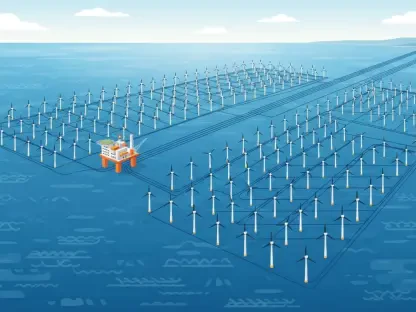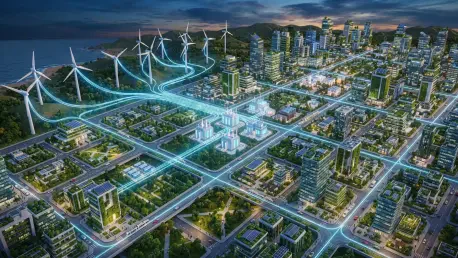

Deep learning architectures offer a significant technical advantage by processing high-dimensional data that traditional linear models cannot interpret. As the global shift toward weather-dependent power generation accelerates, the primary challenge remains the inherent instability of atmospheric conditions. Solar panels and wind turbines are subject to the whims of microclimates, making historical averages nearly useless for real-time balancing. To maintain the frequency of the grid, operators must rely on predictive models that can analyze gigabytes of sensor data in milliseconds. This necessity has pushed the industry toward deep neural networks that mimic the complexity of the systems they monitor. By identifying non-linear patterns, these technologies provide the precision required to integrate fluctuating resources. This evolution represents a fundamental change in utility management, where data processing speed directly determines the operational stability of a nation’s critical infrastructure.
Sophisticated Methodologies for Power Grid Stability
Evolution of Neural Architectures in Energy
Convolutional Neural Networks and Recurrent Neural Networks have become the standard for handling the spatial and temporal nuances of renewable energy production. Convolutional layers allow models to “see” atmospheric pressure systems through satellite imagery, while Recurrent layers, specifically Long Short-Term Memory units, track the historical decay of wind speeds. By merging these capabilities, systems can now predict production drops with confidence several hours in advance. Generative Adversarial Networks have also entered the field to create synthetic weather profiles that help models prepare for rare weather events. This multi-layered approach ensures that the forecasting system is not just reacting to current conditions but is anticipating future shifts based on a deep understanding of historical anomalies. The result is a significant decrease in error rates, enabling a more reliable transition to a green-dominated energy grid as these technologies continue to mature.
Advanced Hybridization and Transfer Learning
Hybrid modeling techniques represent the next stage of development, where deep learning is combined with traditional physical laws and signal processing methods. Techniques such as Wavelet Transforms decompose complex energy signals into simpler frequencies, allowing neural networks to learn distinct patterns at various scales. This hybridization overcomes the limitations of using a single AI architecture, providing a robust solution for diverse geographical locations. Transfer learning has further improved efficiency by allowing models trained on large datasets to be adapted for new installations with minimal local data. This is particularly beneficial for small-scale developers who lack the resources to maintain massive data centers. By leveraging pre-trained weights from successful global projects, these smaller entities can deploy world-class forecasting tools at a fraction of the cost. This democratization ensures that even remote wind farms can contribute effectively to the regional power supply.
Addressing Modern Challenges and Future Directions
Transparency and Model Interpretability
As utility companies increasingly rely on automated systems, the demand for explainable AI has become a central focus for researchers and regulatory bodies alike. Explainable frameworks allow grid operators to look inside the “black box” of neural networks to understand which environmental factors are driving a forecast. This transparency is crucial for risk management, as it enables humans to verify the model’s logic before committing to significant shifts in energy distribution. In the period from 2026 to 2028, the industry adopted Physics-Informed Neural Networks to ensure that AI predictions remained within the boundaries of real-world thermodynamic laws. These models prevent the system from generating physically impossible scenarios, which can occur when standard AI is faced with unprecedented data outliers. By aligning data-driven insights with scientific principles, operators have gained trust in automated decisions, leading to a more seamless integration of AI into daily operations.
Strategic Foundations for Infrastructure
The integration of deep learning represented a transformative leap in how the global energy sector managed the transition toward sustainable power sources. Organizations that embraced these architectures successfully navigated the complexities of variable production and achieved a more resilient infrastructure. To build on this foundation, stakeholders prioritized the development of decentralized edge computing to process information closer to the source, reducing latency and increasing security. Research utilizing the PRISMA framework ensured a transparent selection of training data, which allowed for the creation of global foundational models that generalized across different climatic zones. By treating forecasting as a dynamic and multidimensional challenge, the industry established a new benchmark for operational excellence. These actionable steps ensured that renewable energy was no longer an intermittent alternative but a primary pillar of the modern world, providing the necessary framework for stability.