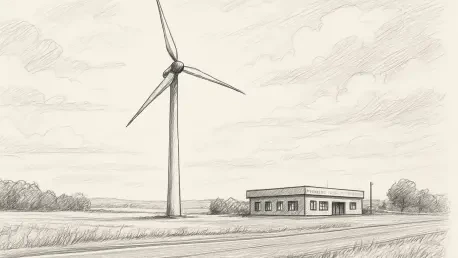

Municipalities facing high interconnection costs for solar projects are increasingly looking toward small-scale wind technology as a viable alternative for generating renewable power. In the town of Becket, Massachusetts, this shift has materialized through the recent installation of a 100-foot wind turbine situated at the local Town Hall. This project serves as a practical response to the twin challenges of escalating energy expenses and the growing urgency of environmental responsibility. While many rural areas struggle with the logistical complexities of large-scale renewable infrastructure, Becket has demonstrated that a targeted approach can yield significant results. The initiative represents the culmination of more than a decade of persistent strategic planning, transforming a conceptual vision into a functional asset. By taking control of their own power generation, local officials have established a working model for energy independence that other communities are watching closely. This success story offers a clear roadmap for other towns currently navigating similar utility hurdles and seeking ways to stabilize budgets.
Overcoming Obstacles and Designing for Longevity
Technical Adaptation: Engineering for Regional Efficiency
The path to this renewable milestone began over twelve years ago, when the Becket Energy Committee first explored various green energy options. Initially, solar power seemed like the most logical choice, but the community quickly encountered significant technical barriers that hindered progress. Specifically, the local electrical grid lacked the necessary capacity to handle a large-scale solar array, and the costs associated with interconnection were prohibitively high for a town of its size. These obstacles persisted until a comprehensive site evaluation conducted within the last few years revealed a more promising alternative. The study highlighted the unique geographical advantage of the Town Hall’s high elevation, which provided an ideal environment for consistent wind generation. To ensure the longevity of this investment, the town selected a turbine model that utilizes a specialized direct-drive permanent-magnet design. This engineering choice is significant because it eliminates the gearbox, which is historically the most common point of failure in wind energy systems. This specific unit is engineered to last for 50 years.
Strategic Energy Distribution: Powering Local Infrastructure
Beyond its mechanical resilience, the turbine is expected to deliver impressive operational efficiency, with an estimated annual output of approximately 36,000 kilowatt-hours. This volume of energy significantly exceeds the 24,000 kilowatt-hours required to power the Town Hall, creating a valuable surplus for the municipality. Instead of allowing this excess power to go to waste, the town has implemented a distribution strategy that redirects the remaining 12,000 kilowatt-hours to the local Highway Department. This internal sharing of resources ensures that every rotation of the turbine blades provides direct economic value to multiple municipal services. By maximizing the utility of a single installation, Becket has created a closed-loop system that reduces the town’s overall dependence on external energy providers. This model of local distribution highlights how rural towns can use small-scale technology to address the needs of several departments at once. It demonstrates that green projects do not always need to be massive in scale to be highly effective.
Financial Sustainability and Community Resilience
Economic Viability: Leveraging Federal and State Incentives
The financial structure of the Becket wind project provides a compelling example of how small municipalities can fund infrastructure goals without burdening taxpayers. A significant portion of the capital was secured through a $139,500 grant from the Massachusetts Department of Energy Resources, covering a substantial share of installation costs. Furthermore, the town leveraged federal investment tax credits provided under the Inflation Reduction Act, which offers direct-pay incentives for renewable energy. These external funding sources were instrumental in making the initiative almost entirely cost-neutral for the community. Although residents approved a contingency fund of $100,000 to cover potential gaps, current projections suggest that only a fraction of that amount will actually be needed. This fiscal strategy illustrates the importance of aligning local needs with state and federal policy goals. By utilizing these available incentives, the town has managed to secure a long-term asset with minimal upfront investment for its residents.
A Model for Self-Reliance: The Future of Rural Energy
Ultimately, the successful unveiling of the wind turbine provided a definitive answer to how small towns could achieve energy independence. The project demonstrated that a combination of technical adaptability and fiscal ingenuity allowed a community to overcome longstanding grid limitations. Officials emphasized that the roadmap established by this initiative was applicable to many other rural areas facing similar constraints. Moving forward, municipalities were encouraged to conduct their own site-specific evaluations to determine whether wind or solar was better suited for their unique geography. This experience highlighted the importance of inter-governmental cooperation and the strategic use of federal incentives to offset capital expenditures. The focus remained on creating scalable, low-maintenance solutions that ensured stability for at least 50 years. By prioritizing long-term durability, the town secured its utility future and provided a model for regional policy. Proactive governance successfully transitioned the community away from fossil fuels.