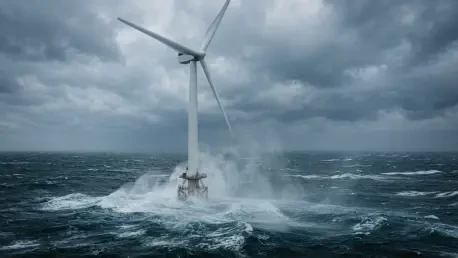

Modified Constitutive Relation Error techniques allow for the relaxation of uncertain constitutive laws while maintaining strict adherence to conservation of momentum. As of 2026, offshore wind energy has solidified its role as a titan of the renewable sector, contributing nearly 15 percent of the global green electricity supply through massive installations that harness the raw power of oceanic gales. These structures are engineering marvels, often standing taller than skyscrapers while supporting rotors that sweep areas larger than several football fields combined. However, the environments they inhabit are notoriously hostile, subjecting steel and concrete to a relentless barrage of turbulent winds, surging waves, and the pervasive, corrosive influence of salt-heavy air. Because these turbines operate at the outer limits of structural capacity, they are inherently vulnerable to fatigue and wear that can eventually compromise their stability. The industry is currently moving away from reactive maintenance toward a proactive digital twin philosophy, where complex numerical models simulate the real-time condition of physical assets. Achieving a high-fidelity virtual replica remains a significant hurdle, as models must be calibrated to match specific field data without losing the grounding of fundamental physical laws.
Bridging Physics and Data with the mCRE Framework
Reconciling Theoretical Models with Experimental Reality
The mCRE framework addresses the modeling gap by systematically categorizing mechanical information into two fundamental groups: reliable principles and uncertain variables. Reliable components are those defined by universal physical laws that are considered non-negotiable within the simulation, such as the conservation of mass and the balance of momentum. These laws establish an admissibility space where the mechanical fields of the turbine must exist to be physically plausible. By contrast, the uncertain components include parameters that are naturally prone to error or fluctuation, such as material stiffness, damping ratios, and boundary conditions at the seabed. Sensors themselves contribute to this uncertainty, as real-world data inevitably contains noise and measurement errors that can skew traditional calculations if not properly filtered or accounted for during the modeling phase.
Instead of demanding that a model perfectly replicate potentially flawed sensor data, the mCRE methodology allows for a controlled relaxation of these uncertain constraints. The objective is to find a mathematical solution that honors the reliable physics while minimizing the error associated with the uncertain constitutive relations. This approach stands in stark contrast to purely data-driven “black-box” models, which might identify patterns in sensor data but lack the physical interpretability required for structural safety assessments. By maintaining a firm grip on the physics while allowing for data-informed flexibility, the mCRE technique ensures that the resulting digital twin is both representative of the specific asset and scientifically sound. This balance is critical for 2026-era wind farm operations, where engineers require models that provide deep insight into internal stresses that sensors cannot measure directly.
The Iterative Process of Model Correction
To arrive at a calibrated state, the mCRE method utilizes a sophisticated iterative process that alternates between localization and correction steps. In the localization phase, the system identifies the best possible mechanical fields for a fixed set of model parameters, such as the assumed stiffness of the turbine tower or the density of the surrounding water. This step effectively determines how well the current model assumptions align with the actual physical environment captured by the turbine’s sensors. If the discrepancy between the theoretical prediction and the observed data is too high, the system flags the specific parameters that are likely responsible for the error. This pinpoint accuracy allows for targeted updates rather than broad, unguided adjustments that could destabilize the entire simulation or lead to physically impossible results.
Following the localization, a correction step is employed where gradient descent algorithms are used to update the uncertain coefficients until the model closely mirrors the physical reality. This might involve adjusting the drag coefficients on the turbine blades or refining the structural damping values of the foundation. Because the process is iterative, the digital twin gradually converges toward an optimal configuration that accounts for both measurement noise and inherent modeling biases. This resilience is what makes mCRE particularly valuable for offshore applications, as it provides a robust way to handle the high levels of environmental noise found in maritime data. The result is a dynamic model that evolves alongside the physical turbine, providing a continuously updated baseline for structural health monitoring and helping operators identify subtle shifts in performance.
Applying Multi-Physics Calibration to Offshore Environments
Integrating Wind, Wave, and Soil Interactions
Modern offshore wind turbines are characterized by highly complex, coupled interactions between the atmosphere, the ocean, and the seabed. Research published in 2026 highlights the extension of mCRE into these multi-physics domains, moving beyond simple structural analysis to encompass fluid-structure interactions. In these models, the turbine tower is often represented as a 3D Timoshenko beam, a standard industrial approach for long, slender structures that accounts for both shear deformation and rotational inertia. Aerodynamic loading from the rotor is typically integrated using specialized drag laws, while hydrodynamic forces on the foundation are calculated through the Morison law, which considers both inertia and drag. These forces do not act in isolation; the movement of the tower affects the aerodynamic thrust, which in turn influences the hydrodynamic response at the base.
The mCRE framework is uniquely suited to handle these interfaces by treating the coupled forces as flexible constitutive relations that can be identified during the calibration process. This is especially important for soil-structure interactions, where the stiffness of the seabed and the connection between the foundation and the tower are often based on uncertain geological estimates. By allowing the model to relax these assumptions, engineers can identify how the soil actually supports the structure in its specific location. This level of site-specific detail is far superior to generalized laboratory assumptions, as it reveals the unique mechanical signature of each individual turbine. This capability allows the digital twin to simulate exactly how a specific turbine reacts to a specific storm, providing a level of granular detail that is essential for managing the long-term integrity of massive offshore arrays.
Validating Performance through Synthetic and Field Testing
Before being implemented on commercial wind farms, the effectiveness of the mCRE framework was verified through rigorous synthetic testing designed to mimic the challenges of the offshore environment. Researchers generated artificial data sets from a known model and then introduced random Gaussian noise to simulate the imperfections of real-world sensors. The framework successfully recovered the hidden parameters, such as the hydrodynamic mass coefficient, with remarkable accuracy. In these tests, the model often converged from an initial incorrect guess to a near-perfect value in only a handful of iterations. This validation proved that the mathematical foundations of the mCRE approach were capable of distinguishing between actual structural behavior and the background noise inherent in remote sensing, providing the confidence needed for industrial application.
The transition to real-world application focused on an 8.6-megawatt industrial demonstrator located off the coast of the United Kingdom, which provided a massive dataset for analysis. Over 4 terabytes of data, including high-frequency inclinometer and strain gauge readings, were processed to test the framework under varying sea states and wind conditions. By isolating specific frequency peaks in the sensor data, the team was able to decouple the signals caused by wind loading from those caused by wave impact. This surgical calibration allowed for the identification of physical phenomena that would otherwise be obscured in a less sophisticated analysis. The industrial test confirmed that the mCRE framework could scale to handle the immense data volumes and mechanical complexity of the largest turbines currently in operation, providing a blueprint for future digital twin implementations.
Industrial Implications for Structural Health and Design
Discovering Discrepancies in Load and Resistance
The application of calibrated mCRE models to active offshore turbines has revealed significant discrepancies between theoretical design assumptions and actual operational reality. For instance, investigations into hydrodynamic loading found that the mass coefficients often used in engineering standards vary considerably depending on the specific sea state. This suggests that the simplified Morison law, while useful for initial design, may not capture the full complexity of wave-induced forces over the lifetime of a structure. Furthermore, in-situ thrust curve measurements indicated that some turbines experience higher aerodynamic loads at high wind speeds than the manufacturer’s original specifications suggested. Such findings are critical because even a small increase in sustained loading can lead to a disproportionate acceleration of fatigue damage over time.
These insights provide a valuable feedback loop for the next generation of offshore engineering, allowing designers to move toward more realistic load cases. By understanding that a turbine might be under-designed for specific wave conditions or over-loaded by certain wind patterns, operators can implement mitigation strategies, such as adjusting the control logic of the rotor to reduce stress during peak events. This shift from theoretical safety factors to data-driven operational limits represents a significant advancement in the reliability of wind energy assets. It ensures that the structural health of the turbine is managed based on its actual history of exposure rather than a generic life expectancy. This approach not only enhances safety but also helps in maximizing the energy output of the turbine throughout its operational life.
Enhancing Long-Term Monitoring and Model Selection
The true power of the mCRE framework lies in its ability to transform a digital twin from a static simulation into a dynamic diagnostic tool that evaluates its own accuracy. By comparing different mathematical representations of components, such as the connection between a concrete foundation and a steel tower, the framework can determine which numerical model most accurately reflects the physical signals coming from the sensors. This capability allows engineers to select the most representative model for each specific turbine in a fleet, ensuring that maintenance decisions are based on the best possible information. As the industry moves deeper into the 2020s, this ability to distinguish between a healthy structure and one undergoing subtle degradation will be the cornerstone of cost-effective offshore operations.
In the final assessment of the demonstrator project, the researchers successfully utilized the mCRE technique to monitor the evolution of structural parameters over multiple seasons. The framework demonstrated that while some factors, like connection stiffness, remained stable, others reacted dynamically to environmental shifts. The study proved that incorporating modified constitutive relation errors significantly improved the predictive reliability of offshore digital twins. These findings provided a clear path forward for the integration of multi-physics modeling in the routine maintenance of renewable energy infrastructure. By the end of the project, the team established that the calibrated models could detect anomalies with a precision that was previously unattainable through standard monitoring techniques. This progress solidified the role of advanced mathematical calibration as a vital component in the quest for sustainable and resilient offshore power generation.