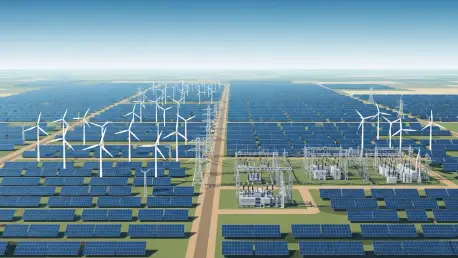

The glittering expanse of solar parks stretching across the Thar Desert represents more than just a triumph of engineering; they serve as a silent testament to a nation racing to reconcile its massive green ambitions with a deep-seated industrial vulnerability. While the landscape is increasingly dotted with photovoltaic arrays, the silicon and specialized alloys within them often originate thousands of miles away. This reliance on international vendors places the country in a delicate position, balancing the urgent need for decarbonization against the volatile realities of global logistics.
The Paradox: India’s Renewable Energy Dominance
Despite securing a position as a top-tier global leader in renewable capacity, the hardware fueling this transition remains largely foreign in origin. The domestic market has mastered the art of deployment and installation, yet the sophisticated components required to capture the sun’s energy are frequently imported from distant manufacturing hubs. This creates an ironic situation where the quest for energy independence is currently powered by equipment that India does not fully control or produce.
Such a setup leaves the national grid susceptible to price fluctuations and trade disruptions that could stall progress. Furthermore, the reliance on a handful of dominant exporters prevents the local economy from capturing the full value of the green revolution. Addressing this imbalance is no longer just an environmental goal; it is a critical necessity for sustaining long-term industrial growth and ensuring that the transition to clean power remains uninterrupted.
The Urgent Shift: Moving From Assembly to Sovereignty
Recognizing these vulnerabilities, the government refocused its industrial policy toward the high-value upstream segments of the supply chain. Instead of merely serving as an assembly point for finished modules, the goal is to build the foundational infrastructure required to manufacture the raw materials themselves. This shift aims to create a supply chain that can withstand the geopolitical shifts and maritime bottlenecks that have historically plagued energy imports.
Establishing a localized production base provides a buffer against the unpredictability of international markets. By securing the early stages of production, the domestic industry can better predict costs and manage project timelines. This strategic move represents a maturation of the sector, signaling a departure from being a passive consumer of technology to becoming an active, self-sustaining producer.
The Upstream Deficit: Challenges in Solar and Green Hydrogen
The leap to deep manufacturing involves overcoming a significant upstream deficit that characterizes current operations. While module production capacity has surged to 225 GW, the critical ingredients like polysilicon and ingot wafers remain elusive. These high-tech inputs require massive energy and specialized chemical processes that the local ecosystem has only just begun to master. Without these base layers, the country remains at the mercy of global supply chains for the most vital parts of a solar cell.
In the green hydrogen sector, the hurdle is even higher, requiring the domestic creation of advanced electrolyzer parts like catalysts and bipolar plates. These are not simple commodities but highly engineered components that demand precision manufacturing. Developing these capabilities requires a monumental effort in research and development to move beyond basic assembly and into the realm of high-science industrial production.
High Stakes: Evaluating Financial Pressures on Emerging Players
Transitioning to these complex processes involves daunting capital expenditure that tests the limits of even the largest industrial conglomerates. Firms are entering a high-stakes arena where they must fund massive factories while competing against global giants who have already amortized their costs over decades. This financial pressure is compounded by the need for rapid technological cycles, where equipment can become obsolete before it even turns a profit.
Market analysts remain watchful as these emerging players navigate the narrow margins of a competitive global market. Investors are particularly sensitive to the strain on cash flows, especially as firms strive to achieve the economies of scale necessary to lower unit costs. The success of these ventures depends on their ability to execute perfectly in a landscape where any delay in commissioning can lead to significant financial setbacks.
The Strategic Framework: Establishing a Competitive Manufacturing Hub
The success of this industrial pivot relied on the effectiveness of government support mechanisms, such as Production-Linked Incentive schemes and strategic import duties. These tools leveled the playing field for local manufacturers while they built the necessary scale to compete globally. Moreover, the industry focused on fostering global technology partnerships and specialized training to acquire the sophisticated engineering capabilities required for a self-reliant chain. By integrating these efforts, the nation transitioned from a clean energy adopter into a manufacturing powerhouse, securing its role in the global energy landscape.