
Christopher Hailstone stands at the intersection of critical infrastructure and sustainability, bringing years of expertise in grid reliability to the table as the industry faces unprecedented growth. As data centers face increasing scrutiny for their massive energy requirements, Hailstone provides a nuanced perspective on why raw consumption figures do not tell the whole story. In this conversation, we explore the transition from “energy guzzlers” to efficiency leaders, the shift to closed-loop cooling architectures, and the innovative engineering models that are redefining how we power the digital age in a volatile global market.
While raw power consumption is a common metric, how should we shift the focus toward computing output efficiency?
Focusing purely on absolute power use often leads to a shallow understanding of the value data centers provide to modern society. We need to look at how effectively every megawatt is converted into computing output, rather than just staring at the meter and fearing the total. In Brazil, for example, data centers currently account for about 1.7% of total electricity consumption, a figure expected to rise to 3.6% by 2029, yet the context changes when you realize their grid is already 88.2% renewable. When infrastructure is powered by green energy, the conversation shifts from the “guilt” of consumption to the “virtue” of efficient, sustainable processing. It is the engineering-led solutions that allow us to scale without the heavy environmental tax typically associated with legacy industries.
Water usage has historically been a point of contention for large-scale facilities; what changes are you seeing in how operators manage this resource?
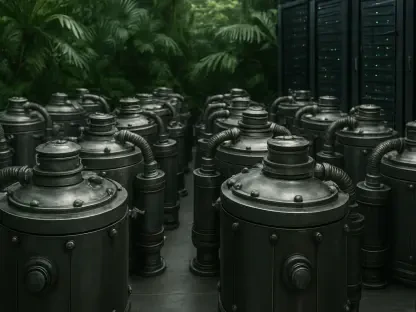
The industry is rapidly moving away from the thirsty, evaporative cooling systems of the past which left a heavy footprint on local water tables. We are seeing a massive shift toward closed-loop liquid cooling architectures that emphasize reuse over constant consumption. At Elea Data Centers, for example, about 80% of their facilities already utilize these closed-loop systems, with plans to hit 90% in just a few years. This transition replaces the humid, heavy air of old cooling towers with sleek, efficient piping that keeps components chilled without wasting a single drop. It is a sensory shift from the roar of water pumps to the quiet, recycled hum of high-performance engineering that respects local ecology.
How are external factors like geopolitics and grid stability forcing a reimagining of power procurement strategies for data centers?
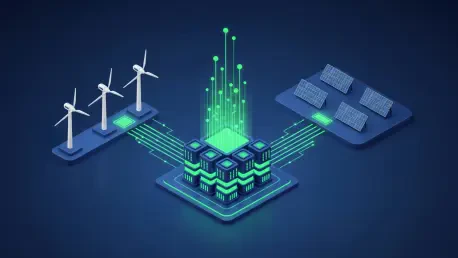
The landscape changed drastically after the invasion of Ukraine, which served as a harsh wake-up call regarding the fragility of relying on single energy sources. This instability has pushed operators toward diversified procurement and long-term renewable agreements to ensure they are not left in the dark during a crisis. We are seeing the rise of “bring-your-own-power” models and modular power systems that offer a level of independence from traditional, often strained, municipal grids. By adopting grid-interactive designs, these facilities can actually support the local infrastructure during peak loads rather than just draining it. It transforms the data center from a passive consumer into an active, resilient partner in the national energy ecosystem.
In an era where trust is paramount, how do high-profile cases of environmental violations affect the industry’s reputation and relationship with the public?
Public trust is incredibly fragile, and it takes only one bad actor to overshadow years of collective progress made by the rest of the sector. When reports surfaced that xAI allegedly ran gas turbines illegally at a U.S. site, it struck a nerve because it bypassed environmental rules and directly impacted the health of nearby residents. These shortcuts create a sense of resentment and skepticism that every ethical operator then has to work twice as hard to overcome through transparency. True leadership in this space requires a commitment to the community’s air quality and safety, not just the speed of the deployment or the height of the profit margins.
What is your forecast for data center energy management?
I foresee a future where data centers are no longer viewed as isolated islands of consumption but as integral nodes of a smart, green energy grid. We will see the widespread adoption of grid-interactive designs and modular power systems that allow facilities to scale up or down based on real-time renewable availability. As demand continues its steep climb, the operators who succeed will be those who master the art of “bring-your-own-power” models, turning their power systems into assets for the public good. Ultimately, the industry will move past the “energy guzzler” label by proving that massive computing power can coexist with, and even bolster, global sustainability goals.