
Global energy markets are currently witnessing a seismic shift as traditional combustion methods struggle to meet the stringent carbon neutrality targets established for the period between 2026 and 2030. Chemical looping combustion offers a transformative alternative by utilizing metal oxides as intermediate oxygen carriers, thereby eliminating the need for direct contact between air and fuel. This specific configuration allows for the inherent separation of carbon dioxide, which significantly reduces the energy penalty typically associated with carbon capture technologies. As industries face mounting pressure to decarbonize, the integration of biomass into these looping systems presents a dual-benefit scenario where carbon-neutral fuel sources are converted into high-grade thermal energy with minimal environmental footprint. This approach addresses the limitations of conventional gasification and paves the way for a more resilient infrastructure that can be deployed across various manufacturing sectors.
Operational Fundamentals of Looping Systems
Oxygen Carrier Selection: The Role of Metal Oxides
Selecting the appropriate metal oxide is the cornerstone of a successful biomass chemical looping operation, as these materials must withstand thousands of reduction-oxidation cycles without losing structural integrity. Iron-based, copper-based, and manganese-based carriers have emerged as the primary candidates due to their high oxygen transfer capacity and relative abundance in the market. Between 2026 and 2028, research has increasingly focused on synthetic perovskites and composite materials that enhance the rate of oxygen release during the fuel reactor phase. These advancements ensure that the biomass particles, which vary significantly in moisture content and density, are efficiently converted into usable energy without causing significant fouling or agglomeration. The durability of these carriers directly dictates the operational costs of the facility, making material science a critical driver of the technology’s widespread adoption across the power generation sector globally.
Thermal stability remains a significant hurdle because the temperatures within the combustion and reduction zones often exceed nine hundred degrees Celsius in a standard operational environment. High-performance carriers must resist attrition, which is the physical breaking down of particles due to friction and collision within the turbulent flow of the reactor. When carriers degrade too quickly, the resulting fines can escape the system, leading to both economic loss and potential environmental hazards in the form of particulate emissions. Modern engineering solutions now employ sophisticated pelletization and coating techniques to provide a protective layer around the active metal oxide core, significantly extending the lifespan of the material. Furthermore, the ability of these carriers to handle the ash content inherent in biomass determines how versatile a plant can be in its feedstock sourcing, ensuring stable power delivery regardless of seasonal variations.
Thermodynamic Control: Managing Heat and Reaction Rates
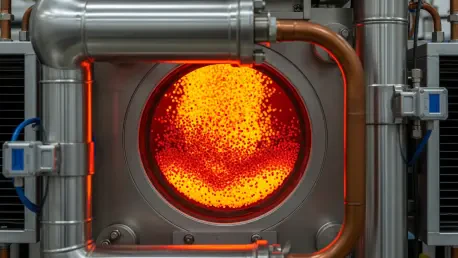
Maximizing the thermodynamic efficiency of chemical looping requires a delicate balance between the exothermic oxidation reactions in the air reactor and the endothermic reduction reactions in the fuel reactor. Heat management systems have evolved to capture the high-grade thermal energy generated during the oxidation of the metal carrier, which is then transferred back to the fuel reactor or used to drive steam turbines. By meticulously controlling the flow rates of both the solids and the gases, engineers can maintain an isothermal state that prevents localized overheating, which would otherwise damage the mechanical components of the plant. This precise thermal regulation is what distinguishes chemical looping from traditional incinerators, allowing for higher energy recovery rates. Recent developments have demonstrated that integrating heat exchangers directly into the fluidized bed can further optimize the process, capturing energy previously lost to the surrounding environment.
Improving the gas-solid contact time within the fuel reactor is another vital aspect of increasing overall system efficiency and ensuring complete conversion of the biomass feedstock. When biomass is introduced, it undergoes rapid devolatilization, releasing a mixture of gases that must react completely with the oxygen carrier to produce a clean stream of carbon dioxide and water vapor. If the contact time is insufficient, unreacted syngas may exit the system, representing a loss of potential energy and a contamination risk for the captured carbon stream. To counter this, advanced reactor designs utilizing internal baffles and secondary injection ports have been implemented to ensure a more uniform distribution of reactants. These design improvements have pushed the carbon conversion efficiency of pilot-scale plants toward the ninety-nine percent threshold, simplifying the subsequent compression of CO2 for underground storage or industrial applications.
Strategic Integration and Environmental Impact
Industrial Scaling: Adapting Infrastructure for Biomass
Transitioning biomass chemical looping from laboratory settings to industrial-scale power plants requires a fundamental rethink of existing infrastructure and supply chain logistics. Large-scale deployment involves the construction of dual-fluidized bed systems that can handle hundreds of tons of biomass daily, necessitating robust mechanical handling systems for the feedstock. These facilities must be strategically located near agricultural or forestry hubs to minimize the carbon footprint associated with transporting bulky biomass materials. Between 2026 and 2029, the industry expects to see a surge in retrofitting projects where traditional coal-fired plants are converted to utilize chemical looping technology. This repurposing of existing assets reduces the initial capital expenditure and allows for a faster rollout of carbon-neutral power generation. Moreover, the modular design of newer units allows for scalability, enabling smaller utilities to adopt the technology locally.
Addressing the logistical challenges of biomass variability is crucial for the continuous operation of large-scale looping systems that require a steady feed to maintain thermal equilibrium. Unlike coal, which has a relatively uniform energy density, biomass feedstocks can range from wet sewage sludge to dry timber scraps, each requiring different pre-treatment processes. Integrated drying and torrefaction units are becoming standard components of these plants, ensuring that the moisture content is optimized before the fuel enters the reactor. This pre-treatment not only improves the combustion characteristics but also prevents the formation of corrosive compounds that could shorten the lifespan of the reactor walls. The integration of digital twin technology has also played a pivotal role, allowing operators to simulate the behavior of different feedstocks in real-time and adjust the reactor parameters accordingly for optimal output and reduced mechanical wear.
Economic Viability: Incentives and Regulatory Frameworks
The economic viability of biomass chemical looping is increasingly supported by evolving carbon pricing mechanisms and government subsidies aimed at reducing greenhouse gas emissions. As carbon taxes rise globally, the inherent ability of chemical looping to capture carbon dioxide at a lower cost than traditional post-combustion methods provides a significant competitive advantage. Investment in these technologies is also driven by the growing market for negative emissions, where companies pay for the removal of carbon from the atmosphere to offset their unavoidable footprints. Between 2026 and 2028, new financial instruments like green bonds and carbon credits are expected to provide the necessary liquidity for large-scale infrastructure projects. This financial backing is essential for overcoming the barriers that often plague emerging green technologies during the transition from pilot phases to commercial viability and industrial scale.
Sustained growth in this sector depended on the establishment of clear regulatory frameworks that rewarded the long-term sequestration of captured carbon from biomass sources. Policymakers recognized that without standardized protocols for monitoring and verification, the true environmental benefits of biomass chemical looping would remain difficult to quantify for international climate reporting. By creating a transparent accounting system, governments encouraged private sector participation and fostered a more stable investment environment for bioenergy projects. The integration of these systems into regional grid networks also required new technical standards for power stability and dispatchability across borders. Ultimately, the collaboration between technical experts and economic strategists ensured that the technology became a cornerstone of the renewable energy portfolio, securing the future of carbon-negative power generation through engineering.