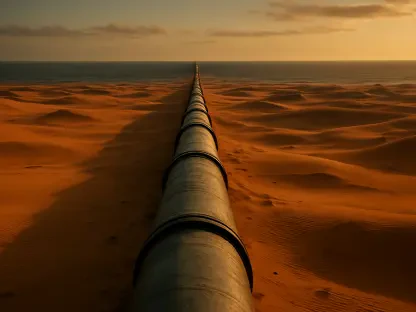

The golden age of Australian iron ore, once defined by the insatiable appetite of Chinese blast furnaces, is undergoing a structural transformation that demands an urgent rethink of national industrial strategy. For decades, the economy relied on a high-volume trade that supported national wealth and funded essential public services. However, as China’s industrial focus shifts away from infrastructure-heavy growth, the traditional “dig and ship” model has reached its limit. Success now depends on moving up the value chain by integrating renewable energy, ensuring the nation remains a global leader in the emerging green iron market.
Market Realities: The Critical Turning Point for Australia’s Mining Dominance
Australia has historically sent over 85% of its iron ore exports to China, a relationship that peaked alongside Chinese steel production. A cooling construction sector and a permanent contraction in property development now signal a long-term decline in demand. Federal forecasts indicate that export volumes will peak within the next two years before entering a period of steady contraction. Understanding this shift is vital for preparing the national budget for a future with lower resource-driven inflows.
Risk Assessment: Navigating Economic and Competitive Headwinds
Revenue Outlook: The Financial Toll of Shrinking Export Earnings
Export earnings are projected to fall by AU$44 billion from 2026 to 2031. This drop threatens government budgets, specifically in Western Australia where iron ore royalties underpin a vast majority of state revenue. As profit margins compress due to lower global prices, the mining sector must find high-value alternatives to maintain historical revenue levels. Transitioning toward processed minerals offers a way to capture value that was previously lost to overseas manufacturers.
Supply Dynamics: Rising Global Competition and the Simandou Factor
New entrants like the Simandou project in Guinea are challenging the established market hierarchy. This supply influx could create a global surplus lasting through 2035, putting sustained downward pressure on iron ore prices. Unlike many local deposits, this African ore is naturally suited for low-emission steelmaking, forcing domestic producers to upgrade their offerings to remain competitive in a quality-conscious global environment.
Trade Barriers: Geopolitical Shifts and the Decline of Traditional Steel
Carbon tariffs in Europe are making carbon-intensive steel less attractive to international buyers. As global partners prioritize sustainability and emission targets, raw ore is losing its appeal compared to pre-processed, low-carbon materials. This shift leaves suppliers of unprocessed hematite vulnerable to changing regulations and domestic protectionism in key manufacturing hubs.
Strategic Evolution: Moving Toward a Green Energy Superpower
Australia is uniquely positioned to lead the renewable revolution by combining vast mineral wealth with solar and wind power. Producing green hydrogen allows for the domestic reduction of iron ore into green iron, effectively exporting renewable energy in a solid form. This strategy provides a clear path to decouple the economy from Chinese property cycles while meeting the rising global demand for sustainable industrial inputs.
Execution Roadmap: Implementing Strategies for a New Industrial Age
This pivot requires immediate investment in large-scale hydrogen electrolyzers and domestic green iron pilot plants. Diversifying partnerships with emerging markets in Southeast Asia and India is also essential for creating a resilient and varied customer base. Success relied on prioritizing capital for technologies that bridged the gap between raw extraction and sophisticated renewable processing.
Future Outlook: Securing Prosperity in a Decarbonized World
The evidence confirmed that the traditional export model reached its limit, necessitating a rapid evolution of the mining industry. While the loss in earnings was a significant challenge, it also functioned as a catalyst for essential industrial innovation. Leaders recognized that pivoting toward value-added commodities was the only way to ensure long-term economic stability. Stakeholders prioritized the development of domestic processing hubs and specialized trade agreements to maintain global relevance. By integrating renewable energy into the resource sector, the nation successfully initiated its transition into a high-tech manufacturing power.