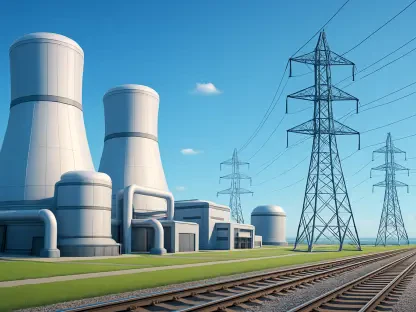

The strategic move to allow a private firm to build its own competing infrastructure network for nearly 5,000 crore rupees has sparked fears of a systemic dismantling of public power assets. This escalating tension centers on the decision by the Haryana Electricity Regulatory Commission to introduce private competition into what has traditionally been a government-held monopoly. By granting a 25-year parallel distribution license to Eleven Power Private Limited, officials aim to modernize the grid and reduce the massive backlog of connection requests in high-growth areas. However, the workforce represented by the Haryana Bijli Karamchari and Engineers Sanyukt Sangharsh Morcha views this as a calculated step toward total privatization. The union argues that injecting private entities into high-revenue zones like Gurugram will eventually deplete the resources needed to maintain rural infrastructure across the region.
The Regulatory Shift: Challenges to Public Utility Dominance
Economic Implications: The Cherry-Picking Controversy
The central grievance of the energy sector employees involves the practice known as cherry-picking, where private enterprises are permitted to operate exclusively in highly profitable industrial zones. By focusing on districts like Gurugram and Nuh, Eleven Power Private Limited can secure high-paying consumers while avoiding the heavy maintenance costs associated with agricultural and residential sectors. This creates a dual-tier system that threatens the financial stability of the Dakshin Haryana Bijli Vitran Nigam, the state-owned utility that has historically relied on industrial surcharges to subsidize power for rural farmers. Labor leaders contend that if the state loses its primary revenue generators, it will lack the capital necessary to upgrade aging equipment or provide reliable service to marginalized communities. This economic imbalance could lead to a permanent reliance on private firms that prioritize shareholder profits over the broader social mandate of service.
Political Friction: Broken Promises and Rising Tensions
The current three-day strike is rooted in a perceived betrayal by the state administration following a series of negotiations earlier in the year. In August, representatives from the Sanyukt Sangharsh Morcha met with the state power minister to voice their objections to the parallel licensing scheme. According to union officials, they received explicit assurances that their concerns would be addressed and that no unilateral decisions regarding privatization would be finalized without further consultation. However, the subsequent issuance of the license was seen as a direct violation of that trust, leading workers to label the ruling a black order. This breakdown in communication has transformed a technical regulatory debate into a full-blown political crisis, with labor groups accusing the government of favoring private interests. To demonstrate frustration, workers have engaged in burning effigies of high-ranking political figures across 300 sub-divisions to signal their total rejection of the ruling.
Future Outlook: Infrastructure and Industrial Unrest
Infrastructure Expansion: The Five-Year Investment Plan
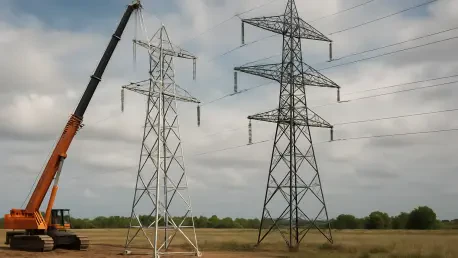
Eleven Power Private Limited has outlined a robust strategy to establish its presence through an investment of approximately 4,716 crore rupees over a five-year period. This capital is slated to build a parallel infrastructure network that functions independently of the existing public grid. Proponents of this plan argue that such a massive infusion of private capital is necessary to meet the rapidly expanding energy demands of Haryana’s urban centers. By creating a modern distribution system, the private firm intends to provide high-reliability power that caters specifically to the needs of the tech hubs and industrial parks driving the local economy. The regulatory commission has defended this move as a necessary evolution under the framework of the Electricity Act of 2003, which seeks to dismantle old monopolies to foster innovation. However, the physical construction of a competing grid presents significant engineering challenges and redundant infrastructure costs.
Strategic Resolution: Future Pathways for Energy Stability
The resolution of the Haryana power dispute required a fundamental shift in how the state balanced private investment with public service stability. Stakeholders recognized that simply allowing parallel networks without a clear revenue-sharing model created unsustainable fiscal gaps. To move forward, the administration adopted a policy that mandated private licensees to contribute to a universal service fund, ensuring that rural infrastructure did not suffer as urban centers modernized. Authorities also integrated union representatives into the oversight committees for new infrastructure projects, which helped rebuild the trust that was lost during the licensing phase. The state eventually pivoted toward a hybrid model where private capital funded the expansion of the grid under a shared management framework. This approach provided a roadmap for other regions to enhance their energy capacity while protecting the interests of the workforce and the long-term viability of the public sector’s essential role.