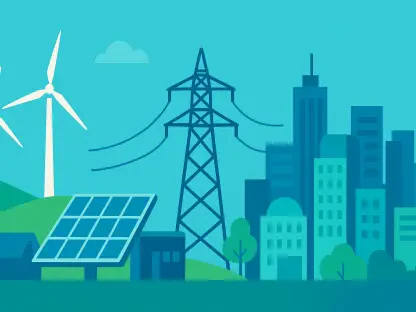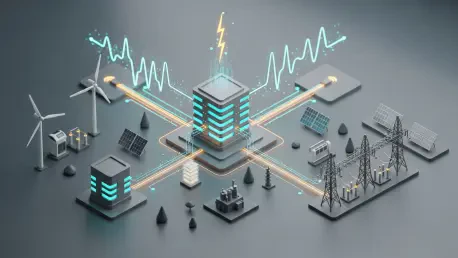

The rapid proliferation of artificial intelligence across every sector of the American economy has fundamentally altered the landscape of domestic energy consumption, pushing aging power grids to their absolute breaking points. Recent federal mandates have begun to address this strain by requiring grid operators to prioritize the integration of flexible large loads, marking a historic transition in how high-density infrastructure interacts with the public utility system. This pivot means that data centers are no longer viewed merely as passive consumers with insatiable appetites for power, but rather as active, responsive participants that can help stabilize the grid during times of extreme stress. By embracing this role, the tech industry is working to prevent an electricity affordability crisis that would otherwise impact residential and commercial rate payers alike. This newfound flexibility is fast becoming the primary mechanism for supporting the expansion of generative AI while ensuring that the lights stay on in local communities. The ability to adjust consumption patterns in real-time allows these facilities to transform from potential bottlenecks into strategic assets that improve overall system efficiency and facilitate faster interconnection times for the next generation of digital infrastructure.
Economic Pressures: The Artificial Intelligence Surge
The scale of modern electricity demand is difficult to overstate, with power requirements for data centers expected to more than double between 2026 and 2028. Projections from industry analysts suggest that by the end of this decade, these specialized facilities could consume nearly one-fifth of all electricity generated in the country, driven by the relentless expansion of cloud-native services and large language model training. This unprecedented growth is inextricably linked to the immediate availability of power, making the speed of energization the primary factor in determining which technology companies can successfully scale their operations in a competitive global market. As traditional power generation struggles to keep pace with the sheer volume of new requests, the concept of load flexibility has moved from a theoretical benefit to a mandatory operational requirement for any facility hoping to secure a stable connection to the national grid. Without these adaptive strategies, the timeline for bringing new compute capacity online would likely stretch into several years, stifling innovation and delaying the deployment of critical AI-driven tools.
This rapid industrial growth often meets significant resistance from local communities and advocacy groups worried about rising utility costs and the environmental impacts of localized energy strain. However, by adopting sophisticated flexible power strategies, data centers can effectively mitigate the need for expensive new power plants and high-voltage transmission lines that would traditionally be funded by the general public through rate hikes. By minimizing their impact on peak demand through intelligent throttling and energy storage, these facilities are proving themselves to be stabilizing assets that support the regional grid rather than liabilities that drain public resources. This shift in perception is vital for the long-term sustainability of the tech sector, as it aligns the profitability of data center operators with the broader economic interests of the regions they inhabit. When a facility can demonstrate that its presence actually lowers the overall cost of grid maintenance, it gains the social and political capital necessary to expand without the friction typically associated with large-scale industrial developments in the modern era.
Standardizing Frameworks: The FlexMosaic Initiative
To manage the inherent complexity of integrating massive compute loads, the Electric Power Research Institute developed the FlexMosaic framework, which categorizes industrial energy use into five distinct and manageable classes. These categories allow grid operators to request specific, graduated levels of response from data center managers, ranging from routine adjustments intended to stabilize daily demand peaks to providing critical emergency support during extreme weather events. This systematic approach creates what engineers call headroom within the existing power systems, allowing for the addition of large, high-density loads without immediately triggering the need for massive, multi-billion-dollar infrastructure upgrades. By standardizing these responses, the framework provides a common language for utilities and tech firms to communicate, ensuring that both parties understand the technical triggers and expected outcomes of any given load reduction event. This clarity is essential for maintaining the reliability of the grid while allowing the digital economy to continue its expansion in energy-constrained markets.
By following these standardized guidelines, data centers are finding themselves in a much stronger position to negotiate favorable terms with utility providers and regional transmission organizations. Those facilities willing to adjust their electrical load in response to immediate local needs, such as frequency stabilization or the prevention of thermal overload on aging transformers, are often rewarded with significantly faster connection times and larger overall capacity allocations. This framework effectively aligns the financial incentives of the high-tech industry with the operational realities of the power grid, creating a symbiotic relationship where technical compliance translates directly into business agility. As more operators adopt these standards, the predictability of the grid improves, reducing the risk of unplanned blackouts and ensuring that renewable energy sources can be more effectively integrated into the total power mix. The result is a more resilient electrical ecosystem where large-scale compute power acts as a buffer against volatility rather than a primary driver of system instability.
Technical Foundations: Managing Compute Workloads
Modern artificial intelligence infrastructure is uniquely suited for this type of operational flexibility because its internal workloads can be strategically divided into time-sensitive inference tasks and more flexible training cycles. Research into data center operations indicates that a significant portion of total power consumption can be adjusted or deferred without compromising the overall quality of service or user experience. For example, while the instantaneous responses required for AI-powered search engines must remain online, the massive, weeks-long training runs for new foundational models can be paused or slowed during peak evening hours when residential demand is at its highest. Furthermore, facility managers can adjust mechanical cooling systems or tap into massive on-site battery storage arrays and backup generators to lower their immediate draw from the public grid during periods of extreme high stress. This multi-layered approach to power management allows a data center to act as a giant, virtual battery that can shed hundreds of megawatts of demand in a matter of seconds when the grid requires relief.
Implementing these dynamic changes at scale requires advanced orchestration software that serves as a sophisticated bridge between the utility’s control center and the data center’s physical hardware. These software platforms allow utilities to send automated signals for power reduction while ensuring the data center stays within safe operational boundaries through the use of predefined digital guardrails. This automation allows for the precise pausing or slowing of non-critical tasks while protecting sensitive, multi-million-dollar server hardware from the sudden and potentially damaging shutdowns that might occur during a total power failure. By integrating these control systems directly into the data center’s stack, operators can provide the grid with the granularity it needs to maintain balance without risking the integrity of the underlying compute infrastructure. This technological synergy is a requirement for the next phase of grid integration, where software-defined power becomes just as important as the physical wires and transformers that deliver electricity to the facility gates.
Performance Validation: Real-World Implementation Trials
Successful pilot programs across the country, particularly in states like Arizona and California, have already proven that massive AI workloads can be ramped down or moved geographically in real-time to assist the grid. These rigorous tests have demonstrated that modern data centers can shed a significant portion of their electrical load during heatwaves or sudden transmission emergencies in less than sixty seconds. By demonstrating this high level of responsiveness, operators have shown that compute loads can be shifted from a stressed regional grid to an underutilized one without causing any noticeable data loss or service interruption for end users. These trials have been instrumental in building trust between the tech industry and utility regulators, proving that the theoretical benefits of load flexibility are achievable in high-pressure, real-world scenarios. The data gathered from these experiments is now being used to refine the protocols for future grid-interactive buildings, ensuring that the next generation of data centers is designed with responsiveness as a core feature.
The next phase of this evolution involves the creation of massive, purpose-built facilities specifically designed for high-scale load flexibility, often referred to in the industry as AI factories. These specialized centers are currently under development to serve as the ultimate proof of concept, showing that even the largest, most power-hungry operations can function reliably while staying highly responsive to the shifting needs of the surrounding power system. These facilities will validate the technical protocols needed to make load flexibility a standard feature of modern data center design, moving the industry away from the old model of static, always-on consumption. By proving that a 500-megawatt facility can behave as a flexible participant in the energy market, these AI factories are paving the way for a more integrated approach to industrial urban planning. This validation is critical for convincing skeptical stakeholders that the continued expansion of high-density computing is compatible with the goal of maintaining a stable and affordable energy supply for the general public.
Strategic Transitions: Harmonizing Grid Operations
The industry recognized that traditional power procurement models were no longer viable in an environment where speed of deployment outweighed the luxury of guaranteed, constant power. Stakeholders prioritized the development of collaborative agreements that allowed utilities the visibility they needed into data center operations while providing tech firms with the necessary safeguards for their expensive hardware. Data center operators realized that a facility capable of operating flexibly was far more valuable than a traditional site stuck in a years-long permitting queue due to grid capacity concerns. This shift in mindset turned load flexibility from an experimental technical feature into a core business necessity that stabilized the relationship between the tech sector and the energy providers. By opting for integrated management systems, companies successfully reduced the friction associated with new site selections and accelerated their ability to bring critical AI capacity to market in high-demand regions.
The transition toward a more responsive grid infrastructure required a fundamental change in how both utilities and tech companies approached the concept of reliability. Engineers implemented sophisticated telemetry that allowed for more gradual load reductions, moving away from the binary on-or-off scenarios that previously characterized industrial power connections. This evolution facilitated a more nuanced approach to energy management, where the needs of the data center and the stability of the public grid were no longer viewed as competing interests. Moving forward, the focus remained on refining the automated protocols that governed these interactions, ensuring that the digital and physical infrastructures could continue to grow in tandem. The successful integration of these flexible loads proved that with the right technological and contractual frameworks, the expansion of artificial intelligence could actually serve to strengthen the national power grid rather than compromise its future stability.