
As millions of sports enthusiasts across the United Kingdom settle in for the expanded tournament schedule, the national electricity infrastructure faces its most significant operational test in recent memory. The shift to a record-breaking format featuring one hundred and four matches means that the National Energy System Operator (NESO) is currently managing a period of unprecedented volatility. This tournament acts as a critical benchmark for the ongoing energy transition, forcing grid managers to demonstrate how a modern system can survive massive, synchronized surges while increasingly relying on carbon-neutral generation. Unlike previous iterations of the competition, the sheer volume of games requires sustained vigilance over a thirty-nine-day period rather than occasional peaks. Consequently, the grid is operating under a high-stakes spotlight that reveals the effectiveness of recent upgrades. The success of this operation determines whether the United Kingdom can truly decouple national cultural events from the historical risk of localized power failures or systemic instability.
The Kettle Surge and Systemic Demand Fluctuations
The physical reality of the “kettle surge” remains a formidable challenge for grid stability as millions of viewers simultaneously transition from watching the screen to activating household appliances during halftime intervals or following the final whistle. This phenomenon can trigger an instantaneous demand spike of roughly six hundred megawatts, a figure that mirrors the entire electricity requirements of major metropolitan centers such as Leeds and Glasgow combined. With the tournament now featuring an expanded forty-eight-team format, the aggregate pressure on the infrastructure is projected to rise significantly. National grid coordinators estimate an eighteen-gigawatt increase in total electricity consumption compared to the previous World Cup cycles, necessitating a constant state of readiness. Managing these surges requires sophisticated forecasting models that predict human behavior down to the second, ensuring that auxiliary supply is ready to deploy the moment the match clock stops. This level of coordination is essential to prevent frequency drops that could cause rolling blackouts.
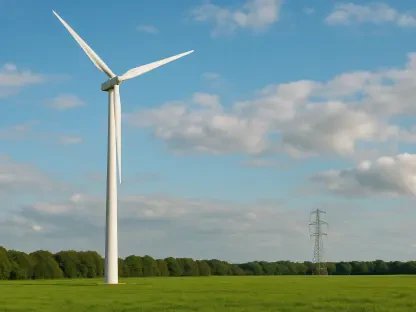
While the current international football competition is positioned as the cleanest in history, the move toward wind and solar energy introduces a layer of complexity that previous grid operators never had to navigate. Traditional fossil-fuel power stations provided a consistent and predictable base load, but modern renewable sources are inherently weather-dependent and intermittent in nature. This transition creates a heightened risk profile if a major demand spike happens to coincide with a period of exceptionally low wind speeds or heavy cloud cover across the British Isles. Therefore, the national energy strategy has shifted from a reactive, predictable model to a highly responsive and flexible architecture capable of handling the inherent volatility of green energy production. The integration of high-definition streaming and global broadcast requirements further complicates this landscape, as the digital backbone of the nation must remain powered regardless of meteorological conditions. Balancing environmental goals with the non-negotiable requirement for grid reliability has become the ultimate test for modern engineers.
Strategic Infrastructure Upgrades and Technological Resilience
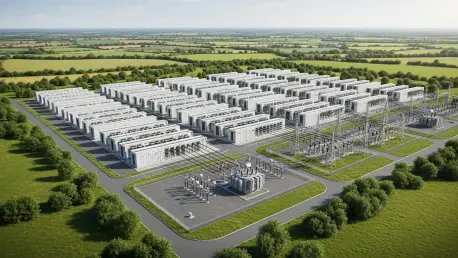
To bolster the resilience of the national grid during these high-pressure moments, engineers have deployed advanced Battery Energy Storage Systems (BESS) along with large-scale synchronous condensers. These batteries function as a vital buffer, rapidly absorbing excess energy during periods of high generation and discharging it into the network the instant that consumer demand peaks. Meanwhile, synchronous condensers are being utilized to provide necessary “inertia” to the electrical system, which is a role traditionally filled by the heavy rotating masses of coal and gas turbines. This inertia is critical for maintaining a steady frequency and preventing the grid from tripping during sudden load changes. These technological assets are effectively serving as the new defenders of national grid reliability as conventional, carbon-intensive power plants are phased out of the primary energy mix. By leveraging rapid-response storage, the system can smooth out the sharpest peaks of the kettle surge, ensuring that the transition to a decentralized power model does not compromise the stability of the entire United Kingdom.
Despite the rising population and the increased frequency of matches, technological advancements in consumer electronics have provided a surprising layer of protection for the national power supply. Current data suggests that power consumption per match is approximately twenty percent lower than it was during the 1998 World Cup, primarily due to the widespread replacement of power-hungry cathode-ray tube (CRT) televisions with high-efficiency LED and OLED displays. This counter-intuitive trend highlights how the technological evolution of home appliances can offset the burden created by an expanded tournament schedule. While the total volume of matches is higher than ever before, the reduced wattage required by modern viewing devices helps mitigate the overall impact on the grid. Furthermore, the adoption of energy-efficient smart home technologies allows for better management of background loads, such as lighting and refrigeration, during peak viewing hours. This synergy between industrial-scale grid management and domestic efficiency gains proves that modernization is not just about producing more power, but also about consuming it more intelligently.
Future Trajectories: Integrated Energy Management
The recent operational strategies implemented by the National Energy System Operator demonstrated that a modern grid could successfully integrate high-volume cultural events with a decarbonized energy portfolio. It was clear that the heavy investment in battery storage and frequency response technology provided the necessary safeguards against the traditional kettle surge. Moving forward, the focus shifted toward expanding demand-side response programs, which encouraged consumers to shift non-essential energy use away from peak match times through financial incentives or smart-meter automation. Furthermore, the integration of vehicle-to-grid (V2G) technology became a prioritized area for development, allowing the millions of electric vehicles parked across the country to act as a distributed battery during halftime spikes. The lessons learned from this tournament highlighted that grid resilience depended less on centralized fossil-fuel generation and more on a diverse, digitally controlled network of storage and efficiency. Strengthening the interconnections between regional power hubs proved essential for rerouting energy to areas with the highest viewing figures.