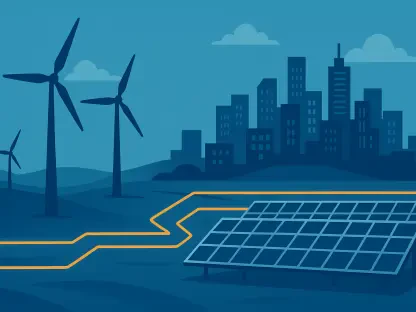

As the global energy transition accelerates, utility companies are discovering that the stability of the physical power grid is now inextricably linked to the robustness and reliability of their underlying digital communications infrastructure. The move away from a small number of massive, centralized power plants toward a web of thousands of distributed energy resources has created a data management challenge of unprecedented proportions. In this new environment, traditional public networks often fail to provide the deterministic performance required to keep the lights on during periods of high demand or technical volatility.
The current state of the industry suggests that the old model of relying on commercial carriers is being replaced by a drive for digital autonomy. Utility providers are increasingly viewing private wireless networks not as a luxury, but as an essential utility asset on par with substations or transmission lines. By owning the pipe as well as the power, these organizations can guarantee that their critical traffic is never slowed down by consumer data congestion or third-party outages.
The Modern Utility Landscape and the Shift Toward Digital Autonomy
The decentralization of the energy grid has fundamentally changed the requirements for field communications as millions of new endpoints, such as residential solar panels and battery storage units, come online. This shift requires a communication layer that can handle massive throughput and low latency to balance the intermittent nature of renewable energy. Without a dedicated high-speed link, the risk of localized grid instability increases significantly as the reaction time between generation and consumption narrows.
Private LTE in a utility context is defined by this move toward dedicated, utility-owned infrastructure that operates on licensed spectrum. Unlike public cellular networks that prioritize high-volume consumer traffic, a private system allows the utility to set its own quality-of-service parameters. This transition ensures that mission-critical data, such as protective relaying or emergency voice communications, always receives top priority regardless of how many people are using their phones nearby.
The market for this technology is being pushed forward by a specialized ecosystem of hardware vendors and automation specialists who provide hardened equipment for extreme environments. These players are developing the sensors and software necessary to turn raw data into actionable grid insights in real time. Moreover, the integration of advanced cybersecurity protocols directly into the private wireless fabric addresses the growing threat of state-sponsored cyberattacks, providing a layer of protection that public networks cannot easily replicate.
Driving Forces and the Economic Reality of Utility Connectivity
Emerging Trends in Automated Grid Optimization
Advanced field operations now rely on real-time data to drive technologies like automated fault detection, isolation, and restoration. These systems allow the grid to “self-heal” by rerouting power around damaged lines within seconds of a failure. Such rapid response requires a network that can maintain sub-millisecond latency across vast geographic areas, a feat that is consistently difficult to achieve on oversubscribed commercial networks.
The Internet of Things is moving to the edge of the grid, where thousands of smart meters and voltage regulators generate constant streams of diagnostic information. Private LTE provides the necessary bandwidth to support this density of devices without degrading the performance of other grid functions. This scalability is crucial as utilities look toward a future where every transformer and pole-top sensor is a live node in a massive, interconnected system.
Market Growth and Long-term Financial Projections
The shift from operating expenses to capital expenditures represents a major financial pivot for utilities in the 2026 to 2030 period. While paying recurring fees to commercial carriers is easy for current budgets, owning the network allows the utility to build a depreciable asset that provides long-term value. This financial structure is often preferred by regulators because it stabilizes costs and eliminates the unpredictability of commercial data pricing.
Failing to act on these infrastructure needs carries a high cost of inaction, particularly as grid complexity outpaces the capabilities of legacy narrow-band systems. Projections suggest that utilities without robust private networks will face higher operational costs due to delayed maintenance and longer outage durations. Furthermore, the rising market value of licensed spectrum suggests that those who do not secure frequency bands now will face much higher acquisition costs in the coming years.
Navigating Technical and Operational Hurdles in Network Deployment
Spectrum scarcity remains the most significant barrier to widespread Private LTE adoption, as licensed radio frequencies are a finite and expensive resource. Utilities must navigate a competitive landscape where they often vie with telecommunications giants for the same bands. Using unlicensed spectrum is an alternative, but it carries the risk of interference and a lack of legal protection for critical signals.
Integrating these high-speed LTE protocols with legacy infrastructure also poses a significant technical challenge for engineering teams. Many grids still rely on aging analog systems and low-speed radio networks that have been in place for decades. Transitioning to a modern digital fabric requires sophisticated bridging technologies that can translate legacy data into modern formats without introducing latency or security gaps.
The Regulatory Framework and Compliance Standards
Federal oversight from bodies like the FCC plays a central role in how utilities secure their wireless futures. Regulators have recently opened specific bands, such as the 900 MHz frequency, specifically for critical infrastructure use to prevent interference from consumer electronics. This alignment between telecommunications policy and energy security is essential for creating a stable environment where long-term investments can flourish.
Grid security mandates are also becoming more stringent as cybersecurity becomes a matter of national defense. Private LTE networks are increasingly designed to meet NERC CIP standards, which require rigorous access controls and encryption for all critical grid communications. By maintaining an independent network, utilities can more easily demonstrate compliance and protect their assets from the vulnerabilities inherent in public internet gateways.
The Horizon of Utility Communications and Disruptive Innovation
The synthesis of Private LTE and 5G technologies is beginning to offer a roadmap for ultra-reliable low-latency communications. While LTE provides the backbone for current operations, the move toward 5G will enable even more advanced applications like augmented reality for field technicians and real-time video surveillance at remote sites. This transition is being planned as a multi-year evolution rather than a sudden replacement.
Low Earth Orbit satellite constellations are emerging as a complementary force, particularly for providing coverage in remote areas where tower construction is impossible. These satellites can serve as a secondary backhaul or a primary connection point for isolated assets. A multi-layered connectivity fabric, often called a network of networks, is becoming the goal for utilities that require total visibility across diverse terrains.
Deciding the Future of Grid Sovereignty and Resilience
The evaluation of Private LTE highlighted the necessity of balancing operational control against the inherent complexities of managing a modern telecommunications network. Leaders determined that the long-term benefits of grid sovereignty outweighed the technical hurdles of deployment. This strategic shift allowed utilities to insulate their most critical operations from the fluctuations of the commercial mobile market.
Financial models demonstrated that the initial capital requirements for private infrastructure were offset by the reduced risk of catastrophic grid failure. By treating the network as a foundational asset, organizations fulfilled their fiduciary duty to provide reliable service to their communities. These investments protected ratepayers from the hidden costs associated with inefficient grid management and unplanned downtime.
Ultimately, the transition to private wireless infrastructure was recognized as a requirement for the 21st-century energy economy. The decision to move away from public dependency ensured that the grid remained resilient in the face of both technological evolution and environmental challenges. This change in philosophy transformed the way energy providers viewed their relationship with data, turning a simple utility into a sophisticated, autonomous digital enterprise.