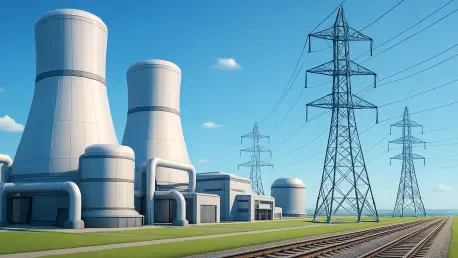

Developers intend to use a fleet-style approach to construction, standardizing the design of all six reactors to ensure long-term operational stability and efficiency. This strategy marks the beginning of the “Prosperity One” project, a massive 6.6-gigawatt nuclear power campus situated in Lewis County, Kentucky. As a joint venture between the local construction firm Trace Creek and the specialized industry organization The Nuclear Company, the proposal seeks to transform the Carrs Bottom property along the Ohio River into the largest nuclear generating facility in the United States. The ambition behind this development is to create a reliable, carbon-free energy source that significantly exceeds the capacity of any current American nuclear installation. By shifting the regional focus from traditional fossil fuels toward advanced nuclear technology, the project team hopes to revitalize the industrial identity of the Ohio River Valley. This development represents a historic milestone, as it would establish the first commercial nuclear power plant in Kentucky’s history, providing a high-capacity energy cornerstone that supports the national grid while addressing long-term sustainability goals.
Leadership and Strategic Land Consolidation
At the helm of this ambitious undertaking is Sam Howard, a Lewis County businessman and the CEO of Trace Creek Construction. His involvement is deeply rooted in a desire for local economic development, having originally secured a 738-acre tract at Carrs Bottom through his entity, Carrs Land LLC. Since that initial purchase, the scope of the project has expanded dramatically, with the development team now controlling or holding purchase options for more than 4,200 acres. This vast area was originally assembled by Kentucky Power nearly half a century ago for a coal project that never materialized. The transition of this land into a nuclear energy hub is managed through a “teaming agreement” where Trace Creek retains control of the property and local development, while The Nuclear Company provides the technical expertise necessary for such a complex facility. This arrangement ensures that the project remains connected to the local community while benefiting from specialized industry knowledge and operational experience in the nuclear sector.
The technical and operational leadership is further bolstered by Chief Nuclear Officer Joe Klecha, a veteran of the U.S. Navy’s nuclear submarine program. With over three decades of experience in commercial nuclear operations, Klecha brings invaluable insights from his previous work on large-scale energy projects, including recent expansions at the Vogtle plant in Georgia. His background is critical for navigating the rigorous technical requirements of building and operating a multi-unit nuclear campus. The partnership between Howard’s local expertise and Klecha’s technical proficiency creates a balanced leadership structure capable of addressing both community-level concerns and high-level engineering challenges. This collaborative model is designed to facilitate smoother project execution by integrating local land management with the highly specialized world of nuclear plant construction and operation. The focus remains on building a facility that meets modern efficiency standards while serving as a long-term economic driver for the entire Appalachian region.
Technological Foundation: The AP1000 Advantage
The Prosperity One project distinguishes itself by opting for the Westinghouse AP1000 reactor, a full-scale commercial technology with a proven track record. While many contemporary energy discussions focus on Small Modular Reactors (SMRs), the developers of this campus believe that utilizing established, large-scale technology is the most efficient way to meet massive energy demands. The plan involves the installation of up to six AP1000 units, each capable of generating approximately 1,100 megawatts of electricity. By standardizing the design across all units, the team aims to avoid the common pitfalls of one-off construction projects, such as unexpected delays and escalating costs. The AP1000 is renowned for its advanced passive safety systems, which rely on natural forces like gravity and convection rather than active mechanical components. This design choice provides a robust layer of safety that simplifies the operational requirements while maintaining high levels of energy reliability for the millions of residents the facility will eventually serve.
Choosing a fleet-style deployment means that the construction of each subsequent reactor can benefit from the lessons learned and the efficiencies gained during the building of the previous units. This repetitive, standardized approach is intended to create a predictable construction schedule and a more manageable supply chain. The collective output of 6.6 gigawatts would position the Lewis County facility as a global leader in power generation, providing a steady baseline of electricity that supports both regional industrial growth and national energy security. Furthermore, the use of the AP1000 allows the project to move forward with a technology that has already received extensive regulatory review and operational validation elsewhere. This focus on proven reliability over experimental designs is a cornerstone of the developers’ strategy to ensure the project reaches fruition. By prioritizing a standardized fleet, the campus can offer a level of stability and efficiency that is difficult to achieve with customized or smaller-scale energy installations.
Geographic Integration and Historical Utility
The selection of Carrs Bottom as the site for Prosperity One is a strategic decision based on decades of industrial evaluation. Originally identified by Kentucky Power in the late 1970s for a large coal-fired plant, the site offers a rare combination of natural features and existing infrastructure that is perfectly suited for nuclear energy. One of the most critical assets is the approximately two miles of Ohio River frontage, which provides the necessary water access for the cooling requirements of a large-scale power facility. Additionally, a CSX railroad mainline bisects the property, facilitating the efficient transport of heavy materials and reactor components during the construction phase. These logistical advantages are complemented by the site’s proximity to a 765-kilovolt high-voltage transmission line, which serves as a ready-made “highway” for distributing the massive amount of electricity generated to the broader regional power grid. This established infrastructure reduces the need for extensive new utility corridors, making the site exceptionally efficient for large-scale energy production.
Despite several historical attempts to develop Carrs Bottom for coal or gasification technologies, none reached the construction phase, leaving the land underutilized for decades. The Prosperity One proposal represents the most comprehensive attempt to date to leverage the site’s specific geographic and technical strengths. The developers recognize that the existing transportation and electrical infrastructure provide a significant head start compared to undeveloped “greenfield” sites. By revitalizing a location with such a long-standing industrial history, the project team can minimize environmental disturbances while maximizing the utility of land that has already been designated for heavy industrial use. This approach not only makes technical sense but also aligns with regional planning goals that seek to cluster major industrial developments near existing infrastructure hubs. The integration of modern nuclear technology with a historically recognized industrial site creates a unique opportunity to fulfill the economic promise that Carrs Bottom has held for nearly fifty years.
Socioeconomic Impact and Regional Revitalization
The primary driver for the Prosperity One project is the potential for a total economic transformation in Lewis County and the surrounding Appalachian region. For years, the local community has struggled with high unemployment rates and a steady decline in traditional manufacturing and coal-related jobs. Developers view this nuclear campus as a legacy investment that will provide high-paying, permanent technical positions for decades to come. By creating thousands of temporary construction jobs and hundreds of long-term operational roles, the project aims to reverse the trend of young residents leaving the county to seek employment elsewhere. The influx of a high-skilled workforce is expected to bolster the local tax base, providing the necessary funding for schools, public services, and infrastructure improvements. This economic ripple effect could revitalize the local economy, attracting new businesses and supporting existing ones through increased demand for services and housing in the Vanceburg and Concord areas.
While the total investment figures for a 6.6-gigawatt project are staggering, potentially reaching into the tens of billions of dollars, the long-term benefits extend beyond simple job creation. The establishment of a major nuclear hub would likely turn Lewis County into a center for technical training and specialized engineering services. Local leaders have expressed hope that the facility will serve as an anchor for a new era of industrial growth in Eastern Kentucky. This vision includes the development of local vocational programs and educational partnerships to prepare the next generation of workers for careers in the nuclear industry. By providing a stable, high-wage alternative to traditional employment, the project offers a pathway to sustainable prosperity that is not subject to the same volatility as fossil fuel markets. The goal is to build an economic foundation that is as durable as the concrete and steel of the reactors themselves, ensuring that Lewis County becomes a leader in the American energy transition.
The Path Toward State and Federal Certification
Navigating the complex regulatory environment is a critical phase for the Prosperity One development team. At the state level, the project has already seen significant progress with Lewis County participating in Kentucky’s “Nuclear Energy Ready Community” certification program. This initiative helps local governments prepare for the administrative, social, and logistical demands of hosting a large-scale nuclear facility. Key local bodies, including the Lewis County Fiscal Court and the Vanceburg City Council, have approved resolutions supporting this certification process. These actions demonstrate a commitment to being “ready” for nuclear development, even as the more rigorous technical reviews continue. This state-level engagement is essential for building a supportive local framework that can manage the growth and change associated with such a massive project. It also serves as a signal to federal regulators and private investors that the community is actively preparing for the responsibilities of hosting a nuclear campus.
On the federal stage, the project must clear the high bars set by the U.S. Nuclear Regulatory Commission (NRC). This process involves exhaustive evaluations of every aspect of the plant, from the seismic stability of the ground at Carrs Bottom to the environmental impact on the Ohio River’s ecosystem. The NRC will oversee the licensing of the AP1000 reactors, ensuring they meet the most stringent safety standards. Detailed site characterization studies, emergency response planning, and public hearings are all part of this multi-year journey toward construction. The development team intends to proceed with these applications immediately, targeting a ground-breaking date as early as 2028. This dual-track approach—securing community readiness at the state level while pursuing safety and environmental permits at the federal level—is designed to ensure that the project moves forward transparently and safely. The rigorous nature of these reviews is seen not as a hurdle, but as a necessary process to gain the public trust and regulatory certainty required for a project of this magnitude.
Strategic Planning and Future Implementation
Project coordinators established a robust framework for the initial site characterization and geotechnical analysis required for federal licensing. They successfully secured preliminary purchase options for the remaining acreage, ensuring that the 4,200-acre footprint remained unified for the full six-reactor configuration. By engaging with the PJM Interconnection early in the process, the developers identified the specific grid upgrades needed to handle the 6,600-megawatt surge, effectively mapping out the transmission requirements for the next several years. Local officials coordinated with state transportation departments to assess the necessary enhancements for the AA Highway and local access roads to accommodate the anticipated influx of thousands of workers. These early logistical maneuvers allowed the team to move beyond theoretical planning and into a phase of concrete preparation. The focus shifted toward long-term resource management, ensuring that the local infrastructure could sustain the growth without overwhelming current public services.
The development team also formulated a comprehensive community engagement plan that addressed public concerns regarding environmental stewardship and safety. They established a series of educational initiatives and transparency protocols that provided residents with regular updates on the regulatory progress and safety benchmarks. By prioritizing clear communication, the project stakeholders fostered a collaborative environment where local feedback directly influenced certain aspects of the site layout and traffic management plans. They also initiated discussions with regional educational institutions to develop specialized curricula, aiming to create a local pipeline for the high-skilled workforce required for plant operations. This forward-looking strategy recognized that the success of the campus depended on more than just engineering; it required a well-prepared community and a reliable local labor pool. Through these foundational efforts, the project transitioned into a structured development path, setting the stage for the next decade of construction and regional economic growth.