
The rapid integration of intermittent renewable energy sources into the national power grid has created an urgent demand for sophisticated management systems that can maintain stability while maximizing efficiency. As India pushes toward ambitious decarbonization targets, the traditional power distribution model is proving inadequate for the complexities of solar and wind variability. To address this, the launch of the JSW Centre of Excellence in Smart Grid and Automation at the MS Ramaiah Institute of Technology in Bengaluru represents a pivotal shift toward a more resilient energy landscape. This initiative is not merely a technical upgrade but a strategic alignment of industry and academia designed to rethink how electricity is delivered and managed across the subcontinent. By bridging the gap between theoretical research and practical grid application, the facility serves as a testing ground for the technologies that will define the power sector from 2026 to 2030 and beyond.
Bridging the Gap Between Industry and Academia
The Tripartite Model for Infrastructure Innovation
A fundamental challenge in modernizing the power sector is the disconnect between industrial requirements and academic research, a gap that this new center of excellence aims to close through a collaborative tripartite partnership. By bringing together the capital resources of the JSW Group, the technical operational expertise of Sharika Enterprises Ltd, and the educational framework of the MS Ramaiah Institute of Technology, the initiative creates a self-sustaining ecosystem for innovation. This structure allows for a “Lab-as-a-Service” model, where the infrastructure is not limited to student use but is available to external stakeholders for testing automation solutions and grid management practices. Such an arrangement ensures that the center remains financially viable while providing a high-fidelity environment for simulating the stress points of a modern power grid. This approach allows for the rigorous validation of new technologies before they are deployed in high-stakes, real-world utility environments.
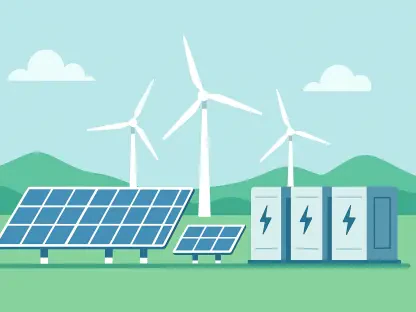
The physical infrastructure of the hub is designed to replicate the nuances of India’s current distribution and transmission networks, focusing specifically on the integration of solar, wind, and Battery Energy Storage Systems. While renewable capacity has expanded significantly, the inherent variability of these sources often leads to frequency fluctuations that can threaten regional stability. The center utilizes advanced modeling and real-time simulation tools to analyze these contingencies, providing data-driven insights into how the grid behaves under various load conditions. By leveraging SCADA systems and international communication protocols, the facility offers a granular view of energy flows, allowing engineers to identify potential failure points before they manifest in the national infrastructure. This level of simulation is critical for developing the wide-area monitoring and energy market strategies necessary to support a more decentralized and volatile power market in the coming years.
Cultivating the Next Generation of Power Professionals
Technical infrastructure is only as effective as the people who operate it, which is why the center focuses heavily on human capital development through specialized educational pathways. As the power sector undergoes a structural transformation, there is a growing need for a new breed of engineers who are proficient in both electrical systems and digital data management. The facility addresses this by offering master’s degrees and professional certification courses that cover cutting-edge topics such as artificial intelligence in energy, data analytics, and algorithmic energy trading. This curriculum is designed to move beyond traditional power engineering, incorporating the software skills required to manage a “smart” grid that relies on massive amounts of telemetry data. By embedding these students within a high-tech laboratory environment, the program ensures that graduates possess the practical experience needed to manage complex grid operations immediately.
The convergence of industry and academia within the center also facilitates a direct pipeline for talent, ensuring that the skills being taught are in lockstep with the evolving demands of the energy market. Industry leaders from the JSW Group and technical experts from Sharika Enterprises contribute to the curriculum, ensuring that academic theories are grounded in the realities of current energy policy and market dynamics. This synergy is vital for creating a sustainable energy ecosystem where innovation is not trapped in a laboratory but is instead used to solve the immediate problems of load balancing and grid resilience. Furthermore, the focus on non-profit capability building suggests that the primary objective is the long-term health of the national power sector rather than short-term commercial gain. This dedication to training creates a more robust workforce capable of steering India’s energy transition through the complexities of the next decade.
Engineering a Resilient National Grid Framework
Advanced Simulation and Real-Time Contingency Analysis
The technical core of the smart grid hub lies in its ability to perform high-fidelity simulations that mirror the stresses of a massive, multi-regional power network. As the National Smart Grid Mission moves forward, the ability to conduct contingency analysis in a controlled environment becomes indispensable for preventing large-scale blackouts. The center utilizes specialized software to model various “what-if” scenarios, such as the sudden loss of a major wind farm or a surge in demand during peak heatwaves. These simulations help grid operators develop better wide-area monitoring strategies, enabling them to make split-second decisions that maintain the delicate balance between supply and demand. By testing these responses in a simulated environment first, the center reduces the risk of trial-and-error in actual grid operations, which could otherwise lead to costly equipment damage or widespread outages.
Furthermore, the facility places a strong emphasis on the integration of Battery Energy Storage Systems, which are increasingly seen as the “holy grail” of renewable energy stability. Effectively managing BESS requires sophisticated algorithms that can determine exactly when to charge or discharge power based on grid frequency and market prices. The researchers at the Bengaluru hub are working to refine these automation protocols, ensuring that storage assets can react with the speed and precision required in a modern energy market. This technical work supports the broader goals of the Government of India’s Revamped Distribution Sector Scheme by providing a blueprint for more efficient energy management at the local utility level. By perfecting these automation workflows, the center helps pave the way for a more flexible grid that can absorb higher percentages of clean energy without compromising the reliability that consumers and industries depend upon.
Strategic Alignment with National Energy Missions
The establishment of the JSW-CoE is not an isolated event but a critical component of India’s broader strategy to modernize its energy infrastructure under the RDSS framework. This alignment ensures that the research conducted at the center directly supports the government’s objectives for grid modernization and carbon reduction. By focusing on international communication protocols and standardized automation, the hub ensures that the solutions developed are scalable and interoperable across different regional grids. This standardization is essential for creating a truly national smart grid where energy can be moved seamlessly from resource-rich regions to high-demand urban centers. The center’s role as a neutral testing ground allows for the evaluation of diverse technologies from different vendors, ensuring that the best-performing solutions are prioritized for national deployment in the near term.
Looking beyond the immediate technical requirements, the center also explores the economic dimensions of a smart grid, specifically in the realm of energy market simulations. As the transition toward more competitive electricity markets continues, the ability to predict price movements and manage energy trading becomes just as important as the physical flow of electrons. The hub provides tools for simulating market dynamics, allowing stakeholders to understand how distributed energy resources and demand-response programs will impact pricing and stability. This holistic approach—combining engineering, data science, and economics—is what makes the Bengaluru facility a unique asset in the country’s energy landscape. By addressing the grid transition from multiple angles, the center provides a comprehensive roadmap for how a developing economy can leapfrog older infrastructure to build a world-class, digitized power system.
Strategic Directions for Grid Modernization
The development of specialized smart grid hubs has transitioned the energy sector from a phase of speculative planning into a period of tangible implementation and rigorous testing. Industry leaders and policymakers succeeded in creating a template for collaborative innovation that prioritized technical resilience and workforce readiness over static traditional models. The integration of real-time simulation and “Lab-as-a-Service” frameworks allowed for a safer transition to renewable-heavy energy mixes, significantly reducing the risks associated with grid instability. Moving forward, the focus should shift toward the rapid scaling of these localized successes to a national level, ensuring that every regional utility can benefit from the automation protocols and data management strategies perfected in Bengaluru. Stakeholders must now prioritize the deployment of decentralized storage solutions and the adoption of unified communication standards to ensure full interoperability across the national network. Furthermore, continued investment in interdisciplinary education will be essential to ensure that the human talent pool remains deep enough to manage increasingly complex digital grid architectures. By maintaining this momentum, the power sector was able to transform from a centralized, fossil-fuel-dependent system into a flexible, data-driven network capable of supporting a modern, green economy.