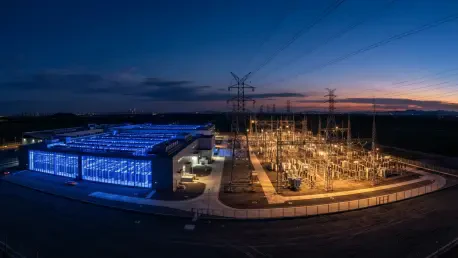

The unprecedented surge in artificial intelligence compute requirements has transformed the electrical grid from a background utility into the primary gatekeeper of global technological progress and industrial expansion. As developers race to secure the massive energy volumes needed for next-generation facilities, they are encountering a hard reality: the infrastructure built for a previous century is struggling to keep pace with the speed of 2026 innovation. This bottleneck has created a high-stakes competition where the traditional first-come, first-served queue no longer guarantees success. Instead, a new strategy is taking hold—one where data centers must act as sophisticated grid partners rather than passive energy consumers to unlock faster interconnection.
This partnership-based model is grounded in the principle of mutual reciprocity. Grid operators are increasingly overwhelmed by a backlog of requests, many of which are speculative and may never reach completion. By moving beyond the standard utility-customer relationship, developers can offer the grid the predictability and stability it needs to prioritize their projects. This shift is not merely about jumping the line; it is about providing the technical and financial solutions that make rapid energization feasible for the utility. Those who embrace this collaborative path are finding they can bypass years of uncertainty and secure power with much greater confidence.
The Evolution of Data Center Interconnection and Grid Integration
Historically, the process of connecting a data center to the power grid was a linear and somewhat predictable journey. A developer would identify a site, submit a load request, and then wait for the utility to perform the necessary studies and infrastructure builds. This passive approach worked when the demand was incremental and the grid had ample spare capacity. However, the current environment has rendered this model obsolete, as the sheer scale of modern facilities can equal the power draw of an entire metropolitan area.
Consequently, the industry is seeing a fundamental change in how large-scale loads are integrated. Modern developers are now required to deeply understand the operational mechanics of the regional grid. Rather than being seen as a drain on resources, the data center is being reimagined as a flexible asset that can help balance the system. This integration requires a proactive stance where energy strategies are developed in tandem with utility planners from day one. By aligning operational goals with grid reliability, developers can transform a potential liability into a stabilizing force.
Why Collaborative Grid Partnerships Are Essential for AI Growth
Adopting a collaborative framework is the most effective way to ensure project viability in an era of constrained supply. When a developer shows a commitment to grid health, it reduces the risk profile for the utility, which in turn accelerates the regulatory and technical approval processes. This transparency is crucial because it allows utilities to allocate limited resources to the projects most likely to succeed. Without this cooperation, massive energy demands run the risk of alienating local communities and triggering regulatory intervention to protect residential power stability.
Moreover, these partnerships provide a clear roadmap for navigating the complexities of modern energy markets. By working closely with grid operators, developers can gain insights into where capacity is most available and where infrastructure upgrades are already planned. This alignment helps avoid the common pitfall of selecting sites that require decade-long transmission overhauls. Ultimately, the partnership model fosters a sustainable ecosystem where technological growth and grid reliability are not in conflict, but are instead mutually reinforcing priorities.
Actionable Best Practices for Data Center-Grid Partnerships
Transitioning to a partnership model requires a commitment to transparency and a willingness to share in the operational risks of the grid. To achieve faster power, developers must move toward a performance-based approach that emphasizes financial accountability and technical flexibility. This means being prepared to offer more than just a monthly utility check; it involves bringing tangible grid-supportive assets to the negotiation table.
Implementing these practices involves a strategic shift in how site selection and facility design are managed. Instead of designing a facility in a vacuum and then asking for power, the design should be informed by the specific needs and constraints of the local grid. This could include integrating onsite storage or adopting advanced software that allows for real-time load management. When a developer can demonstrate that their facility will not break the grid during peak times, they become a much more attractive partner for the utility.
Implementing Financial Risk-Sharing and Capacity Commitments
One of the primary obstacles to fast interconnection is the financial risk utilities face when building infrastructure for speculative projects. To overcome this, developers should provide substantial collateral and commit to capacity-reservation fees. This “skin in the game” reassures utilities and regulators that the project is mature and that the investment in new substations or transmission lines will not be stranded if the project is scaled back.
Furthermore, these financial commitments serve as a powerful filter in crowded interconnection queues. By accepting “pay-to-reserve” terms, serious developers can distinguish themselves from those who are simply “camping” on capacity. This proactive financial stance creates a win-win scenario: the utility receives the funding needed for upgrades, and the developer receives a guaranteed path to energization. It is a fundamental shift toward making financial certainty a primary currency for speed.
The Ohio Model: Using Financial Collateral to Clear the Interconnection Queue
The regulatory landscape in Ohio provides a clear example of how financial mechanisms can solve queue congestion. When faced with a massive backlog of power requests that threatened to stall development, the local utility implemented a settlement that required significant commitments from large-scale users. Data center operators were asked to pay for 85% of their reserved capacity, regardless of their actual usage at the time of energization.
This policy had an immediate impact on the market by forcing speculative developers to withdraw, which cleared the way for projects with actual funding and timelines. For the developers who stayed, this financial requirement acted as a catalyst for faster approvals. It provided the utility with the long-term revenue certainty required to move forward with infrastructure projects that had previously been on hold. This model demonstrates that when developers take on a share of the financial burden, the entire system can move toward a solution much faster.
Utilizing Operational Flexibility and Load Shedding Capabilities
Data centers are uniquely positioned to act as dispatchable loads because of their ability to modulate power draw and utilize onsite backup systems. By agreeing to reduce their grid consumption during periods of extreme stress, facilities can provide a critical safety valve for the grid operator. This operational flexibility is a major selling point for utilities that are struggling with the intermittency of renewable energy sources and the general volatility of the power market.
In practice, this means developers should design their facilities with the technical capacity for rapid curtailment. Whether it is through shifting non-critical workloads to other regions or switching to onsite battery storage, the ability to shed load on command is highly valuable. In exchange for this flexibility, utilities are often willing to offer “less firm” interconnection agreements that allow for much faster energization than traditional firm power contracts.
The Texas and SPP Models: Fast-Tracking Through Dispatchable Curtailment
In the ERCOT and SPP regions, the concept of dispatchable curtailment has been codified into specific interconnection pathways. The High Impact Large Load frameworks allow for significantly compressed timelines for developers who agree to follow the grid operator’s instructions during emergencies. In some cases, interconnection studies that traditionally took years were completed in as little as 90 days for projects that met these rigorous flexibility requirements.
This approach rewards transparency and technical readiness. Developers who provide the grid operator with remote-disconnect capabilities and real-time visibility into their power draw are viewed as lower-risk additions to the system. This demonstrates that speed is not just about who applied first, but about who is most willing to be a responsive and controllable part of the energy mix. In these markets, the price of rapid entry is a commitment to being a “good neighbor” to the grid.
Contributing to Resource Adequacy Through Onsite Generation and Storage
When regional power supplies are tight, simply asking for more power can be a non-starter for utilities. To mitigate this, many developers are now bringing their own energy resources to the site. Large-scale battery arrays, hydrogen fuel cells, or even small modular reactors can provide the “clean firm” power that helps offset the impact of the data center on the wider system. This contribution to resource adequacy is a powerful tool for overcoming local capacity shortages.
By integrating these resources, the data center becomes more than just a consumer; it becomes a potential supplier of emergency power to the grid. This capability is especially important during extreme weather events when the grid is most vulnerable. A data center that can go “island mode” or feed power back into the system during a crisis is a major asset for any utility. This strategy not only secures the facility’s own power needs but also builds long-term goodwill with local regulators.
The PJM Framework: Mitigating Capacity Shortfalls With Co-Located Resources
Within the PJM Interconnection, the focus has increasingly turned to ensuring that new large-scale loads do not trigger energy shortages for existing customers. The emerging framework suggests that developers who co-locate generation or storage with their facilities can avoid the delays associated with general capacity shortages. This model prioritizes projects that are energy-neutral or energy-positive during peak periods, ensuring that the local grid remains balanced.
This collaborative stance transformed the perception of data centers within the Eastern U.S. power system. Instead of being viewed as a burden that required the utility to find new power sources elsewhere, these facilities were seen as self-contained solutions. By addressing the capacity problem at the source, developers removed the primary reason for interconnection delays. This strategy emphasized that the most successful players were those who recognized that their growth must be supported by a corresponding growth in energy resources.
The paradigm of mutual reciprocity ultimately proved to be the only viable path for sustaining the scale of development required for the next decade. Stakeholders who prioritized grid stability found that their projects moved through the queue with significantly more speed than those relying on traditional procurement. The shift toward performance-based interconnection was a fundamental change that aligned the interests of data center developers with the long-term health of the energy system. This collaborative framework allowed for a more resilient infrastructure that benefited both industrial giants and the residential ratepayer alike. By treating the grid as a partner rather than a simple service provider, the industry established a foundation for continuous, reliable growth through 2028 and beyond. The strategic focus on transparency and operational flexibility provided the necessary certainty that had been missing in earlier development cycles. Successful developers moved forward by integrating sophisticated energy management systems and clear financial guarantees into every project proposal. This era was defined by the realization that the power grid was not a static resource to be consumed, but a dynamic partner that required active and intelligent management.