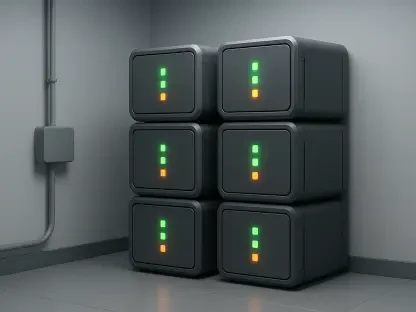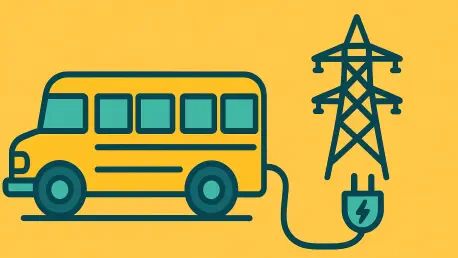

The quiet transition of nearly half a million yellow school buses from diesel-guzzling relics to sophisticated energy storage hubs has fundamentally altered the relationship between local school districts and the American power grid. As of 2026, the traditional image of a bus depot as merely a parking lot is being replaced by the reality of decentralized power plants. This evolution is driven by the urgent need for grid flexibility as the nation integrates more intermittent renewable energy sources, such as wind and solar. By utilizing bidirectional charging technology, commonly known as vehicle-to-grid (V2G), school districts are no longer just consumers of energy; they are becoming critical suppliers during times of peak demand. This market analysis explores how these mobile battery units are transforming the fiscal and operational landscape of student transportation, providing a stabilizing force for a power grid that faces increasing volatility.
The Transformation of Student Transportation into a Grid Resource
The iconic yellow school bus is undergoing a radical technological evolution that extends far beyond the tailpipe into the very heart of the American infrastructure. As school districts across the United States transition from diesel engines to electric drivetrains, these vehicles are being reimagined as high-capacity batteries on wheels. This shift is not merely about reducing carbon emissions or improving the air quality for students who breathe in the exhaust during the morning commute; it is about the strategic integration of transportation into the broader energy ecosystem. By leveraging V2G technology, electric school buses (ESBs) are beginning to function as mobile energy storage units that can provide critical support to utilities when the demand for electricity threatens to outpace supply.
The significance of this transition lies in the sheer volume of energy these fleets can hold. A typical electric school bus possesses a battery capacity several times larger than that of a standard passenger vehicle, and when aggregated, a single district fleet can rival the output of a small peaking power plant. This article investigates the burgeoning role of ESBs as components of virtual power plants (VPPs) and how this dual-purpose model addresses the inherent instability of modern energy markets. From the economic drivers that make these expensive vehicles affordable to the technical hurdles of large-scale deployment, the following sections detail how a fleet of idle buses is becoming one of the most significant assets in the quest for a resilient, renewable energy future.
From Diesel Emissions to Decentralized Energy Storage
Historically, the school bus was viewed as a single-purpose asset that sat idle for a significant portion of the day and remained unused throughout the long summer months. However, the rise of fleet electrification has coincided with an increasing need for grid flexibility. As the American power grid incorporates more renewable sources that fluctuate with weather patterns, the demand for high-capacity, rapidly deployable storage has reached an all-time high. The foundational concept of V2G emerged from the realization that tens of thousands of school buses, equipped with massive battery packs and predictable schedules, represent a vast and largely untapped reservoir of energy that can be harvested when the sun sets or the wind stops blowing.
This shift matters because it fundamentally changes the value proposition of the school bus for local taxpayers and school boards. In the past, a bus was a depreciating expense that required constant maintenance and fuel. Today, through the lens of grid stabilization, it is a piece of critical infrastructure that can generate income or offset its own capital costs. Early pilot programs, which have expanded significantly between 2026 and 2028, have demonstrated that the energy stored in these batteries can be discharged back into the grid to prevent brownouts during extreme heatwaves. This historical pivot from a transportation-only model to a dual-purpose energy model is the cornerstone of modern fleet electrification strategies, proving that the vehicles are worth more than the sum of their parts.
The Strategic Synergy of School Schedules and Utility Demand
Aligning Operational Cycles: Maximum Utility through Scheduling
The most compelling argument for the use of electric school buses as grid stabilizers lies in the natural alignment of their operational cycles with peak energy demand. Most school buses operate in two primary windows: the early morning and the mid-afternoon. This leaves them stationary and connected to chargers during the late afternoon and early evening—the exact window when residential energy use surges as people return home and solar production begins to wane. In districts like Fremont Unified, buses return to the depot by 4:30 p.m. with significant battery life remaining. They can discharge this power to support the grid until 10:00 p.m., then recharge during the super off-peak overnight hours when electricity is at its cheapest and most abundant.
This predictable schedule allows utilities to count on a specific amount of power being available at a specific time, which is the holy grail of grid management. Unlike personal electric vehicles, which may be driven at any time, a school bus fleet follows a rigorous and legally mandated schedule. This reliability makes them the perfect candidate for demand response programs where the utility pays for the right to “borrow” electricity from the buses. Furthermore, because schools are closed during the summer—the season when grid stress is often at its peak due to air conditioning loads—the entire fleet is available to serve as a massive, stationary battery for the duration of the hottest months.
The Economic Case: Bidirectional Charging as a Revenue Stream
While the environmental benefits are a significant part of the conversation, the adoption of ESBs is frequently driven by economic necessity. The upfront cost of an electric bus is substantially higher than a diesel equivalent, often posing a massive barrier to entry for cash-strapped districts that struggle to balance their budgets. However, V2G programs create a new revenue stream that can offset these costs over the life of the vehicle. In New England, some districts have earned upwards of $10,000 per bus in a single summer by participating in these programs. This income can be used to pay down the lease on the vehicle or to fund other educational priorities, effectively making the bus a self-financing asset.
In other regions, utilities provide capital offsets, subsidizing the battery cost in exchange for the management rights during peak periods. This creates a symbiotic relationship where the school district gets a cleaner, safer vehicle for a lower price, and the utility gains a distributed energy resource without having to build a new, multi-million-dollar battery farm. This financial synergy makes the transition to clean energy a fiscally responsible choice for local governments. Moreover, as the market for carbon credits and grid services matures toward 2030, the financial incentives for school districts are expected to become even more robust, further accelerating the retirement of the diesel fleet.
Overcoming Obstacles: Technical and Infrastructure Hurdles
Despite the immense potential, the path to a fully integrated grid is fraught with technical complexities that require careful management. Recent studies have identified growing pains, such as interoperability issues between different brands of buses and the various chargers available on the market. It is not uncommon for a software update on a bus to break the communication link with the charger, rendering the V2G capability useless until a technician can intervene. Furthermore, the 12-volt batteries that power a bus’s internal computers can sometimes fail if the high-voltage system is not managed correctly, preventing the main battery from engaging with the grid when the utility calls for power.
There is also the significant matter of infrastructure; a depot with hundreds of buses requires massive electrical upgrades. Most existing bus yards were never designed to handle the megawatt-scale power flows required for fast charging or bidirectional discharge. Upgrading local substations and installing the necessary transformers can take years and cost millions of dollars. Addressing these misconceptions about the plug-and-play simplicity of the technology is vital for utilities and school districts as they plan for the large-scale electrification of student transport. Coordination between city planners, school boards, and energy providers must begin years before the first electric bus arrives on site to ensure the infrastructure is ready.
Emerging Trends and the Future of Mobile Resilience
The future of grid stabilization through ESBs is moving toward a model of community resilience that goes beyond simple load balancing. One emerging trend is the development of onsite microgrids at bus depots, where solar arrays and stationary batteries work in tandem with the bus fleet. This creates a “belt and suspenders” approach to energy security, allowing a school district to operate entirely independently of the main grid if a disaster strikes. Furthermore, experts predict that ESBs will eventually serve as mobile resilience units. In the event of a hurricane or wildfire, a fleet of electric buses could be dispatched to provide emergency power to hospitals, shelters, or water treatment plants, fundamentally changing how we approach disaster recovery in vulnerable regions.
As regulatory frameworks evolve, the market is seeing more virtual power plant aggregators entering the space. These third-party companies use sophisticated, AI-driven software to manage thousands of buses simultaneously across different districts. This automation is the key to scaling V2G from a series of local pilot projects to a nationwide standard. By 2028, these platforms will likely be able to predict grid stress days in advance, pre-charging bus fleets to their maximum capacity before a storm or heatwave hits. This level of foresight and coordination will ensure that the grid receives the power it needs without ever leaving a bus too depleted to complete its morning route, maintaining the primary mission of student safety.
Best Practices for a Seamless Energy Transition
For school districts and utilities looking to capitalize on this technology, several strategies are essential for success. First, districts must prioritize hardware interoperability, ensuring that their charging infrastructure is compatible with multiple vehicle manufacturers to avoid being locked into a single vendor’s ecosystem. Second, stakeholders should utilize advanced planning tools to assess the local grid’s capacity before breaking ground on new depots. Understanding where the grid is strongest—and where it needs the most help—can determine whether a project receives utility funding or faces significant delays.
Finally, it is highly recommended that districts partner with experienced energy management firms. These partners can handle the complexities of energy trading, demand response enrollment, and load management, allowing transportation directors to focus on their primary mission: student safety. By following these best practices, educational institutions can ensure that their transition to electric fleets is both operationally sound and financially rewarding. The goal is to create a system that is transparent, automated, and capable of adapting to the changing needs of both the school district and the power grid over the next decade.
The Strategic Outlook for Grid-Integrated Transportation
The analysis demonstrated that the integration of electric school buses into the American power grid functioned as a rare win-win in the transition to renewable energy. It was observed that by serving as mobile batteries, these vehicles provided the storage capacity necessary to stabilize the grid, while simultaneously generating revenue that made clean transportation affordable for school districts. The core themes of economic viability, operational synergy, and community resilience highlighted why the ESB was no longer viewed as just a vehicle, but as a vital energy asset that secured a more stable future.
As researchers reflected on the progress made, the significance of this topic only grew. The ability to decentralize power storage and tap into the latent energy of idle vehicle fleets proved to be a cornerstone of modern grid management. The yellow school bus, once a symbol of the morning commute, became a guardian of the American power grid, ensuring a more sustainable energy landscape for the generations it carried. Stakeholders concluded that the next steps required a focus on standardizing bidirectional charging protocols and expanding the infrastructure to every corner of the country. This transition was not just a technological shift; it was a fundamental reimagining of how public assets could serve the common good.