
Christopher Hailstone is a distinguished authority in the landscape of African energy, bringing decades of experience in grid reliability and the complex economics of utility management. As the continent moves toward a more digitized and decentralized energy future, his insights into the structural reforms of national power companies have become essential for policymakers and investors alike. In this discussion, we explore the shifting dynamics of Ghana’s electricity sector, where a delicate balance is being struck between impressive revenue growth and the persistent call for private-sector intervention. We delve into the friction between government objectives and labor unions, the lingering shadows of past failed concessions, and the financial pressures exerted by international lending institutions that continue to shape the trajectory of the nation’s power distribution.
Recent data shows that electricity revenue increased to over $1.6 billion while losses dropped significantly; how do these figures change the narrative around the necessity of private intervention?
The numbers coming out of the 2025 fiscal year are certainly striking, with revenue climbing to GH¢22.11 billion—roughly $1.61 billion—up from the GH¢19.03 billion recorded in 2024. Seeing the after-tax loss narrow so dramatically from $601 million to just $184 million creates a powerful visual of a utility that is finally finding its footing under public management. However, we must look at the “scent” of these numbers; much of this improvement was driven by a stronger cedi and a strategic shift away from expensive liquid fuels rather than a total structural fix. While the Public Utilities Workers Union uses these figures as a shield to prove they don’t need outside help, the government views this as the perfect time to bring in private players while the company is actually attractive. It is a classic tension between a staff that feels vindicated by their hard work and a state that fears these gains are too fragile to last without external capital and expertise.
If the Electricity Company of Ghana is showing such marked improvement under its current management, what is the fundamental argument for continuing to push for private sector participation?
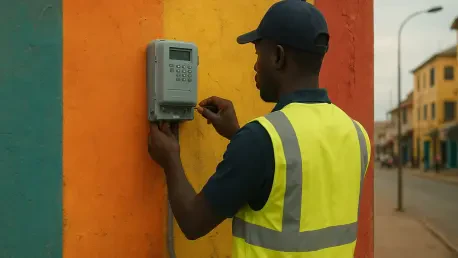
The government’s argument is rooted in the “leakage” that still plagues the system, where too much electricity simply vanishes or remains unpaid before the cash can flow back to the power producers. Even with the current improvements, a technical committee identified deep-seated governance and procurement weaknesses that lead to high technical and commercial losses. They evaluated eight different models for the future of the utility before narrowing it down to three specific paths: a single private operator, multiple private leases for different geographic zones, or a service franchise specifically for lower-voltage distribution. By bringing in private firms to handle the “sharp end” of the business—specifically billing, metering, and revenue collection—the state hopes to professionalize the interface with the customer. The goal is to move away from the heavy government subsidies that saw a $1.4 billion shortfall in 2025, ensuring the utility can finally stand on its own two feet.
The labor unions recently suspended their protests to review alternative proposals; what specific concerns are driving this resistance, and how do they view the government’s strategy?
There is a deep-seated distrust within the Public Utilities Workers Union and the senior staff associations, who feel that “private participation” is often just a slow-motion version of a fire sale. Timothy Nyame and other union leaders argue that the recent financial gains prove that the problem isn’t public ownership, but rather the need for more consistent support in terms of physical hardware like meters and transformers. They are frustrated because they feel the government is obsessing over revenue collection while ignoring the fact that workers often lack the basic tools to do their jobs effectively. The unions are currently pushing an alternative proposal that emphasizes internal management reforms and tighter procurement controls instead of bringing in a middleman. For the workers on the ground, the prospect of a private operator feels like an indictment of their capabilities, and they are prepared to fight for a model that keeps the “National Pride” of the utility intact.
The International Monetary Fund has highlighted a substantial shortfall in Ghana’s energy sector; how does this financial pressure influence the timeline and the specific models being considered?
The IMF’s influence is the silent engine driving this entire reform process, as they have projected another $1.1 billion shortfall for the 2026 fiscal cycle. This financial gap is a heavy weight on the national budget, especially considering the government had to shell out $1.47 billion just last year to cover debts owed to power producers and gas suppliers. Because of this pressure, the timeline has become quite aggressive, with a transaction adviser already working toward a comprehensive plan for private participation expected by March 2027. The IMF sees these reforms as a mandatory step to stabilize the broader economy and reduce the sector’s reliance on emergency government bailouts. Consequently, the models being discussed aren’t just about efficiency; they are designed to shift the financial risk away from the taxpayer and onto private balance sheets as quickly as possible.
Looking back at the collapse of the Power Distribution Services concession, what lessons must be applied to ensure that any new arrangement doesn’t suffer a similar fate?
The 2019 collapse of the PDS concession is a ghost that still haunts every meeting about energy policy in Accra today. That arrangement was supposed to last twenty years, but it imploded within months, leading the Millennium Challenge Corporation to withdraw a staggering $190 million in promised funding. It was a sensory shock to the system that proved that a private contract is only as good as the transparency and due diligence behind it. To avoid a repeat, the current government must be crystal clear about who carries the financial risk and what specific, measurable targets the private operators are required to hit. There has to be a robust regulatory framework that can act as a referee, ensuring that if an operator fails to deliver reliable power or accurate bills, there are immediate and enforceable consequences rather than a total systemic breakdown.
Some analysts suggest that the focus on revenue collection misses the deeper issues of procurement and infrastructure; how would a private operator address these “hidden” inefficiencies?
This is a critical point that analysts like Benjamin Koffi have raised—you can’t just fix the cash register if the warehouse is empty and the delivery trucks are broken. If a private company is only brought in to handle billing but has no control over the procurement of transformers or the maintenance of the grid, the fundamental inefficiencies will remain. There is a real danger in creating a fragmented system where one entity collects the money while another remains responsible for the aging, physical infrastructure. For a private intervention to truly work, it needs to address the “smell of decay” in the procurement process, where high costs and slow delivery of equipment like meters have historically crippled the utility’s ability to serve new customers. The ideal model would grant private partners enough agency to streamline how equipment is bought and deployed, ensuring that every dollar collected is actually reinvested into a more resilient grid.
What is your forecast for the Ghanaian energy sector?
I forecast that by the start of 2027, we will see a hybrid “service franchise” model where private companies take over the high-friction areas of metering and billing in specific urban hubs like Accra and Kumasi. While the government will publicly insist that the utility remains state-owned to appease the unions, the operational reality will shift toward a decentralized system where private efficiency benchmarks drive the day-to-day management. If the current momentum in revenue collection holds, we could see the sector shortfall finally drop below the billion-dollar mark for the first time in years, providing a much-needed breathing room for the national treasury. However, the ultimate success of this transition will depend entirely on whether the government can turn the labor unions into partners rather than adversaries, ensuring that the workers who keep the lights on feel they have a stake in this new, more commercialized future.