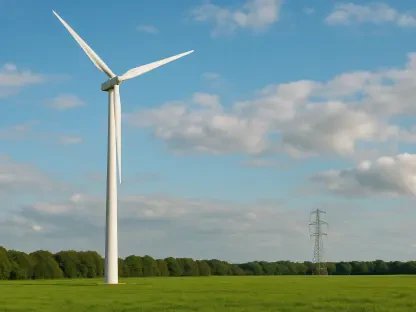

The transition toward a fully decarbonized power system in the United Kingdom has reached a critical juncture where the intermittency of wind and solar generation no longer represents a minor nuisance but a fundamental challenge to national energy security. As the nation aggressively pursues its clean energy targets for 2030, the reliance on weather-dependent sources has exposed structural vulnerabilities in the grid during periods of low wind and limited sunlight. These periods, often referred to as dunkelflaute, necessitate a robust secondary layer of protection that short-term lithium-ion batteries cannot provide. While lithium-ion dominates the market for frequency response and short-duration bursts of power, it lacks the discharge capacity to sustain the grid for several days. Consequently, the focus has shifted toward Long-Duration Energy Storage (LDES) technologies capable of storing electricity for hundreds of hours. This shift is not merely a technical upgrade but a wholesale reimagining of how the British Isles manage their power.
The Shifting Landscape of the United Kingdom’s Energy Infrastructure
Pumped Hydro and Compressed Air: The Traditional Giants
Pumped hydroelectric storage remains the most mature and physically imposing form of long-duration capacity currently operating within the British landscape. By utilizing two water reservoirs at different elevations, these facilities act as massive gravity batteries that can release enormous amounts of energy by allowing water to flow through turbines when demand peaks. Major projects currently under development, such as the Cruachan facility expansion or the Coire Glas project in the Scottish Highlands, demonstrate the scale required to provide meaningful grid stability. These installations offer discharge durations that far exceed anything achievable by chemical battery arrays, often providing twelve or more hours of continuous high-capacity output. However, the geographic requirements for pumped hydro are highly specific, limiting its deployment to mountainous regions. This constraint has spurred interest in alternative mechanical systems like compressed air energy storage. By pumping air into underground salt caverns, operators can store energy that is later reclaimed by expanding the air through a turbine. This method provides similar long-term reliability while potentially utilizing legacy industrial sites across more diverse parts of the country, ensuring the energy transition reaches beyond the Scottish Highlands to areas with specific geological salt formations.
Liquid Air and Thermal Systems: Innovation in Mediums
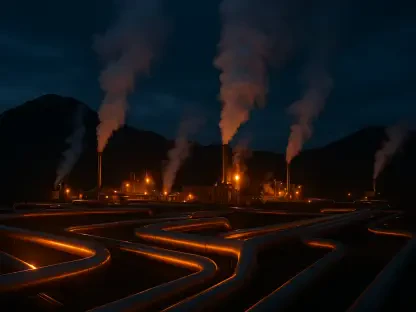
Innovation in long-duration storage has recently moved beyond traditional gravity systems to include cryogenic and thermal mediums that offer high energy density and modularity. Liquid Air Energy Storage (LAES) represents a promising frontier for the United Kingdom, as it utilizes readily available components from the liquefied natural gas and industrial gas sectors. In this process, surplus renewable electricity is used to cool air until it liquefies, after which it is stored in insulated tanks at low pressure. When the grid requires power, the liquid air is heated, causing a rapid expansion that drives a turbine. This technology is uniquely suited for mid-to-long duration storage because the capacity can be scaled simply by adding more tanks. Similarly, thermal storage systems are gaining traction by using surplus electricity to heat materials such as molten salts or crushed rock to high temperatures. This stored heat can then be used to generate steam for conventional turbines or provide high-grade heat for industrial processes. These technologies are often more easily sited than pumped hydro because they do not require specific topography. They represent a bridge between the existing industrial infrastructure and the requirements of a modern, net-zero power network that demands both flexibility and substantial volume in energy management.
Economic and Strategic Implementation of Long-Duration Storage
Policy Frameworks and Market Stability: Driving Investment
Establishing a stable investment environment for long-duration storage has required a departure from the short-term market mechanisms that historically governed the UK energy sector. Because LDES projects involve massive capital expenditure and long construction timelines, investors find it difficult to commit funds without clear long-term revenue certainty. To address this, the government and regulatory bodies have moved toward implementing cap and floor mechanisms, similar to those successfully utilized for international interconnectors. This framework provides a minimum revenue guarantee to operators, ensuring they can service their debt even during periods of low market volatility, while capping excess profits to protect consumers. Such policy interventions are essential because the primary value of LDES—providing system-wide insurance against prolonged generation deficits—is not always fully captured by daily price fluctuations. By de-risking these projects, the UK has paved the way for institutional investors to view energy storage as a safe, long-term asset class. Furthermore, the integration of LDES into the Capacity Market has allowed these technologies to compete effectively with fossil-fuel-based peaking plants. This evolution ensures that the physical stability of the grid is matched by economic sustainability, allowing for a phased transition away from gas-fired generation.
System Integration and Future Resilience: Strategic Outcomes
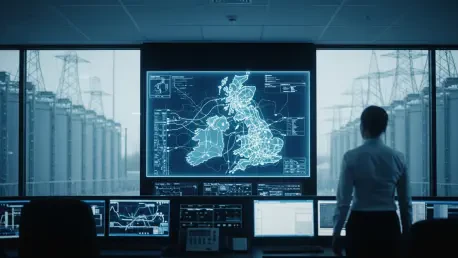
The integration of diverse storage technologies established a blueprint for achieving a resilient and decarbonized grid that other nations recently began to replicate. It was observed that the focus needed to shift toward optimizing the geographical distribution of these assets to minimize transmission losses and prevent regional grid congestion. Localized thermal storage and liquid air facilities were prioritized in industrial clusters to provide both electrical stability and low-carbon industrial heat. Policymakers and grid operators also refined the digital orchestration of these assets, utilizing advanced forecasting to predict weather patterns and manage discharge cycles. It was demonstrated that technical capability alone was insufficient; rather, the combination of engineering innovation and market regulation allowed long-duration storage to stabilize the system. Stakeholders identified the potential for cross-border storage coordination across the North Sea region. This approach enhanced security by diversifying the risks associated with renewable generation. By maintaining this momentum, the UK ensured that its power system remained flexible and secure.