
The latest Grandland Electric lineup addresses the primary hurdles of EV adoption by combining ultra-efficient charging speeds with an impressive driving range of up to 691 kilometers. As the automotive industry pivots toward a sustainable ecosystem, the focus has shifted from merely increasing battery size to optimizing the speed at which energy can be replenished. For many modern drivers, the transition to electric mobility is often hindered by the logistical challenges of daily charging, particularly when relying on public alternating current infrastructure. By introducing a new standard in onboard hardware, this SUV seeks to provide a practical solution that fits seamlessly into a professional or active lifestyle. This technological leap represents a fundamental change in how manufacturers perceive the energy lifecycle of a vehicle. It is no longer sufficient to provide a long-range battery; that power must be accessible through efficient, high-output intake systems that minimize downtime during the day.
Strategic Integration: Charging and Range Efficiency
High-Speed Alternating Current Solutions
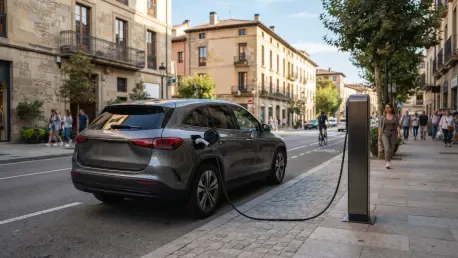
The primary technical breakthrough in this updated vehicle lineup is the implementation of the 22-kW onboard charger, making it a pioneer in its class for such hardware. This upgrade specifically targets alternating current intake, which remains the most common method for residential, workplace, and public curbside charging. By doubling the previous industry standard of 11 kW, the system effectively halves the time required to reach a full state of charge. For the standard 78-kWh battery variants, this reduces the necessary charging window from five hours down to approximately 2.5 hours when connected to a compatible high-output station. Even the larger 100-kWh battery, which provides the maximum driving range, can now be fully replenished in roughly 3.25 hours. Such improvements are vital for professional users and daily commuters who may not always have access to ultra-fast DC chargers but need their vehicles ready at a moment’s notice during the workday or after errands.
Battery Performance and Long-Distance Capability
Beyond the improvements in charging logistics, the vehicle utilizes a sophisticated architecture to host a variety of drivetrain configurations tailored for both efficiency and power. The Long Range model stands out with its 100-kWh battery pack, delivering a WLTP-rated distance that allows for cross-country travel without frequent interruptions. This is made possible through the STLA Medium platform, which optimizes energy density and thermal management to ensure consistent performance across various climates. Meanwhile, the dual-motor All-Wheel Drive variant caters to those seeking high performance, offering a combined output of 239 kW and a substantial 509 Nm of torque. This mechanical setup is not merely about raw acceleration; it includes an intelligent power management system that distributes energy between the axles. In slippery conditions, the dedicated 4WD mode ensures that traction remains optimal, providing a level of security and confidence for drivers navigating unpredictable weather.
Advanced Dynamics: Engineering and Ownership Support
Mechanical Precision in Damping Technology
The driving experience is further refined through the inclusion of Frequency Selective Damping technology, a mechanical innovation that adjusts the suspension’s behavior in real time without the need for complex electronics. This system employs a specialized valve within the damper to distinguish between high-frequency vibrations, such as those from rough city streets, and lower-frequency movements during cornering. When the vehicle encounters uneven surfaces or cobblestones, the valve opens to provide a softer, more compliant ride that absorbs shocks effectively. Conversely, during high-speed maneuvers on the highway or tight turns, the damping firms up to minimize body roll and improve overall handling precision. This creates a versatile chassis capable of maintaining luxury-level comfort without sacrificing the agility expected from a modern SUV. The integration of such chassis tech ensures that the weight of the battery pack does not negatively impact the vehicle’s composure on the road.
Dual-Motor Performance and Traction Control
To support the diverse needs of modern drivers, the drivetrain options were engineered to balance high-voltage efficiency with physical durability and driver engagement. The dual-motor system provides a seamless transition between various driving modes, including Sport, Eco, and Normal, allowing for a customized experience based on the current environment. This versatility is particularly important for drivers who transition between congested urban centers and high-speed highway travel. The dedicated 4WD mode specifically addresses the requirements of those living in regions with frequent snowfall or heavy rain, as it maintains a consistent torque split to prevent loss of grip. By focusing on the mechanical interaction between the motors and the road, the engineering team achieved a level of stability that complements the vehicle’s high power output. This ensures that the 325-horsepower capacity is always usable and safe, reinforcing the SUV’s position as a reliable tool for both recreational and professional use.
Future Stability: Holistic Service Ecosystems
The implementation of the comprehensive service package proved to be a decisive factor in stabilizing consumer confidence during the electric transition. By bundling 22-kW charging hardware with long-term battery warranties and specialized navigation tools, the brand effectively mitigated the traditional risks associated with high-tech vehicle adoption. This strategic approach demonstrated that the future of the automotive sector depended on a synergy between mechanical engineering and digital infrastructure. Owners found that the combination of rapid AC charging and the extended range of the platform addressed the practical demands of long-distance travel and urban commuting alike. Ultimately, these advancements established a new benchmark for versatility, showing that an electric SUV could meet the rigors of heavy daily use without the historical compromises in time and convenience. These developments signaled a clear shift toward a more accessible and reliable era of sustainable transportation for a broader demographic of drivers.