
The global transition toward a sustainable energy infrastructure has reached a critical stage where the limitations of traditional lithium-based battery systems are becoming increasingly apparent to manufacturers and policymakers alike. As the demand for electric vehicles and grid-scale storage continues to climb, the reliance on geographically concentrated minerals like lithium, cobalt, and nickel has created significant vulnerabilities in the global supply chain. This pressure has accelerated the search for alternative chemistries that can provide reliable performance without the high costs and environmental baggage associated with deep-crust mining. Sodium-ion technology has emerged as a frontrunner in this race, leveraging the extreme abundance of sodium to offer a more equitable and accessible solution for mass-market applications. While it was once relegated to niche research, the current industrial climate has forced a reevaluation of sodium-based systems as a necessary component of a diversified energy strategy that balances performance with economic reality.
The Shifting Landscape of Energy Storage Technology
Material Abundance: Building Supply Chain Resilience
The primary driver behind the rapid development of sodium-ion technology is the staggering difference in raw material accessibility compared to traditional lithium-based chemistries. Lithium is often extracted from remote brine pools or hard-rock mines in specific regions, making the supply chain vulnerable to geopolitical tensions and extreme price fluctuations that disrupt manufacturing schedules. In contrast, sodium is roughly one thousand times more abundant than lithium and can be harvested from seawater or soda ash deposits found virtually everywhere on the planet. This geographical neutrality allows countries to establish domestic production lines without depending on a handful of global suppliers, thereby stabilizing the cost of battery packs for electric vehicles and stationary storage. By utilizing aluminum foil for the current collector on both the anode and cathode sides, sodium cells also eliminate the need for expensive copper, further reducing the overall weight and expense.
Transitioning to a salt-based chemistry offers a profound advantage in terms of environmental sustainability and ethical sourcing, which have become critical metrics for modern energy companies. Traditional lithium-ion batteries often require cobalt and nickel, materials that are frequently associated with high ecological damage and complex human rights issues during the extraction process in certain regions. Sodium-ion systems utilize abundant transition metals like iron and manganese, which are not only easier to process but also carry a much smaller carbon footprint throughout their lifecycle. Furthermore, the inherent stability of sodium allows for these batteries to be transported at zero volts, a feat impossible for lithium-ion cells which must maintain a minimum charge to prevent degradation. This capability significantly reduces the risk of thermal runaway during shipping and storage, simplifying the logistics involved in moving large-scale energy systems across international borders.
Performance Benchmarks: Comparing Performance and Safety
Despite the clear economic advantages, sodium-ion batteries have historically struggled with energy density, which remains the primary hurdle for their widespread adoption in high-performance applications. Because sodium ions are larger and heavier than lithium ions, they do not pack as tightly within the crystalline structure of the electrode materials, resulting in a lower specific energy. Current commercial-grade sodium-ion cells typically offer energy densities ranging from 140 to 160 Wh/kg, which is competitive with lithium iron phosphate but falls short of the high-nickel chemistries used in long-range premium electric vehicles. This limitation suggests that sodium-ion is currently best suited for applications where weight and volume are less critical than cost, such as city-focused micro-cars or residential backup systems. Engineers are currently working on innovative hard-carbon anodes and layered oxide cathodes to bridge this gap and push performance closer to the 200 Wh/kg threshold.
One area where sodium-ion technology consistently outperforms its lithium counterparts is in operational resilience under extreme temperature conditions and rapid charging cycles. Many lithium-based batteries lose significant capacity and efficiency when the thermometer drops below freezing, necessitating complex thermal management systems that consume additional energy. Sodium-ion cells maintain a much higher percentage of their capacity in cold climates, making them an ideal solution for energy storage in northern latitudes where winter reliability is a paramount concern for utility operators. Additionally, the fast-charging capabilities of sodium-ion are impressive, with current models reaching an eighty percent charge in less than fifteen minutes without causing the accelerated degradation typically seen in other formats. This thermal stability also translates to a lower risk of fire, as the chemistry is less prone to the internal short-circuiting that can lead to catastrophic failure.
Commercialization Strategies and Industrial Integration
Manufacturing Infrastructure: The Drop-In Production Model
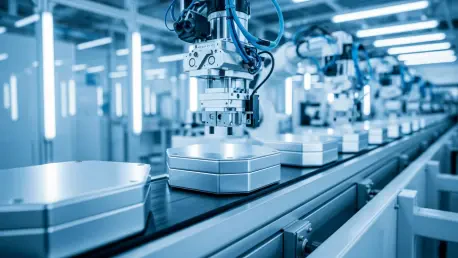
A significant advantage of sodium-ion technology is its compatibility with existing lithium-ion production lines, allowing manufacturers to pivot their operations without the need for massive capital investment. The assembly processes for both chemistries are remarkably similar, involving the same coating, winding, and electrolyte filling techniques that have been perfected over the last decade. This drop-in compatibility means that established gigafactories can allocate specific portions of their capacity to sodium-ion production as demand grows, leveraging existing labor expertise and supply chains. By utilizing similar machinery, the industry can achieve economies of scale much faster than if an entirely new manufacturing paradigm were required. This synergy between the two technologies ensures that sodium-ion is not viewed as a disruptive threat but rather as a complementary addition to the broader battery ecosystem, providing a lower-cost tier for the public.
Looking at the financial outlook, the cost of sodium-ion batteries is projected to drop significantly as production volumes increase throughout the cycle ending in 2028. Analysts suggest that the bill of materials for sodium-based cells could be thirty to forty percent lower than that of lithium iron phosphate, providing a massive incentive for budget-conscious markets. This price advantage is particularly relevant for the stationary energy storage sector, where the sheer volume of batteries needed to stabilize renewable energy grids makes cost the most important factor in deployment. Utility companies can utilize these cheaper cells to store wind and solar energy, effectively lowering the levelized cost of electricity for the general public. As the price of lithium continues to be volatile due to mining constraints, the predictable and low-cost nature of sodium offers a stabilizing force for the energy industry, allowing for more accurate long-term planning.
Future Market Sectors: Transportation and Stationary Storage
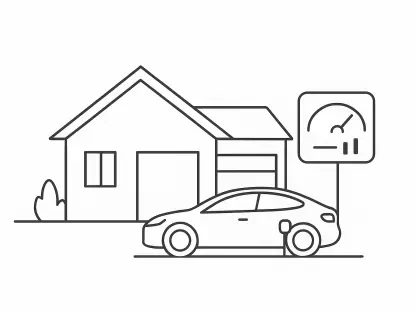
The most immediate impact of sodium-ion technology is visible in the micro-mobility sector, where electric scooters, bicycles, and small urban commuter vehicles have already begun adopting salt-based power. These applications are particularly well-suited for sodium because they prioritize low purchase prices and safety over extreme driving range, making the energy density trade-off negligible for the average city dweller. Several major automotive manufacturers have already launched pilot programs featuring entry-level electric hatchbacks powered entirely by sodium-ion packs, proving that the technology is robust enough for daily passenger transport. These vehicles offer a practical solution for markets in developing nations where the high cost of lithium batteries has traditionally been a barrier to electric vehicle ownership. By making electrification more affordable, sodium-ion acts as a catalyst for reducing urban air pollution in many global regions.
The evolution of sodium-ion technology represented a fundamental shift in how the global energy industry approached the challenges of sustainability and resource management. By moving away from the constraints of rare mineral mining, researchers and engineers successfully created a viable secondary tier of storage that addressed the needs of mass-market transportation and large-scale grid stabilization. Stakeholders should have recognized that the goal was never to fully replace lithium-ion, but rather to diversify the energy portfolio to ensure economic resilience against supply chain shocks. Looking forward, the industry must focus on refining cathode materials to further improve energy density while simultaneously standardizing recycling processes for these new chemistries. Organizations that proactively integrated sodium-ion into their infrastructure positioned themselves to benefit from a more stable and affordable energy future, effectively decoupling progress from the volatility of mineral markets.