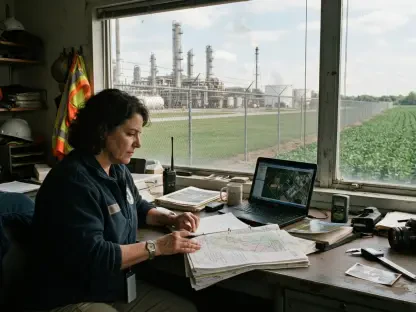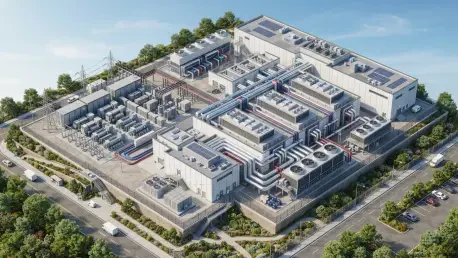

The focus of the AI revolution is shifting away from software algorithms toward the physical construction of massive twenty-gigawatt energy and cooling projects. As the current year 2026 unfolds, the industry is witnessing a profound transition where silicon shortages are no longer the primary concern for the world’s most powerful technology executives. Instead, the global race for dominance is being fought on the terrain of industrial engineering and utility management. The immense appetite for generative intelligence has pushed the limits of existing power grids, necessitating a reimagining of how data centers are built and operated. This shift is not merely a technical adjustment but a fundamental realignment of the digital economy toward physical infrastructure. The industry leaders are now forced to navigate a landscape where their growth is dictated by the availability of electricity and the efficiency of thermal management systems. Consequently, the narrative surrounding artificial intelligence has moved beyond the ethereal realm of code and into the heavy reality of large-scale construction.
Overcoming Physical and Financial Bottlenecks
Energy and Cooling: The New Infrastructure Gatekeepers
The realization that computational power is tethered to the physical world has led companies to seek unprecedented energy independence. Industry experts have recently highlighted that the primary constraint on expanding artificial intelligence capacity is the availability of power and sophisticated cooling architectures. To address this, organizations are exploring diverse energy portfolios that move beyond traditional gas turbines, which currently suffer from significant supply chain lead times of up to 18 months. The goal is to establish a massive twenty-gigawatt power and cooling infrastructure by 2027 to ensure that future model training is not throttled by external utility failures. This transition marks a critical moment where the digital and industrial sectors converge, as tech giants essentially transform into energy companies. The focus on localized power generation and sustainable cooling technologies reflects a strategic necessity to bypass the fragility of national grids, which were never designed to handle the concentrated loads required for modern high-density computing clusters.
As these major technology players secure their energy futures, a significant ripple effect is being felt across the industrial and utility markets. Investors have begun to favor companies that provide the hardware for the AI backbone, such as high-efficiency cooling systems and advanced electrical transformers. This shift indicates a broader market recognition that the success of software-driven intelligence is entirely dependent on the robustness of physical assets. The rally in utility stocks underscores the reality that the artificial intelligence revolution is fundamentally a construction project on an unparalleled scale. Furthermore, the move toward infrastructure roadmaps for the 2026 to 2028 period suggests that the current expansion is only the beginning of a long-term industrialization. By securing these resources now, companies are building a moat that competitors may find impossible to cross without similar access to massive power blocks. The dependency of the digital world on the electrical world has never been more apparent, leading to a permanent change in how tech capital is allocated across different sectors.
Transformative Financing: The Industrialization of Computing
To fuel this massive expansion, the financial mechanisms supporting technology growth are being fundamentally reimagined. Prominent industry leaders have advocated for a model where high-performance computing hardware is treated as a financeable asset, much like real estate or large commercial aircraft. By reclassifying GPUs and data center equipment as collateral, companies can unlock billions of dollars in working capital that was previously tied up in direct purchases. This approach is essential because a single one-gigawatt facility can now require an investment of approximately $50 billion. Treating compute as a hard asset allows for more flexible lending structures and enables specialized cloud providers to compete in the high-stakes intelligence market. This financial innovation is designed to match the scale of the physical construction required, ensuring that capital flow does not become a secondary bottleneck. As computing power becomes a commodity with predictable revenue streams, the ability to leverage these assets will define the global speed of deployment.
The urgency of this financial pivot is underscored by the immense revenue potential of high-density data centers, where even a three-month delay in construction can result in a loss of potential earnings exceeding $10 billion. Such high stakes require a seamless integration between industrial construction, high finance, and telecommunications. There is an increasing expectation that existing cellular base stations will eventually be repurposed as distributed computing hubs, bringing intelligence closer to the edge and reducing the load on central facilities. This transformation would allow telecommunications providers to act as vital components of the global AI network, utilizing their distributed physical footprint to provide localized processing power. This strategy not only optimizes data flow but also mitigates some of the massive centralized energy demands that characterize traditional data centers. By integrating these diverse physical networks, the industry aims to create a resilient infrastructure that can sustain continuous growth while optimizing the use of regional energy resources.
Corporate Strategy and Global Scaling Constraints
Resource Scarcity: Governance at Scale
Despite the theoretical infinite demand for intelligence services, the physical reality of resource scarcity is forcing major tech firms into difficult strategic trade-offs. Leadership teams at major cloud providers are increasingly prioritizing internal research requirements over external customer demands to maintain a competitive edge. This has led to scenarios where revenue-generating cloud customers are turned away to ensure that elite research labs have the necessary computing clusters to develop the next generation of models. Meeting the demands for 2027 and beyond is becoming a significant logistical hurdle, with some executives warning that securing future capacity is now a multi-year diplomatic and industrial effort. The scarcity of high-tier computing resources has created a tiered system where only the most critical projects receive the power and hardware they need. This focus on internal priority over short-term revenue highlights the high-stakes nature of the current race, where long-term dominance is valued far above quarterly growth metrics.
To manage the extreme capital expenditures required for this growth without losing strategic focus, several companies are restructuring their corporate governance. Some organizations have implemented new share structures and stock splits to ensure that long-term visionaries can maintain control while the company spends billions on infrastructure projects. These structural changes are designed to insulate management from the short-term pressures of the stock market during a period of heavy reinvestment. Additionally, the industry is seeing a surge in strategic partnerships where former rivals share hosting capabilities and models to bypass individual physical constraints. These collaborations are essential because the rollout of global services is currently limited not by demand, but by the sheer lack of available compute centers. By pooling resources and utilizing combined cloud infrastructures, companies can achieve a level of scale that would be impossible to reach independently. This collaborative yet competitive environment defines the current strategic landscape, where physical limitations govern the pace of innovation.
Reliability and Monetization: The Future of Robotics
While much of the industry remains focused on the arms race for hardware, a parallel movement is advocating for a shift toward reliability and enterprise utility. Strategic initiatives are emphasizing the need to move beyond the experimental phase and provide predictable, agent-based systems that offer tangible business value. This macro delegation approach allows users to assign large, complex tasks to digital agents while maintaining granular control over the process. This strategy has already shown results in the professional sector, where tens of millions of users have adopted paid services that integrate these capabilities into their daily workflows. The focus is shifting from basic capability to operational reliability, marking a maturation of the market. By prioritizing monetization through utility rather than speculation, companies are finding a more stable path forward in an environment where infrastructure costs are soaring. This focus on practical application ensures that the massive investments in physical assets can be justified by consistent, growing revenue from enterprise clients.
Beyond software-based assistants, the industry is increasingly looking toward the integration of artificial intelligence with physical robotics as the ultimate expression of this technological era. The potential consolidation of robotics and automotive platforms suggests a future where autonomous machines handle the labor-intensive tasks required to maintain our modern infrastructure. For example, the development of humanoid robots and autonomous transit systems represents a multi-decade bet on the physical manifestation of intelligence. While the market remains cautious about the immediate profitability of these ventures, the vision of a robotics-driven economy remains a primary motivator for sustained capital expenditure. These projects are particularly energy-intensive, further reinforcing the need for the massive power projects currently under construction. The success of these robotics initiatives will ultimately depend on whether the industry can solve the twin challenges of mobile energy density and massive-scale manufacturing. As these physical machines begin to emerge, they will represent the final step in the shift toward hardware-heavy ecosystems.
Practical Strategies: Moving Toward a New Industrial Standard
The strategic landscape of late 2026 was defined by a transition from speculative digital growth to a disciplined industrial expansion. Organizations successfully navigated this shift by treating electricity and cooling not as external utilities, but as core components of their technological stack. Those who secured long-term power purchase agreements and invested in modular data center designs early in the year found themselves better positioned to weather the volatility of energy markets. The integration of high-performance computing as a financeable asset provided the necessary liquidity to maintain growth despite the high costs of physical construction. Looking forward, enterprises should focus on optimizing the efficiency of their existing models to reduce the dependency on massive power draws. Investing in edge computing and localized AI agents will be critical for reducing the burden on centralized infrastructure. The industry demonstrated that the key to sustained progress in intelligence lies in the ability to harmonize digital ambitions with the rigid realities of the physical world, setting a new standard for industrial-tech collaboration.