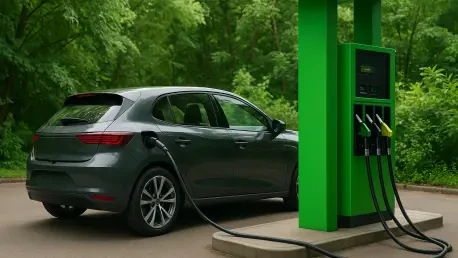

The use of organic waste residue as a fuel source offers a circular economy approach to reducing the environmental impact of the traditional automotive industry. This perspective has gained traction as manufacturers seek diverse methods to achieve carbon neutrality without abandoning the internal combustion engine. Toyota is leading this movement by proposing a new regulatory category known as VEEF, or Vehicles running Exclusively on Eligible Fuels. This initiative is designed to place vehicles powered by one hundred percent renewable fuels on equal financial and regulatory footing with battery-electric models across Europe. By framing these fuels as a zero-emission solution, the proposal addresses the urgent need to decarbonize the massive global fleet of existing cars. High-quality biofuels emit no net carbon dioxide at the tailpipe, making them a logical addition to the green transition. As the industry faces pressure to meet strict climate targets, such a classification could bridge the gap between legacy technology and sustainability.
Practical Strategies for Decarbonizing Existing Fleets
Bridging the Gap With Drop-in Biofuels
One of the most compelling arguments for the VEEF category is its focus on the immediate decarbonization of the existing automotive landscape. Currently, there are over three hundred million internal combustion engine vehicles on European roads, and replacing this entire fleet with battery-electric alternatives would take decades and require astronomical capital. Rather than waiting for a total fleet turnover, Toyota suggests that renewable ‘drop-in’ fuels can provide a drastic reduction in emissions starting today. These fuels, particularly second-generation biofuels derived from organic waste, are engineered to function perfectly within current engine architectures without requiring mechanical modifications. This approach utilizes the expansive network of existing gas station infrastructure, which is already in place. By avoiding the need for a massive overhaul of refueling systems, the industry can leverage historical investments while transitioning to a cleaner operational model that fits the current economic reality.
Proving Performance and Regulatory Compliance
The feasibility of the VEEF concept has been rigorously tested through real-world applications and collaborative research. Recently, a six-month trial concluded in Spain involving industry leaders including BMW, Bosch, and Repsol to evaluate the performance of one hundred percent renewable fuels. The results were positive, demonstrating that these advanced fuels maintain standard vehicle performance and reliability across a wide range of driving conditions. No technical issues were reported during the trial, proving that modern internal combustion engines are already capable of operating on high-blend biofuels without additional hardware changes. This empirical data is crucial for convincing regulators that renewable fuels are a mature technology ready for broader adoption. By showing that performance remains consistent, the trial countered the misconception that alternative fuels lead to decreased efficiency. The success of this collaboration highlights the potential for cross-industry partnerships to accelerate sustainable mobility.
Future Implementation and Scaling Solutions
The pursuit of the VEEF category represented a shift toward a more inclusive and technologically diverse environmental strategy within the European Union. Policymakers and industry stakeholders recognized that achieving carbon neutrality required the deployment of every available tool, from electrification to advanced combustion. Future initiatives should focus on harmonizing fuel standards across borders and providing tax incentives for consumers who opted for renewable-ready vehicles. Manufacturers began integrating the necessary sensors and fuel-management systems into new models to prepare for a market where liquid fuels were entirely decoupled from fossil origins. Investors looked toward the expansion of biorefineries as a core component of green infrastructure, ensuring that the existing vehicle parc remained a viable part of the solution. By treating renewable fuels as a peer to electric power, the industry fostered a competitive environment that drove innovation. This multi-pathway transition ensured that the journey toward a zero-emission future remained resilient and accessible.